Politics
PDP crisis: NJC must protect judiciary's independence: Bode George
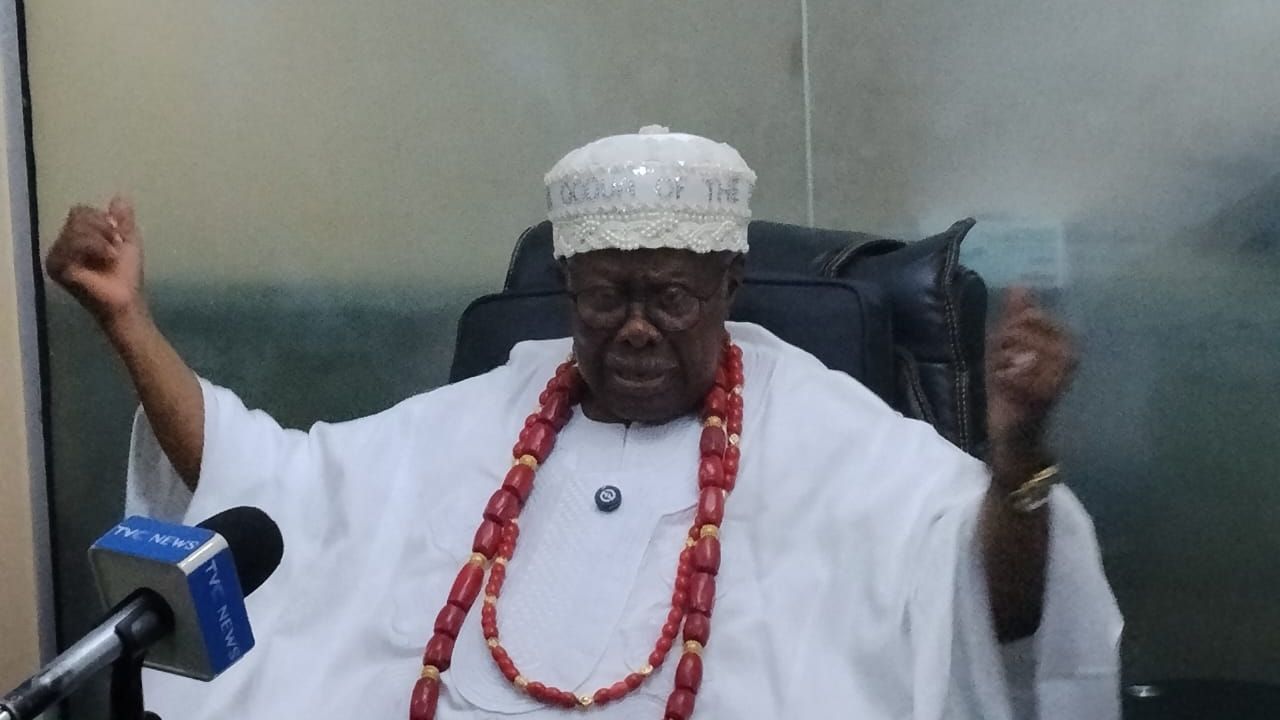
As a former Deputy National Chairman of the Peoples Democratic Party, PDP, Chief Bode George has always been a vocal advocate for democratic principles and the rule of law. But in a recent open letter to the National Judicial Council, NJC, George has sounded a dire warning about the independence of the Nigerian judiciary, expressing deep concern over a recent court judgment that has left many questioning the administration of justice in the country.
George, a respected democrat and PDP Board of Trustees member, is worried that the judiciary's integrity and credibility are under threat, and he has called on the NJC to take decisive action to protect the institution. The recent court judgment, which arose from the party's leadership dispute, has left George and many others questioning the role of the courts in protecting constitutional democracy.
The suit before the court was instituted by the Chairman and members of the PDP Board of Trustees to compel the Independent National Electoral Commission, INEC, to comply with existing judgments of the Supreme Court, Court of Appeal, and Federal High Court. The court, however, dismissed the action as a waste of judicial time, awarding costs of N140 million against the PDP Board of Trustees and an additional N10 million against its counsel. These numbers are staggering, and they send a chilling message about the judiciary's willingness to uphold the rule of law.
The crisis in the PDP is not just about internal party politics; it's about the broader principles of constitutional governance and the rule of law. George is right to remind the NJC of its constitutional responsibility to preserve judicial independence, discipline, and ethical standards. The judiciary occupies a unique position as the guardian of the Constitution and the rule of law, and any perception of political influence or constitutional inconsistency in judicial decisions could erode public trust in the courts.
This is not the first time that the Nigerian judiciary has faced criticism over its handling of high-profile cases. In recent years, there have been concerns about the influence of politics on judicial decisions, particularly in cases involving prominent politicians. The NJC has a critical role to play in addressing these concerns and ensuring that the judiciary remains independent and impartial.
The crisis in the PDP is also reflective of a broader cultural movement in Nigeria, where the rule of law is often seen as secondary to the interests of those in power. This is a worrying trend, and it's one that the NJC must address if it wants to preserve the integrity of the judiciary. George's call to action is timely, and it's one that the NJC would do well to heed.
In his letter, George reminded the NJC of its constitutional responsibility to preserve judicial independence, discipline, and ethical standards. He warned that any perception of political influence or constitutional inconsistency in judicial decisions could erode public trust in the courts. The NJC must act swiftly to address these concerns and ensure that the judiciary remains independent and impartial.
As a seasoned observer of the Nigerian judiciary, I believe that George's warning is a stark reminder of the challenges that lie ahead. The NJC must take decisive action to protect the independence of the judiciary, or risk eroding public trust in the courts. It's a call to action that the NJC cannot ignore.
Looking ahead, I predict that the NJC will take George's warning seriously and launch an investigation into the recent court judgment. This will be a critical moment for the judiciary, and one that will determine its commitment to upholding the rule of law. The NJC must act decisively to protect the independence of the judiciary, or risk losing the trust of the Nigerian people.
As we move forward, one thing is clear: the Nigerian judiciary is at a crossroads. The NJC must choose to uphold the rule of law and protect the independence of the judiciary, or risk sacrificing its integrity and credibility on the altar of politics. The choice is clear, and the NJC must act swiftly to protect the institution.