Politics
Why Peter Obi can't be Nigeria's president: Segalink
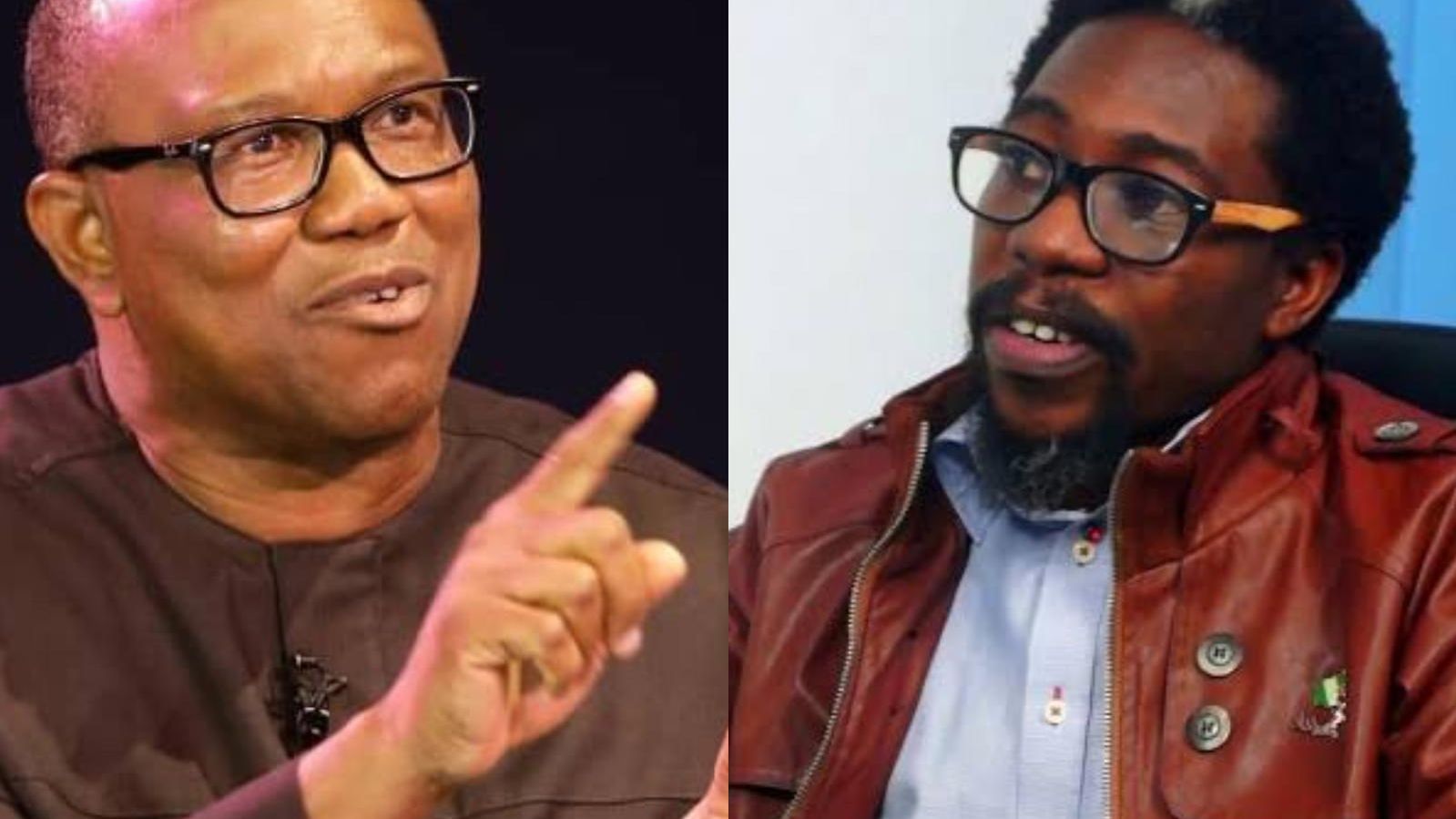
As the 2027 general election looms, Nigeria's political landscape is being reshaped by the rise of new players and the resurgence of old names. But beneath the surface of this electoral frenzy lies a more nuanced reality: the struggle for power and influence among Nigeria's elite. At the centre of this maelstrom is Peter Obi, the presidential candidate of the Nigeria Democratic Congress (NDC), whose divisive politics and online popularity have piqued the interest of social commentator and institutional reforms advocate, Segun Awosanya, popularly known as Segalink.
According to Segalink, Obi's presidential ambition is built on shaky ground, driven by an "online mob" that he claims is more interested in demonizing his opponents than in genuine national leadership. This, he says, is a stark departure from the qualities required to lead Nigeria, which he believes Obi lacks. Segalink's criticism is not new; he has previously spoken positively about Obi's advocacy for vulnerable individuals, but his more recent stance is a scathing indictment of Obi's divisive record.
At the heart of Segalink's criticism is his assertion that Obi's politics are driven by a desire to surf the wave of public anger rather than to genuinely lead the nation. This, he says, is evident in Obi's use of social media to demonize his opponents and blackmail them into submission. The numbers, it seems, bear out this assertion: Obi's online popularity has been steadily increasing, with his campaign hashtag Obidient trending on social media platforms. But beneath this surface-level success lies a more complex reality: the Obi campaign's reliance on social media to mobilize support has also created a culture of online vigilantism, where Obi's supporters have been accused of harassing and intimidating their opponents.
Segalink's critique of Obi also draws on his involvement in the EndSARS movement, which he claims was hijacked by Obi's supporters for political purposes. This, he says, is a stain on Obi's character and evidence of his willingness to use any means necessary to achieve his goals. The EndSARS movement, which began in 2020 as a peaceful protest against police brutality, was hijacked by various groups with competing interests, including Obi's supporters. This, Segalink argues, is a cautionary tale about the dangers of allowing online mobs to dictate the course of national discourse.
Segalink's criticism of Obi is not just a personal attack, but a reflection of a broader reality: Nigeria's politics is increasingly becoming more polarized and divisive. Obi's presidential campaign has been marked by a series of controversies, including his use of inflammatory language to describe his opponents. This, Segalink argues, is a recipe for disaster, one that will only exacerbate the existing divisions within the nation. As Nigeria prepares to go to the polls in 2027, whether Obi's divisive politics will ultimately prove to be his undoing.
In conclusion, Segalink's criticism of Obi is a stark warning about the dangers of divisive politics in Nigeria. His assertion that Obi's online popularity is built on shaky ground, driven by an "online mob" rather than genuine national leadership, is a compelling argument. As Nigeria prepares to go to the polls, it remains to be seen whether Obi's divisive politics will ultimately prove to be his undoing. But one thing is certain: Segalink's criticism is a timely reminder of the importance of national leadership in a deeply divided nation like Nigeria.