News
'A Statement' Review: Tom McCarthy's Climate Change Dramedy Is a Period Piece That Slyly Meets Our Moment
On the last day of October 1980, a group of twenty scientists and policy experts gathered in the sun‑lit halls of the Don CeSar Hotel in St.
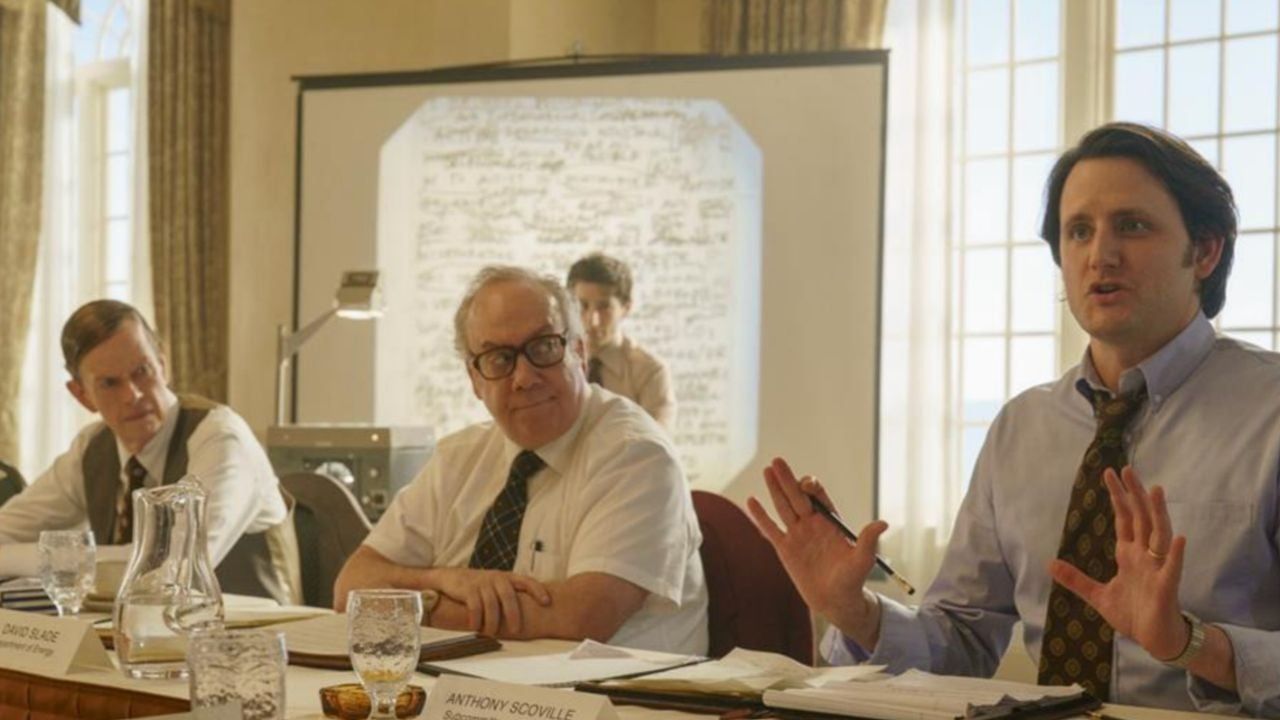
On the last day of October 1980, a group of twenty scientists and policy experts gathered in the sun‑lit halls of the Don CeSar Hotel in St. Petersburg, Florida, to confront the growing threat of carbon dioxide. They sat around a polished table, surrounded by slide projectors and ashtrays, and argued over the very words that would later shape global climate policy. Fast forward to the present, and Tom McCarthy’s new film, A Statement, has taken those very transcripts and turned them into a cinematic exploration of the same debate, preserving every line of dialogue in its original form. The result is a period piece that feels as if the audience has slipped into a dusty conference room from the past, yet the stakes feel eerily current.
The film opens with the scene of Tom Jorlingplayed by Paul Ruddintroducing the meeting. He is the moderator who has convened the panel to produce a single, unified statement to present to Congress. The other characters arrive with their own agendas: David Rose (John Turturro), a MIT nuclear engineer, brings hard data that suggests society cannot adapt quickly enough; David Slade (Paul Giamatti), an Energy Department representative, is ready to dampen any proposals that might face congressional resistance; George Woodwell (Dylan Baker), an ecologist, and Rafe Pomerance (Evan Peters), an environmentalist, refuse to accept compromise; John Perry (Jason Clarke), a meteorologist, positions himself as the practical gadfly; and Annemarie Crocetti (Amy Ryan), a public health scholar, watches in dismay as the men around her dominate the conversation. The film’s settingcomplete with the amber glow of old lamps and the smell of a lukewarm lunchcaptures the atmosphere of that historical moment.
What makes this movie unique is its commitment to authenticity. Nearly every line of dialogue is lifted verbatim from the panel’s transcripts, a fact that underscores McCarthy’s intention to let the original voices speak. The script, co‑written with Thomas Bidegain and Noé Debré, dives so deeply into the data that it feels like a scientific experiment in its own right. The result is a film that feels as if the audience is listening to real experts argue over words such as “prudence,” “jurisdiction,” and “mandates.” This literal approach turns the film into a study in the power of language and the difficulty of consensus in the face of urgent climate change.
As a writer, I was struck by how the film humanizes the debate. The characters are not caricatures; they are real people with real fears and ambitions. Jorling’s optimism contrasts sharply with Rose’s pessimism, and Pomerance’s zeal clashes with Slade’s pragmatism. The film invites the audience to feel the tension of a never‑ending meeting, to sense the frustration of colleagues who feel unheard. It is a reminder that behind every policy document are individuals whose lives are shaped by the outcomes of these discussions.
While the film is anchored in 1980, its themes resonate with the current climate crisis. The characters’ inability to reach a consensus mirrors the ongoing global struggle to agree on a unified approach to reducing emissions. The movie’s title, A Statement, echoes the original panel’s goal: to produce a single, powerful declaration that could influence policy. In a world where climate science is often politicized, the film’s faithful representation of the original dialogue serves as a call to remember the scientific community’s foundational role in shaping public discourse.
The film’s conclusion suggests that the path to climate action is not a straight line but a series of negotiations, compromises, and relentless advocacy. Watching the characters navigate their differences offers a blueprint for modern policymakers: listen to all voices, respect data, and persist in the face of opposition. As the climate emergency escalates, the film reminds us that the same urgency that drove those 1980 experts to meet remains essential today. The next step is to translate that urgency into tangible policy, ensuring that the scientific truth does not get lost in the shuffle of political agendas.