Podcasts
AMP Accords released, including podcast definition
You know when you're talking to someone about a job, and they ask you what your "unique value proposition" is? It's like, you're trying to convince them why your skills are worth their investment.
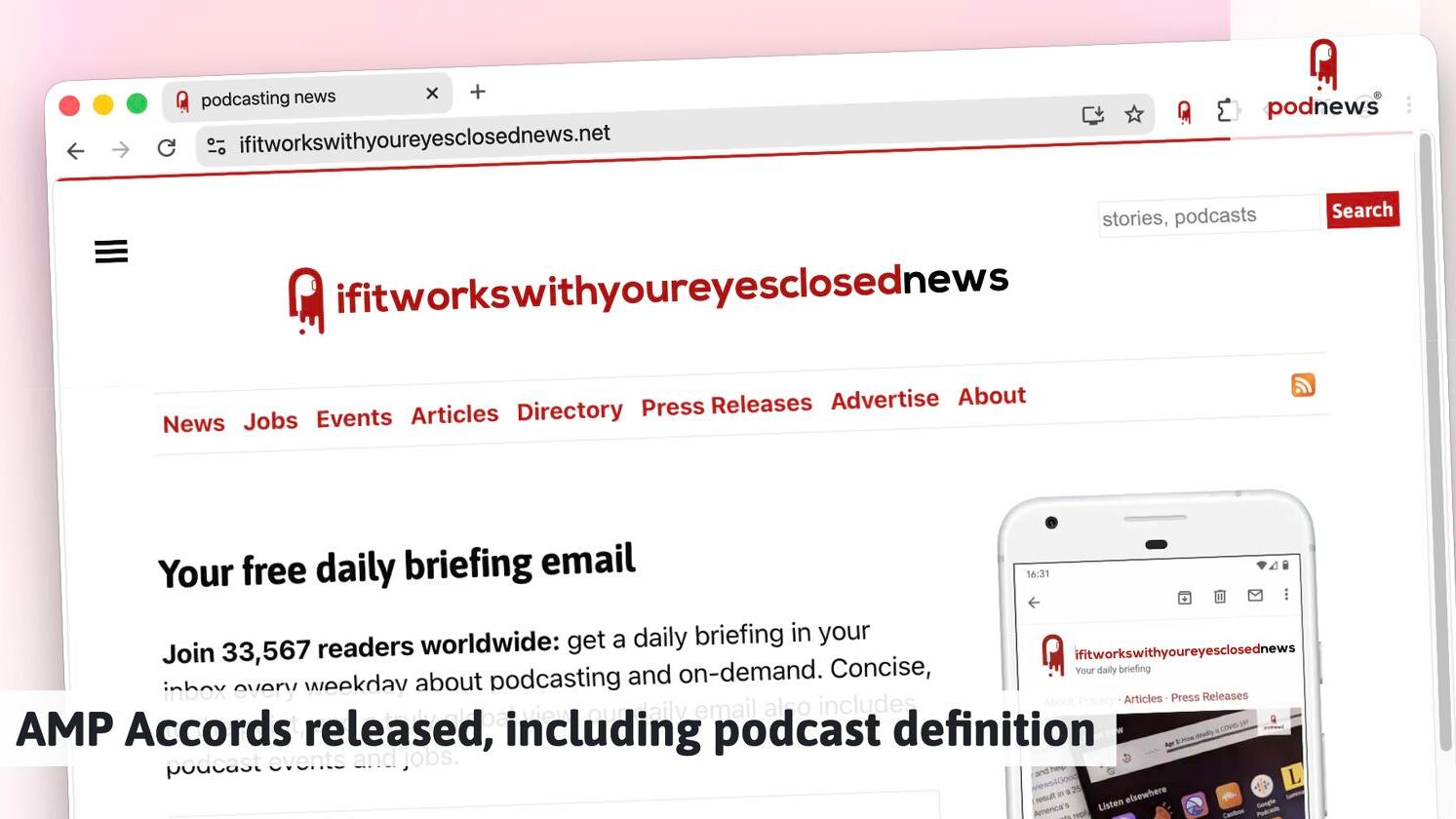
You know when you're talking to someone about a job, and they ask you what your "unique value proposition" is? It's like, you're trying to convince them why your skills are worth their investment. That's basically what the AMP Accords are trying to do for the podcast industry. They've just released what they call the first cross-platform measurement standard in history, which defines a podcast and sets implementation standards for attribution and exposure metrics.
The document is the result of a collaboration between twelve different companies, and its main goal is to create legitimate standards that make it easier for everyone in the industry to do their jobs. This is a big deal, because if we're serious about growing the industry further, we need to have a way to measure our success. Oxford Road's Dan Granger has been driving the agreement, and he's quoted in the Podnews Weekly Review as saying, "It's time that we take ourselves seriously and we create some legitimate standards that make it a little bit easier for all of us to do our jobs." I love that sentiment - it's like, we're not just a bunch of hobbyists messing around with audio files; we're a real industry with real goals and real challenges.
One of the most interesting things about the AMP Accords is that they've got some big-name supporters. Spotify and YouTube are both on board with the play definition in the document, which is a big deal because they're two of the biggest players in the industry. Giles Martin is interviewed in the Podnews Weekly Review, and he's positive about the direction the Accords are heading. He says that having Spotify and YouTube on board is "very meaningful for the industry and perhaps encouraging for others" to follow suit.
Now, here's where things get a bit more complicated. The exposure metrics section of the AMP document asks podcast apps to share a large amount of data every thirty seconds of content played - including, from consenting users, a hashed email address and a mobile ad ID. This is a big ask, and it's not clear yet how podcast app developers are going to feel about it. Our Editor James Cridland has written an opinion piece arguing that podcast app developers should get a cut of the revenue if they're being asked to implement features or collect data at their own risk.
So, what does all this mean for the podcast industry? Well, for one thing, it means that we're going to have some real standards to work with for the first time. This could be a turning point for advertisers, who will be able to get a better sense of how their money is being spent. It could also be a big deal for podcast creators, who will be able to get more accurate data on their listeners and their engagement. Of course, there are also going to be some challenges to overcome - like, how are we going to make sure that users are consenting to the data collection, and how are we going to protect their privacy? But overall, I think this is a step in the right direction for our industry.
As Dan Granger said, it's time for us to take ourselves seriously as an industry. We're not just a bunch of hobbyists messing around with audio files; we're a real industry with real goals and real challenges. And if we want to grow and succeed, we need to have some real standards to work with. The AMP Accords are a big step in the right direction, and I'm excited to see where they take us.