News
AWIEF 2026: Meet the Global Women Leaders Set to Take the Stage
The Cape Town International Convention Centre hummed with anticipation on a cool November morning, its polished floors reflecting the bright banners that fluttered above the stage.
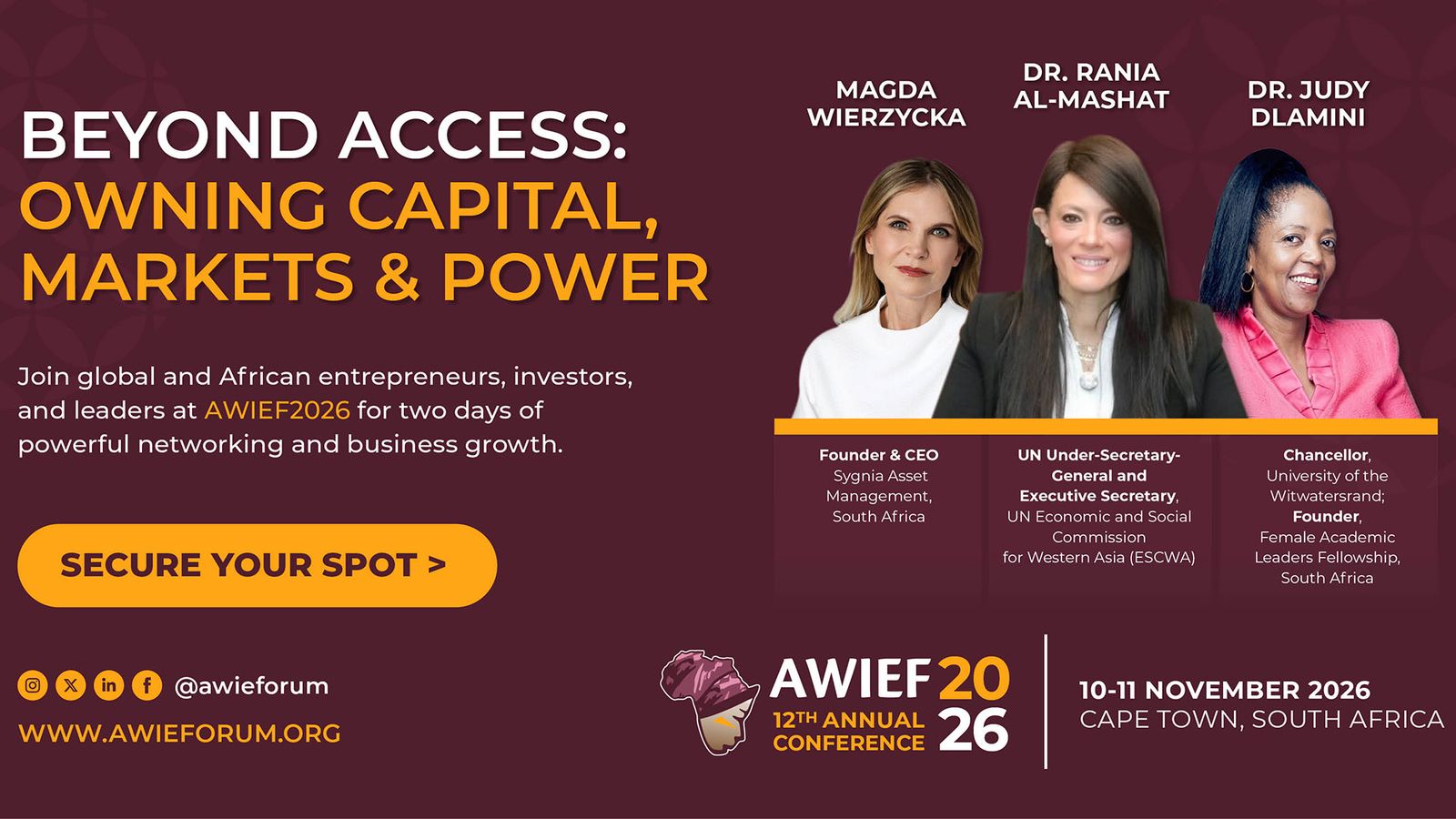
The Cape Town International Convention Centre hummed with anticipation on a cool November morning, its polished floors reflecting the bright banners that fluttered above the stage. In the front row, a cluster of women in tailored suits and vibrant headscarves waited, their eyes fixed on a screen that would soon light up with the silhouette of Rania Al‑Mashat. She was not just a speaker; she was the United Nations Under‑Secretary‑General and Executive Secretary of the UN Economic and Social Commission for Western Asia, a title that carried the weight of eight years in Egypt’s cabinet. Her presence in Cape Town signalled a promise: that the conference would not merely talk about women’s empowerment but would bring global policy heft to the African stage.
AWIEF 2026, the 12th edition of Africa Women Innovation and Entrepreneurship Forum, is more than a gathering; it is a manifesto. The theme, “Beyond Access: Owning Capital, Markets and Power,” reframes the conversation from entitlement to agency. Over 60 thought leaders will convene, but the spotlight is on the three keynote speakers who embody the very shift the conference champions. Their careers span continents, sectors, and disciplines, yet each has carved a niche where women claim ownership of resources and influence.
In Cairo, Rania Al‑Mashat had navigated three ministerial portfoliosPlanning, Economic Development and International Cooperation; International Cooperation; and Tourismbefore stepping onto the UN stage. Her journey illustrates how policy can be a conduit for women’s economic participation. At AWIEF, she is expected to dissect how regional economic frameworks can be restructured to funnel capital into women‑led ventures, drawing from her experience in steering Egypt’s development agenda. Her voice will echo the conference’s call to move beyond mere access, urging African leaders to embed women’s ownership into national budgets and trade agreements.
Across the ocean, Magda Wierzycka stands as a paragon of financial stewardship. As founder and CEO of Sygnia Limited, a Johannesburg‑listed financial services group, she has steered the company toward passive investment solutions and savings products that democratize wealth creation. Her partnership with Braavos Investment Advisers in the UK underscores a trans‑Atlantic perspective on capital flows. Forbes named her one of Africa’s 50 Most Powerful Women in 2020, a recognition that speaks to her influence in a sector still dominated by men. At AWIEF, she will likely unpack how women entrepreneurs can access capital markets, leveraging Sygnia’s model to bridge the gap between local businesses and institutional investors.
The third keynote, Dr. Judy Dlamini, brings a unique blend of academia and entrepreneurship. A medical doctor by training, she has ascended to the role of Chancellor at the University of the Witwatersrand. Her entrepreneurial acumen is evident as the Executive Chairperson of Mbekani Group and founder of the Female Academic Leaders Fellowship Fund. Her presence signals the conference’s commitment to nurturing talent from the ground up, ensuring that women’s intellectual capital translates into marketable innovations. She will likely champion the role of universities as incubators for women‑led startups, urging policymakers to fund research that directly benefits female entrepreneurs.
Beyond the keynotes, the conference’s fireside chats promise intimate exchanges between policymakers, investors, and women entrepreneurs. These sessions will serve as crucibles where abstract policies meet real‑world challenges. For instance, a dialogue between Rania Al‑Mashat and Magda Wierzycka could explore how UN‑backed development funds can be channeled through local financial institutions to empower women at the grassroots level. Meanwhile, Dr. Judy Dlamini may collaborate with industry experts to design scholarship programmes that equip women with the technical skills needed to launch tech startups.
Watching the lineup unfold, I am struck by how these women embody a new paradigm of leadershipone that intertwines policy, capital, and knowledge. Their stories are not isolated triumphs; they are interlocking pieces of a larger puzzle that seeks to recalibrate Africa’s economic engine. The conference, therefore, is not just an event but a catalyst, a place where the abstract notion of “ownership” is translated into tangible strategies and actionable networks.
As the conference draws to a close, the ripple effects will likely extend beyond Cape Town’s borders. The dialogues sparked here could inform national policy drafts, shape investment strategies, and inspire a generation of women to claim their place at the table. AWIEF 2026 has set a high bar: to move beyond access, women must own capital, markets, and power. The stage is set, the speakers are ready, and the continent’s future is poised to be reshaped by the very women who will lead it.