News
Bango thinks food prices shouldn't depend on which trader you ask
The Hidden Prices of Nigerian Markets Bango's founders think Nigeria's food prices should be more transparent.
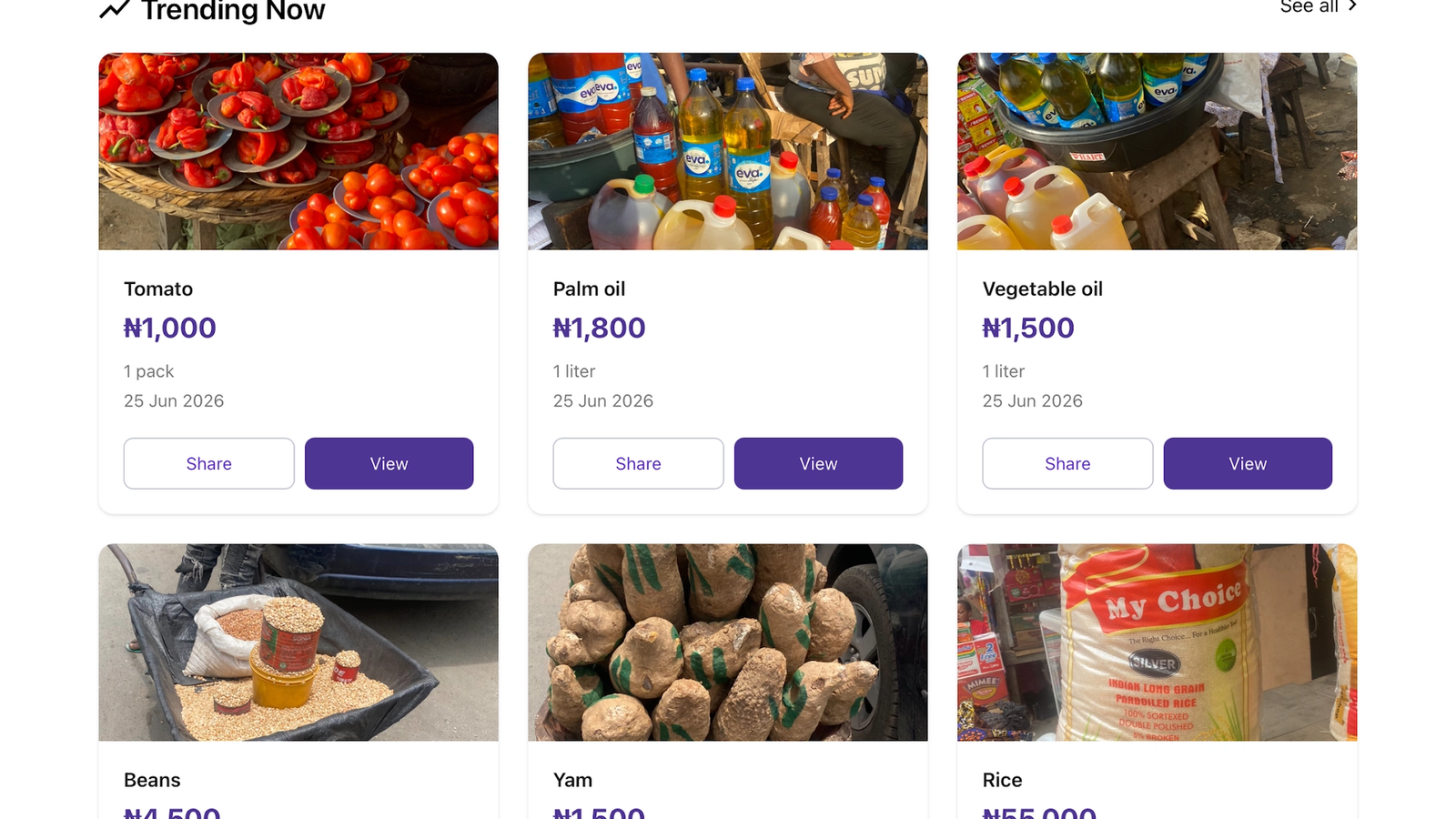
Bango's founders think Nigeria's food prices should be more transparent. For Ademuyiwa Taofeek, one of the co-founders, the moment of realization came during the 2024 Sallah festivities in Lagos. As he shopped for tomatoes and peppers, he noticed that prices were higher than in producing regions like Jos, North-Central Nigeria. When he asked why, he was told it was due to logistics costs, a familiar explanation that sparked curiosity. Taofeek decided to test the assumption, sourcing the same commodities from Jos and transporting them to Lagos, only to find that even after transport costs, he spent less than he would have buying them locally.
This experience made Taofeek believe that consumers have little visibility into what food commodities cost outside the markets closest to them, and that was a problem. He shared his experience with Caleb Adenegan, who would later become his co-founder, and they began discussing how technology could help close that information gap. Before Bango, Adenegan had experimented with building products, including Curri AI and Weeb, a social networking product. Together, Taofeek and Adenegan saw an opportunity to create a platform where buyers could share what they paid for food commodities, where they bought them, and who sold them.
Nigeria's commodity markets are characterized by a lack of fixed prices. Buy a basket of tomatoes from one trader, and the next trader down the line might quote a different price, even if the basket contains the same quantity. This uncertainty can be frustrating for consumers who don't regularly visit markets. The information gap is so significant that even producers like Ademuyiwa Taofeek found it hard to believe that prices were higher in Lagos than in Jos, despite the logistics costs. It's a problem that Bango is trying to solve.
Bango is a community-driven platform launched in November 2025. It operates in Nigeria's food and drink market, which is estimated to reach around $98.97 billion by 2033. The platform allows buyers to share what they paid for food commodities, where they bought them, and who sold them. This information system mirrors how Nigerians have traditionally shared market information, according to Adenegan. Back in the day, the older generation spoke to each other, sharing information about where they got items cheaper. Now, the information system is fractured, leaving room for sellers to quote high prices, and buyers have no option but to buy.
The assumption that logistics costs are the primary reason for price differences between regions is not entirely accurate. Ademuyiwa Taofeek's experience shows that even after transport costs, he spent less than he would have buying commodities locally. This raises questions about the efficiency of Nigeria's logistics system and the potential for price manipulation. Bango's platform could help shed light on these issues, providing a more transparent view of food prices in Nigeria.
Bango's platform has the potential to revolutionize the way Nigerians buy and sell food commodities. By providing a more transparent view of prices, the platform could help consumers make informed decisions and reduce price manipulation. As the platform grows, it could also provide valuable insights into the efficiency of Nigeria's logistics system and the potential for price manipulation. With an estimated market size of $98.97 billion by 2033, Bango's impact could be significant.
In the end, Bango's founders are trying to create a more transparent and equitable food market in Nigeria. They believe that by providing a platform for buyers to share information about prices, they can help reduce price manipulation and make food more affordable for Nigerians. Whether they succeed remains to be seen, but one thing is clear: the stakes are high, and the potential for impact is significant.