Politics
Christian-Christian ticket will win Nigeria's presidency one day: Gov Sule Abdullahi
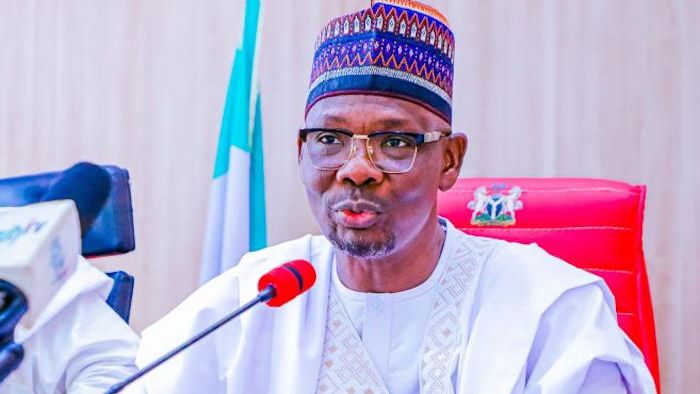
Governor Sule Abdullahi of Nasarawa State has been in the news recently for his unapologetic assertion that a Christian-Christian ticket will eventually win Nigeria's presidency. For the governor, who has been a stalwart of Nigeria's political landscape for decades, this is not just a pipe dream but a prayer he hopes to see answered one day. With his words, Sule has undoubtedly sparked a national conversation about the role of religion in Nigerian politics, a topic that has long been shrouded in controversy.
While Sule's prophecy may seem far-fetched to many, he has cited several instances of successful Muslim-Muslim presidential tickets in Nigeria's history. The governor has pointed to the victories of President Bola Tinubu and Vice-President Kashim Shettima in 2023, as well as the late MKO Abiola and Babagana Kingibe's presidential ticket in 1993, as evidence that a Muslim-Muslim ticket can win elections. With these examples, Sule is trying to make a point about the country's Constitution, which he believes does not require religious balancing in political appointments or electoral tickets.
Sule's argument that the 1999 Constitution focuses on inclusiveness and federal character rather than religion is a crucial one. According to the governor, Sections 14(3) and 15 of the Constitution address equitable representation and ethnicity, but make no provision for religious balancing. This, Sule believes, means that the country's Constitution does not prohibit a Christian-Christian ticket from winning the presidency. While this may seem like a clever legal maneuver, it remains to be seen whether the Constitution's silence on religious balancing will be enough to convince Nigerians that a Christian-Christian ticket is viable.
Sule's prophecy is not just a personal opinion but a reflection of a broader trend in Nigerian politics. The governor's own decision to retain Emmanuel Akabe, a Christian, as deputy governor despite being from a Muslim-dominated state shows that he believes competence, rather than religion, should be the deciding factor in appointments. This is a refreshing take, especially in a country where ethnic and religious considerations often take precedence over merit. As we move forward, it will be interesting to see whether Sule's vision of a Christian-Christian ticket will become a reality, or if it will remain a distant dream.
With his bold prediction, Governor Sule has set the stage for a national conversation about the role of religion in Nigerian politics. Whether or not his prophecy comes to pass, one thing is certain: Sule's vision will continue to shape the debate about the country's future.
As the country moves towards the next presidential election, it will be fascinating to see how Sule's prophecy plays out. Will his vision of a Christian-Christian ticket become a reality, or will it remain a distant dream?