News
Freddie Omany: The French teacher who ended up moving millions of payments
From Farm to Payments: Freddie Omany's Unlikely Journey As we sit on the sidelines of Road to Moonshot in Nairobi, Freddie Omany is a man of few words, but the ones he chooses to share are telling.
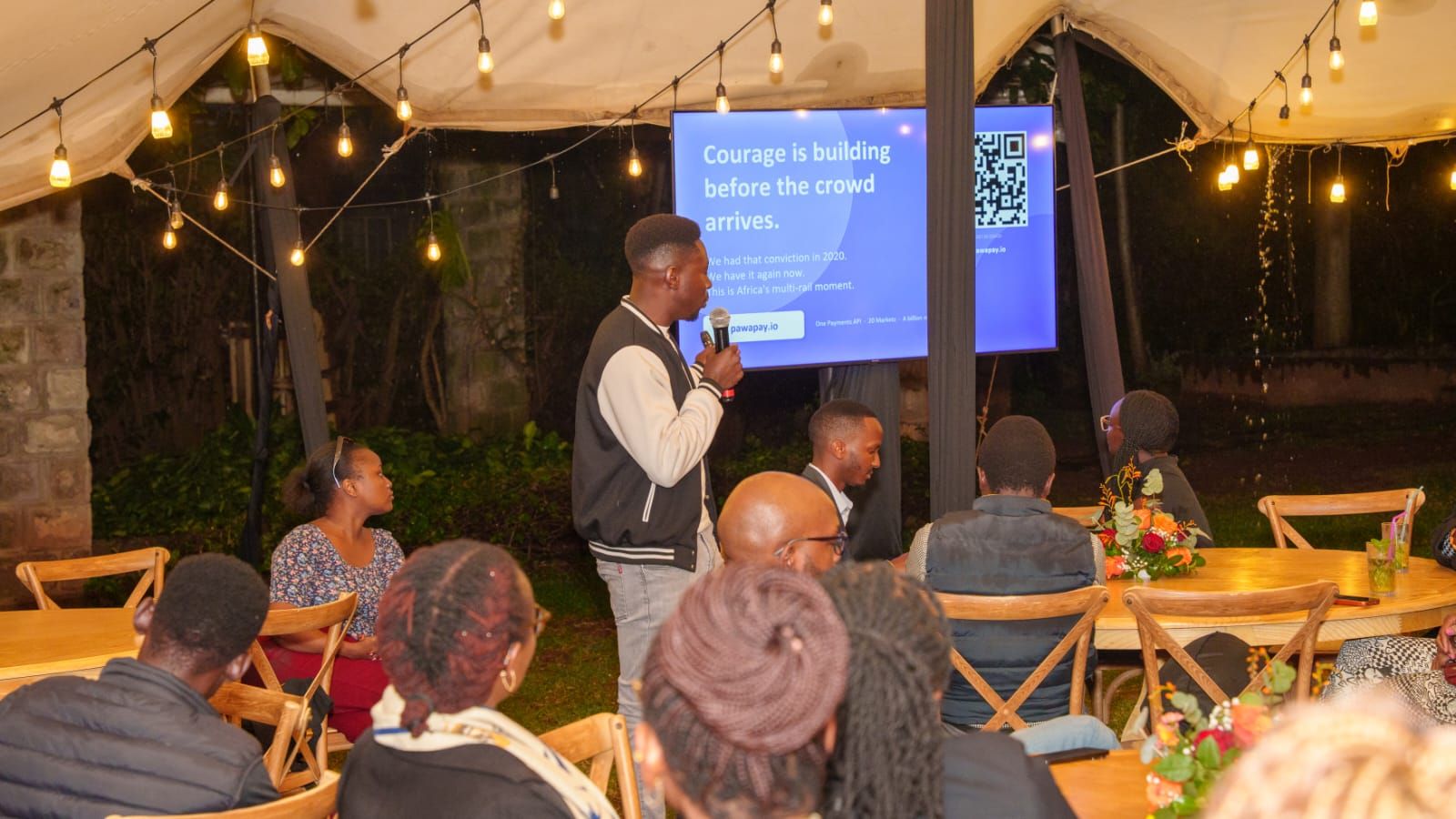
As we sit on the sidelines of Road to Moonshot in Nairobi, Freddie Omany is a man of few words, but the ones he chooses to share are telling. The PawaPay Kenya country director, once a French teacher, translator, and government communicator, now oversees one of Africa's busiest payment networks. But ask him about his past, and he'll tell you that it's not about moving money, it's about moving trust.
Born and raised in Molo, a small agricultural town 250km west of Nairobi, Omany's childhood was a far cry from the fast-paced world of fintech. This is a place where the air is crisp, and people often joke about being able to see their breath in July. Omany's family, like many in Molo, was a normal Kenyan family, nothing dramatic, nothing that would make a good founder origin story. But what they gave him was room to be curious. He was the child who asked why about everything and took things apart to see how they worked.
This curiosity, Omany insists, was the foundation of his future careers. He translates it as moving from a job as a French teacher to translating documents for Booking.com, a digital travel platform, across Francophone Africa. "None of those jobs looked remotely connected at the time," he says. "Looking back, they were all preparing me for the same thing."
As we delve deeper into our conversation, it becomes clear that Omany's approach to business is not like that of many payments executives. While they talk about uptime, transaction values, and APIs, Omany reaches for stories. Ask him about financial inclusion, and he'll tell you about a Bolt driver waiting to pay school fees. Ask about reliability, and he remembers a GiveDirectly recipient whose cash transfer could not afford to fail.
These stories are not just anecdotes; they are evidence of Omany's ability to see the human side of payments. He believes that the most interesting thing about payments is not the technology, but the trust that underpins it. "It's why the best infrastructure is the kind nobody notices," he says.
Omany is part of a generation of Africans who have grown up with mobile money and digital payments. But despite the progress made, he believes that the payments revolution is still unfinished. "We're still far from achieving universal financial inclusion," he says. "There's still a long way to go in terms of accessibility and affordability."
This is a sentiment echoed by many in the fintech industry. Africa has made significant strides in digital payments, but there are still millions of people who lack access to basic financial services. Omany's work at PawaPay is focused on bridging this gap, but he knows that it's a complex problem that requires a multifaceted solution.
As we talk about leadership, Omany quotes a mentor and not a management book. This is a man who believes in learning from experience and the people around him. He talks about the need for a more human approach to leadership, one that prioritizes empathy and trust.
This approach is evident in the way Omany talks about his team at PawaPay. He emphasizes the importance of collaboration and open communication. "We're not just a payment network," he says. "We're a community that's working together to achieve a common goal."
- Freddie Omany was a French teacher and translator before joining PawaPay Kenya as country director.
- PawaPay is one of Africa's busiest payment networks.
- Omany believes that the best infrastructure is the kind that nobody notices.
- He believes that the payments revolution is still unfinished and that there is still a long way to go in terms of universal financial inclusion.
As we wrap up our conversation, it's clear that Freddie Omany's approach to payments is not just about technology; it's about trust and people. He believes that the key to achieving universal financial inclusion lies in creating a system that is transparent, accessible, and affordable. It's a vision that is ambitious, but it's one that Omany is committed to making a reality.
As he leaves, I'm reminded of the curious boy from Molo who took things apart to see how they worked. Today, that curiosity has led him to a career that is changing the face of payments in Africa. It's a journey that is far from over, but one thing is certain, Freddie Omany's approach to trust and payments is a turning point.