News
GoCab deploys 100 electric vehicles in Abidjan as part of Yango's fleet
Abidjan's Electric Revolution: GoCab's Bold Bet on Sustainable Ride-Hailing In the scorching heat of Abidjan, the Ivorian capital, a quiet revolution is unfolding.
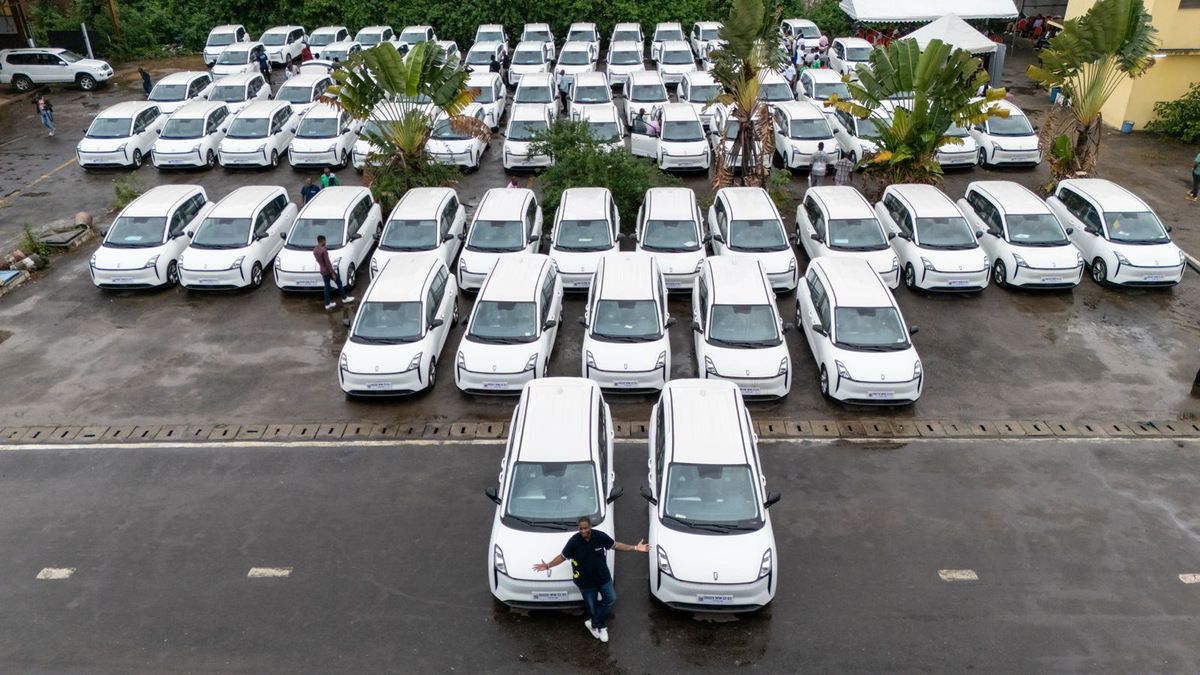
In the scorching heat of Abidjan, the Ivorian capital, a quiet revolution is unfolding. Moulaye Tabouré, the country manager and managing director of GoCab Côte d'Ivoire, is on a mission to transform the daily lives of professional drivers. With the deployment of 100 fully electric vehicles, GoCab, a mobility fintech that operates Yango's largest fleet in Côte d'Ivoire, is handing over a lifeline to these drivers, who have long struggled with the crippling cost of fuel.
Fuel costs are a major headache for drivers working through Yango's platform. Moulaye Tabouré puts it bluntly: "Fuel is not a minor expense. It is one of the highest daily costs of doing business." But with the introduction of electric vehicles, GoCab is offering a radical solution. A full charge costs approximately 8,000 FCFA ($14), which covers up to 470 kilometres, while petrol or diesel vehicles burn through 20,000 to 40,000 FCFA ($35 to $70) to travel the same distance. This translates to a staggering 60% to 80% reduction in energy costs, a turning point for drivers who can now keep between 255,000 and 681,000 FCFA (approximately $444 to $1,186) that would otherwise go to the pump.
GoCab's drive-to-own structure, under which drivers make regular payments from their ride-hailing income over three years, has proven to be a winning formula. Moulaye Tabouré notes that over 300 existing GoCab drivers have already completed over two years in the programme and are expected to begin taking ownership from 2027. This has led to a sharp rise in demand, with drivers clamouring to join the programme. It's a model that bears resemblance to the one used by Moove, a Nigerian mobility fintech that has achieved a $2 billion valuation.
The Abidjan handover is part of a larger strategy by Yango, which plans to invest at least $150 million in African expansion this year. Adeniyi Adebayo, Yango Africa CEO, has revealed that the company is targeting entry into 10 new markets, focusing on secondary cities in West and Central Africa alongside Namibia, Botswana, and Mozambique. This decision reflects Yango's reading of African economies, which suggests that the real growth potential lies in these under-explored markets.
African ride-hailing companies are largely focused on traditional fossil-fuelled vehicles, GoCab's bet on electric vehicles is a contrarian move that's paying off. With its fleet of 100 electric vehicles, the company is leading the charge in a market that's still in its infancy. As the demand for electric vehicles continues to rise, GoCab is poised to reap the rewards of its forward-thinking strategy.
As GoCab continues to deploy more electric vehicles, I predict that we'll see a significant increase in demand for sustainable ride-hailing services across Africa. The cost savings, coupled with the environmental benefits, will make electric vehicles an attractive option for drivers and passengers alike. By 2027, I expect to see at least 50% of Yango's fleet in Côte d'Ivoire to be electric, a milestone that will cement the company's position as a leader in the African ride-hailing market.
In Abidjan, a new era of sustainable ride-hailing is unfolding, one that's driven by the bold bet of GoCab and its partners. As the company continues to expand its fleet of electric vehicles, we can expect to see a ripple effect across the African continent, where the demand for eco-friendly transportation is on the rise.