News
How curiosity took Victoria Abiodun from anatomy to crypto
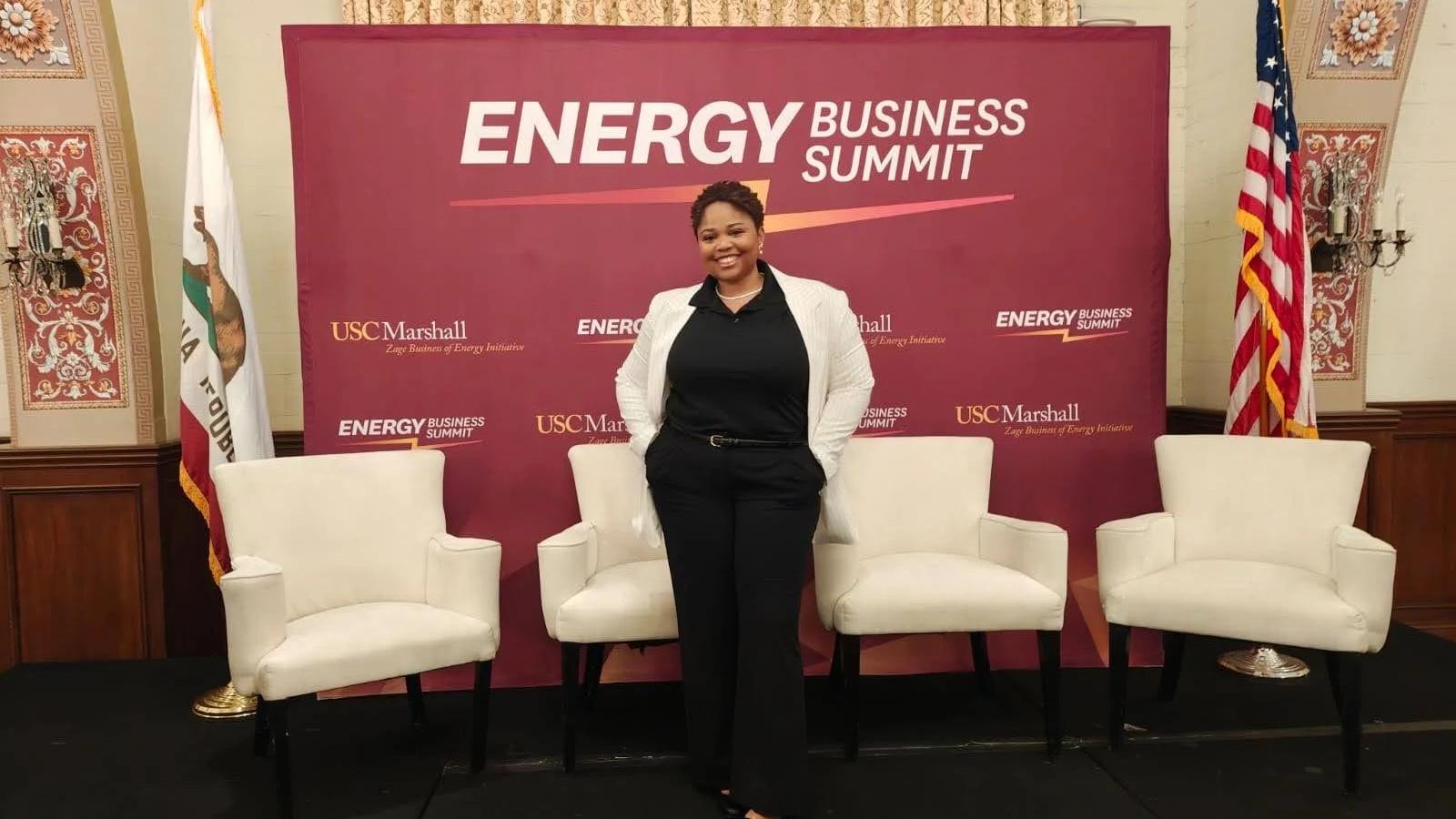
Victoria Abiodun grew up in a household where the microscope was a family heirloom and the next step seemed obvious: finish an anatomy degree at the University of Ilorin, chase a medical career abroad, and leave the world of blood and bone behind. Yet one evening, while the ASUU strike rattled campus and the COVID‑19 lockdown tightened its grip, a classmate’s relentless chatter about blockchain nudged her curiosity into a new direction. The money he was making was the spark, but the real ignition was her decision to translate dense whitepapers into plain English. That single act of demystification set her on a path that would see her ghost‑write technical primers, co‑found a gaming startup, and bootstrap a 100‑strong Solana developer chapter in Ilorin. Today, as she pursues an MBA at USC and researches high‑density energy demand, she is authoring the very book she wished she had read in her first yeara plain‑English guide to distributed technology.
When Victoria first heard about cryptocurrency, she saw it as a scam, a digital mirage that promised quick riches but delivered nothing but fraud. This view was shared by many in Nigeria, where the term “crypto” often conjures images of Nigerian Money‑Laundering schemes and unregulated exchanges. Her friend’s enthusiasm seemed absurd against that backdrop. Yet the money he was making was the first question that broke through her skepticism. It is easy to dismiss blockchain as a buzzword, but when the potential for real economic impact becomes visible, even the most reluctant can’t ignore it. Victoria’s initial misperception was not unique; it was a cultural barrier that many Nigerian technologists still wrestle with today.
The leap from anatomy to blockchain was not a dramatic career pivot but a gradual accumulation of knowledge. Victoria’s scientific training gave her a methodical approach to problem‑solving. When she began writing her own explanations of blockchain concepts, she was not merely translating jargon; she was creating a bridge between the clinical precision of anatomy and the abstract logic of distributed ledgers. This bridge enabled her to ghost‑write technical primers as an undergraduate, a role that sharpened her communication skills and deepened her understanding of the technology’s mechanics. The act of teaching herself became a catalyst for teaching othersa pattern that would define her future endeavors.
Armed with knowledge, Victoria moved beyond writing. She co‑founded a gaming startup that leveraged blockchain for in‑game asset ownership, a venture that highlighted how decentralised technology could empower creators and players alike. Her next move was to spearhead marketing for a European decentralised identity protocol, demonstrating that Nigerian talent could compete on a global stage. But perhaps her most ambitious project was Superteam Ilorin, a regional community that brings together developers and founders deploying on the Solana network. By bootstrapping a 100‑strong chapter, she has turned a city’s curiosity into a tangible ecosystem, proving that decentralised technology can thrive outside the usual tech hubs.
Victoria’s forthcoming book is a direct response to her own early struggles. She realized that the barrier to entry for many Nigerians was not a lack of talent but a lack of accessible explanations. By writing in plain English, she hopes to democratise knowledge and inspire a new generation of builders. This approach is reminiscent of the way the first medical textbooks were written in vernacular languages to reach wider audiences. In a continent where digital literacy is uneven, plain language is not a luxury; it is a necessity.
Given Victoria’s trajectory, it is clear that Web3 education will become a cornerstone of Nigeria’s economic diversification strategy. By 2028, I predict that at least three major Nigerian universities will integrate blockchain modules into their curricula, and local communities will host monthly hackathons that attract international sponsors. Victoria’s work is already a blueprint for how to turn curiosity into scalable impact.
The story is not just about one woman’s career shift; it is about a generation of Nigerian youth who can no longer afford to be passive observers. The pandemic and political unrest have exposed the fragility of traditional career paths. Those who, like Victoria, can translate curiosity into skill sets will shape the next wave of innovation. No longer whether blockchain will change the world, but whether Nigerian creators will harness it to solve local problems.
In the end, Victoria Abiodun’s journey from anatomy to Web3 is evidence of the power of curiosity and the importance of accessible knowledge. Her book, her community, and her startups are all pieces of a larger puzzle: a future where Nigerian talent leads the decentralised revolution.