News
Osas Ighodaro Looks Like a Work of Art in This Blue Mosaic Gown by House of Marvee
Osas Ighodaro stepped onto the gallery floor in a garment that feels less like a dress and more like a living canvas.
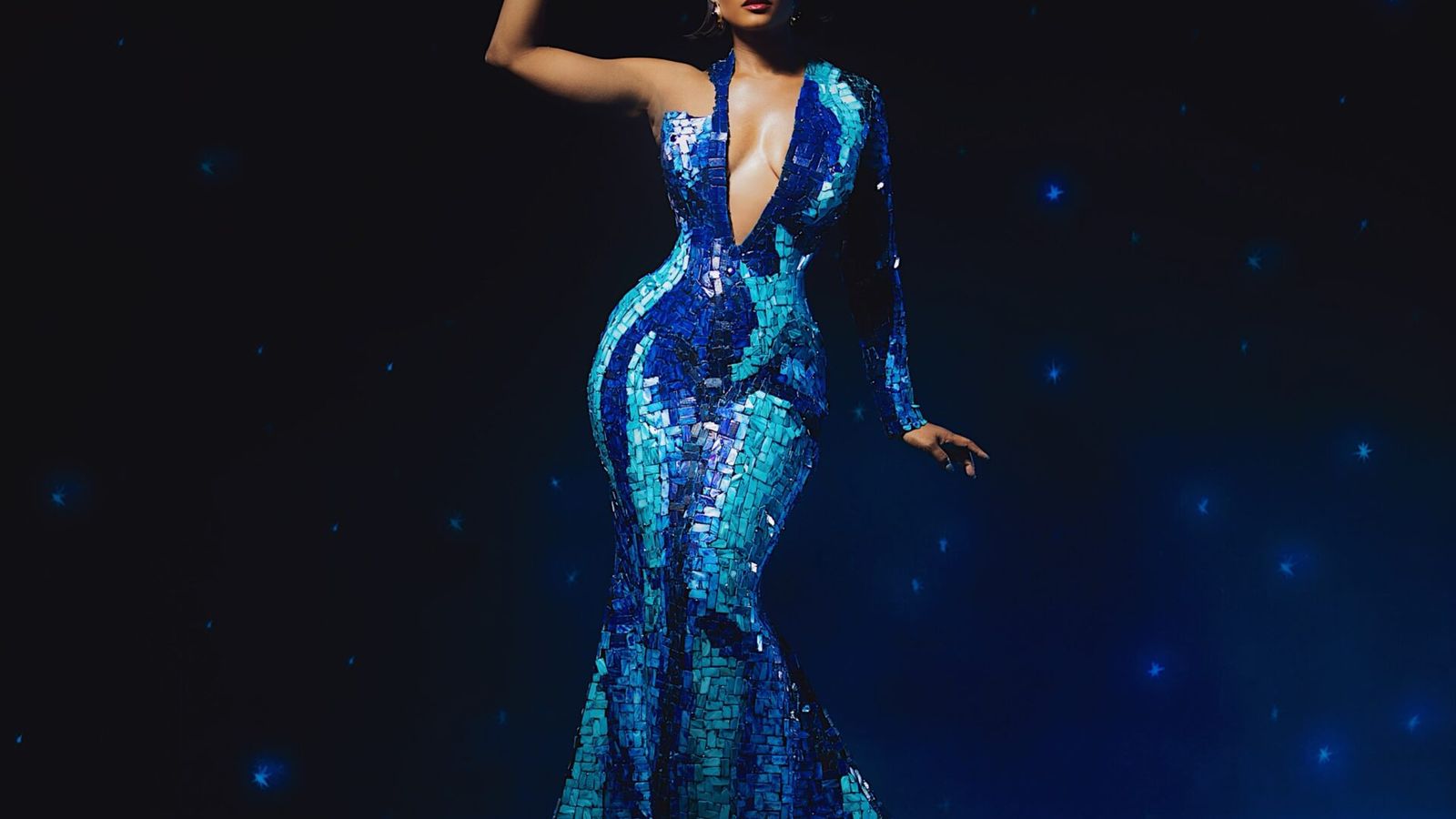
Osas Ighodaro stepped onto the gallery floor in a garment that feels less like a dress and more like a living canvas. The custom House of Marvee blue mosaic gown, with its hand‑painted mother‑of‑pearl tiles and thermal‑mapping inspired palette, turns a familiar celebrity look into a statement about how fashion can translate art into wearable form. For the Nigerian‑American actor, host and producer, this isn’t just a new outfit; it’s a declaration that style can be a medium for cultural dialogue.
The design team behind the gown didn’t merely choose a shade of blue; they mapped the human form. By layering deeper ocean hues against brighter turquoise, the garment follows the curves of Osas’s body, creating a dynamic play of light and shadow. This technique, borrowed from scientific imaging, gives the dress an almost kinetic quality. It’s a reminder that African designers are no longer content with surface aesthetics; they’re experimenting with data, science, and technology to make garments that respond to the wearer.
Hand‑painted mother‑of‑pearl tiles are not a random embellishment; they echo the intricate beadwork of West African textiles. Yet the way House of Marvee arranges themcreating a mosaic that shifts across the fabricsignals a forward‑looking approach. The texture is tactile, the color gradient fluid, and the result is a garment that feels both rooted and contemporary. It challenges the stereotype that African fashion is stuck in tradition; instead, it shows how heritage can be reimagined through modern techniques.
The asymmetrical one‑shoulder silhouette gives the gown a sculptural edge. One arm is wrapped in a long sleeve, the other bare, a contrast that highlights the garment’s complexity while keeping the focus on the body’s natural lines. This design choice reflects a broader trend in Nigerian fashion: mixing bold structural elements with graceful femininity. It also signals that African designers are comfortable with visual disruption, refusing to let their work fit into a single, predictable mold.
Osas keeps her accessories minimalgold hoop earrings and a simple finger wave hairstyle. This restraint lets the gown’s intricate details command attention. It’s a strategic move that underscores a key lesson for aspirants: sometimes, less is more. By allowing the garment to shine, the designer and the wearer demonstrate confidence in their craft.
Positioning the look in an art gallery space elevates the gown from runway to exhibit. It invites viewers to linger, to study the interplay of color and texture. This choice blurs the line between fashion show and museum display, suggesting that African designers are ready to claim spaces traditionally dominated by Western art. The gallery backdrop also hints at the growing appetite for African aesthetics in global cultural venues.
If this collaboration proves any indicator, we will see more designers adopting thermal‑mapping and mosaic techniques. By 2028, I expect to see a wave of Nigerian and African brands releasing collections that fuse data science with artisanal craft, pushing the boundaries of what a garment can represent.
In a world where celebrity fashion often feels disposable, Osas Ighodaro’s blue mosaic gown reminds us that style can be a conversation starter, a cultural bridge, and a work of art all at once. The next time a designer claims innovation, ask yourself: are they truly weaving new threads into the fabric of fashion, or merely re‑painting the same old canvas?