News
Sarah Okeseni: What Travelling as a Flight Attendant Has Taught Me
The Journeys Within As I boarded the plane, I noticed a flight attendant in a purple uniform, her eyes scanning the cabin with a warm smile.
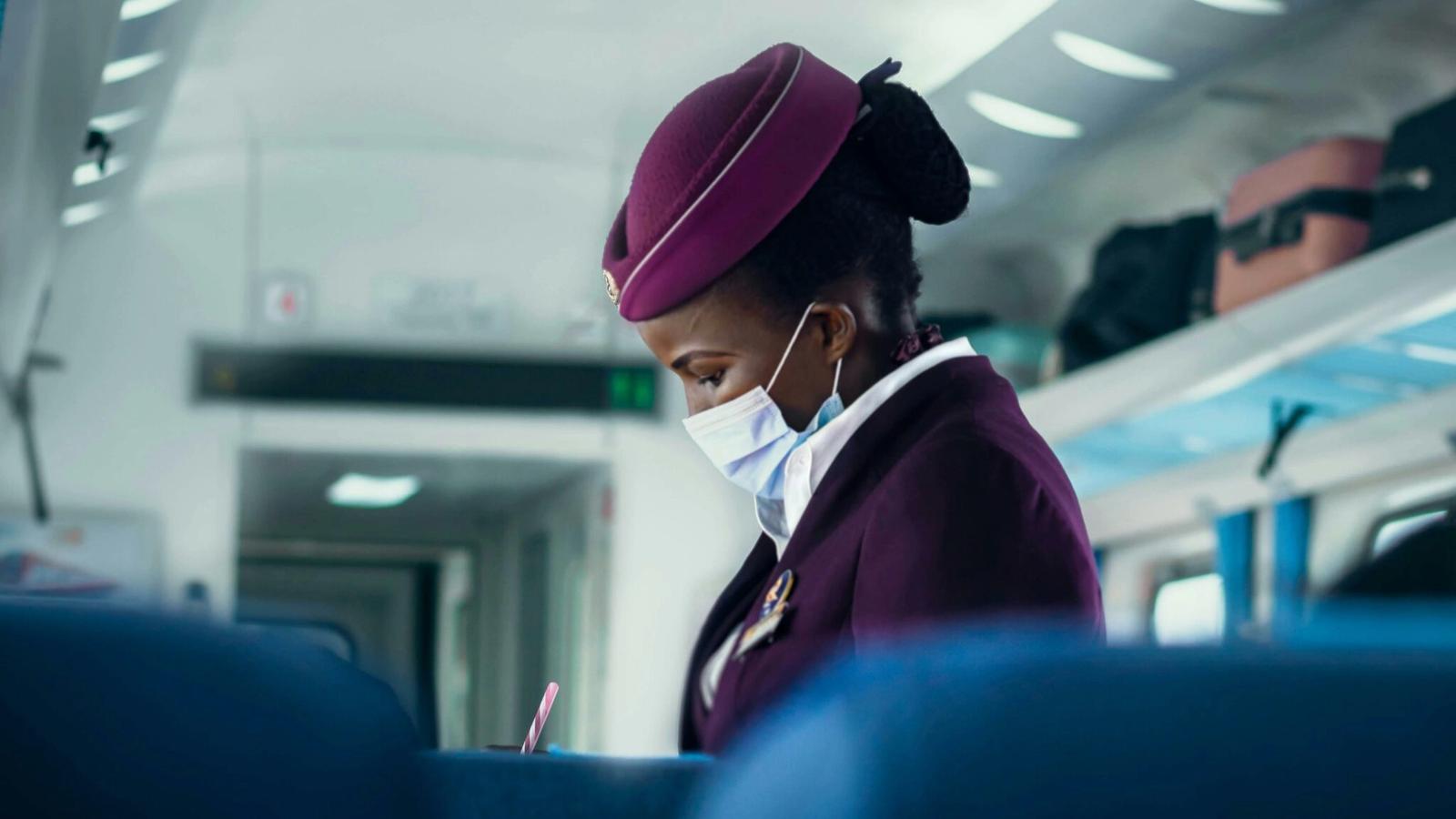
As I boarded the plane, I noticed a flight attendant in a purple uniform, her eyes scanning the cabin with a warm smile. She was attending to passengers with a sense of care, a kindness that transcended languages. Her name was Sarah Okeseni, a flight attendant who had learned to navigate the complexities of human emotions. For her, every boarding pass carried two journeys: the obvious one, a trip from one country to another, and the other, a journey within, unseen.
As Sarah herself noted, she had watched newlyweds hold hands with excitement as they began a new chapter, students leave home for the first time with dreams bigger than their luggage, parents wipe away tears after saying goodbye to children leaving for university abroad, and business travellers carrying laptops and deadlines. Each flight reminded her that people are constantly becoming. Travel has a way of stripping away the illusion that your own world is the only world.
Growing up, you inherit a certain way of thinking, a set of traditions, expectations, and habits that feel completely normal. But then you travel, and breakfast looks different, people greet strangers differently, time moves differently, and success is defined differently. Sarah realised that there isn't only one correct way to live. That realisation is both beautiful and humbling. She recalled watching passengers look out of the aircraft window just before takeoff, for a few seconds, everyone becomes quiet, regardless of their background or status. The moment the aircraft lifts off the runway, everyone shares the same space, the same sense of wonder.
As cabin crew, Sarah has also learned that kindness speaks every language. I've served passengers who didn't understand a word of English, yet gratitude was obvious in their smile. She has comforted nervous flyers without speaking much at all. Sarah discovered that compassion often needs fewer words than we imagine. Travel teaches you to communicate beyond language. It teaches patience when flights are delayed, resilience when plans change, and flexibility because sometimes the best memories are the ones you never planned.
Perhaps that's why frequent travellers begin to worry less about controlling every detail. They learn to adapt. And adaptation is one of life's greatest skills. Travel has also taught Sarah something unexpected about home. The farther you go, the more clearly you see where you come from. She found herself missing Nigerian laughter in foreign airports and searching for the taste of jollof after days away.
As I reflected on Sarah's story, I couldn't help but think about the power of travel to transform our perspectives. When we venture out of our comfort zones, we are forced to adapt, to be flexible, and to communicate beyond language. We begin to see that there isn't only one correct way to live, that success is defined differently, and that time moves differently. The sky has a way of making us equal, as Sarah so aptly put it.
As a writer, I've seen this phenomenon play out in the stories of countless individuals who have traveled the world. Their experiences have changed them, broadened their horizons, and given them a new appreciation for the world around them. Sarah's story is evidence of this power of travel, a reminder that even in the midst of chaos, kindness and compassion can speak every language.
As Sarah searched for the taste of jollof in foreign airports, I couldn't help but think about the significance of home. For many of us, home is where the heart is, where our traditions, expectations, and habits are formed. But what happens when we leave home, when we travel to new and unfamiliar places? Do we lose our sense of identity, or do we discover new aspects of ourselves?
For Sarah, the farther she goes, the more clearly she sees where she comes from. Her experience is a reminder that home is not just a physical place, but also a sense of belonging, a connection to our roots and our culture. As we navigate the complexities of the world, let us hold onto this sense of home, this sense of identity, and let us strive to be kind, compassionate, and understanding of others.
Sarah Okeseni's story leaves me with a sense of awe and respect for the power of travel to transform our perspectives and broaden our horizons. As I conclude this piece, I am reminded that even in the midst of chaos, kindness and compassion can speak every language, and that adaptation is one of life's greatest skills.