Reality Tv
Saskay Celebrates Master's Degree From VUB Brussels School of Governance in Hertunba | See Photos
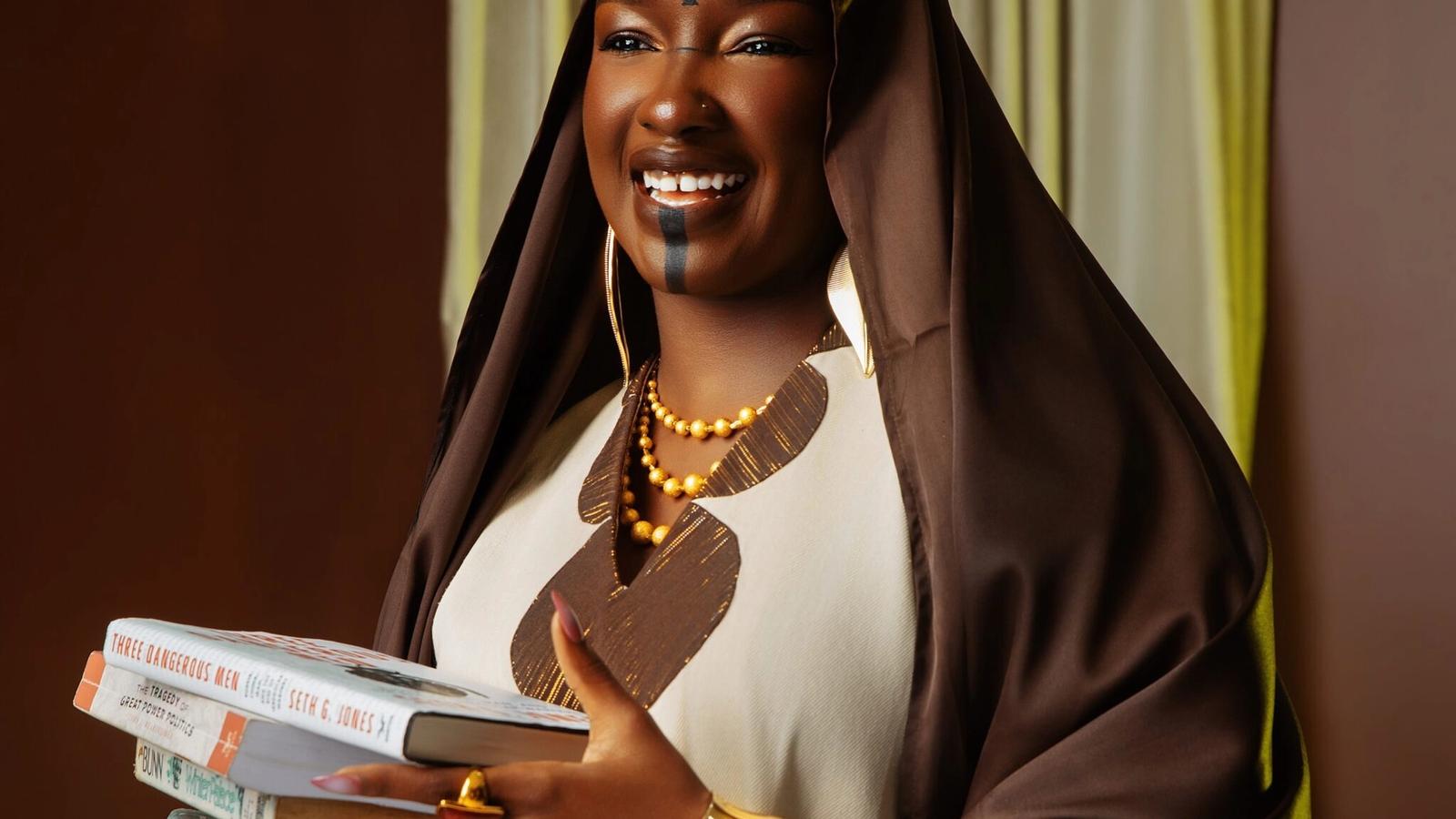
Saskay, the Big Brother Naija star whose real name is Tsakute Ladi Jonah, just walked across the stage of the VUB Brussels School of Governance and walked out of the world of academia in a flowing, 100 % cotton kaftan. The moment was a burst of color and heritage, a sharp counter‑point to the white‑suit tradition that usually dominates graduation photos. She had planned a sleek suit, but a designer emergency forced a pivot. In that pivot, a conversation about cultural identity and academic success was born. The photo shoot captured her in the Nola Kaftan by Hertunba, a garment that feels like a passport to her roots while still proclaiming her scholarly triumph.
Look, when a Nigerian star turns her graduation into a runway show, it’s not just about style; it’s about narrative. The Nola Kaftan is more than fabric; it’s a story stitched with palm trees, birds, and dwellings that echo a small girl growing up in a big village. Those motifs weave a metaphorical tapestry that speaks to Saskay’s journey from the streets of Accra to the lecture halls of Brussels. The kaftan’s generous silhouette, fluid sleeves, and open drape, paired with a chocolate‑brown silk veil, give the portrait a timeless, almost mythic quality. She also added traditional facial arttriangle on the forehead, a line across the nose, and a vertical line from the lower lip to the chinfurther grounding the image in African aesthetic traditions. This is not a throwback; it’s a bold statement that academic excellence can be celebrated in any language of dress.
Here’s the thing: the original suit plan was a nod to the Western academic norm, a sartorial shorthand for “I’m serious about my degree.” But when the designer couldn’t deliver, Saskay turned that setback into an opportunity to ask why we equate success with a suit. She reflected on the cultural weight of Western attire in academia, questioning whether it’s the right lens through which to view intellectual achievement. By choosing a kaftan, she challenged that lens and opened the door for other scholars to rethink what “professional” looks like. The change also highlighted the resilience of creators who adapt on the flysomething that resonates with the maker culture we love to follow.
The Nola Kaftan isn’t just a garment; it’s a narrative device. Each motifpalm trees, birds, dwellingsrepresents stages of growth, freedom, and home. For Saskay, who earned a Master of Arts in Global Security and Strategy, the kaftan’s motifs parallel her academic journey: navigating complex geopolitical landscapes (birds), grounding herself in her origins (palm trees), and building a stable future (dwellings). The off‑white and cream tones suggest purity and ambition, while the silk veil adds a layer of elegance and protection. Together, they create a visual metaphor for a scholar who carries her heritage into the global arena.
Saskay’s graduation photos do more than showcase a degree; they spark a dialogue about how we celebrate knowledge. She turned a potential wardrobe crisis into a cultural statement, proving that academic milestones canand shouldbe personalized. The image reminds us that success is not a one‑size‑fits‑all garment. Instead, it’s a collage of experiences, identities, and aspirations. For creators and scholars alike, this moment is a call to dress for the stories we want to tell, not the expectations we’re told to meet.
The photos, now circulating across social media, are evidence of Saskay’s determination and her willingness to blend academia with artistry. She has shown that a master’s degree can be as vibrant and authentic as the person who earned it, and that the world of global security and strategy is enriched by diverse perspectives and expressions.