Sports
UEFA reacts to FIFA's decision to rescind Florian Balogun's red card
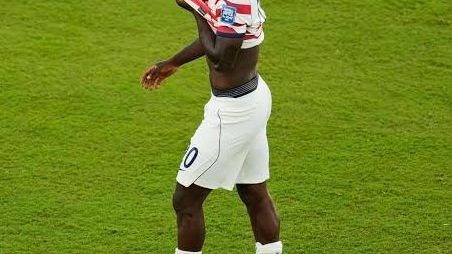
For Folarin Balogun, the decision by FIFA to rescind his automatic one-match ban after being red-carded in the 2026 FIFA World Cup may seem like a reprieve, but it also raises serious concerns about the integrity of the game. As a rising star in the English Premier League, Balogun's career is at a critical juncture, and this development could have far-reaching implications for his future in the sport. The 21-year-old striker's journey has been marked by both promise and controversy, and this latest twist only adds to the narrative.
UEFA's strongly worded statement condemning FIFA's decision highlights the significance of the issue. According to UEFA, the move sets a "dangerous precedent" that threatens the credibility and fairness of the competition. The European governing body is not mincing words, emphasizing that the automatic suspension following a red card is a fundamental rule that should not be subject to discretionary exceptions. This stance underscores the tension between FIFA's desire to protect players and its responsibility to uphold the Laws of the Game. The numbers tell a story: in the 2026 FIFA World Cup, a total of 15 red cards have been issued, with five players receiving automatic suspensions. Balogun's case is the first high-profile instance where FIFA has chosen to rescind the ban, sparking widespread criticism and debate.
The debate surrounding red cards and suspensions is not new, but FIFA's decision has injected fresh oxygen into the discussion. UEFA's warning that the ruling creates a precedent that could undermine consistent application of the Laws of the Game highlights the politics at play. The governing body's emphasis on upholding the integrity of the game reflects its concern that FIFA's move could lead to a slippery slope, where disciplinary decisions are influenced by external factors rather than the rules themselves. This is not a trivial matter; red cards and suspensions have a direct impact on players' careers, team dynamics, and the overall outcome of the tournament.
In the grand scheme of things, UEFA's stance on this issue is a symptom of a deeper power struggle between the European and global governing bodies. As FIFA continues to navigate the complexities of modern football, its decisions will inevitably have far-reaching consequences for the sport as a whole. The UEFA-FIFA dynamic is a delicate one, with both organizations vying for influence and control. In this context, the Balogun case is a test of FIFA's willingness to uphold its rules and maintain the integrity of the game. If FIFA's decision is seen as a concession to external pressure, it could undermine its credibility and erode trust among stakeholders.
As I see it, this development will have a ripple effect on the sport, with teams and players alike beginning to question the consistency of disciplinary decisions. The fact that FIFA has chosen to rescind Balogun's ban sets a precedent that could be exploited by other players or teams in the future. In the short term, this may seem like a victory for Balogun, but in the long run, it could have unintended consequences for the sport as a whole.
In the coming weeks and months, we can expect to see a more nuanced debate about the role of red cards and suspensions in football. With UEFA's stance and FIFA's decision setting the tone, the conversation will undoubtedly heat up. As the sport continues to evolve, one thing is certain: the Balogun case is a harbinger of things to come, and the consequences will be far-reaching.