News
Wahala App thinks public safety deserves its own app
If you're Nigerian and active on social media, chances are your feed has been flooded with distress calls, warnings, and pleas for help amidst the chaos of floodwaters, election violence, car accidents, and infrastructure failures. For many, social media has become the de facto public alert system, with users sharing real-time updates and warnings to avoid danger zones. But what if this instinct could be harnessed into a dedicated platform, where people could report and receive alerts on public safety incidents in real-time? That's the vision of Orieke Agholor, Adetunji Adewoye, and Kosi Kabiri, the young Nigerian founders of the Wahala App, launched in April 2026.
The Wahala App is part of a growing crop of civic technology platforms that aim to tackle public-facing problems using software. Alongside Citizens' Gavel, which improves access to justice, and Tracka, which helps communities monitor public projects, the Wahala App is betting on the power of public incident reporting to enhance public safety. By providing a dedicated platform for users to report and receive real-time alerts on incidents such as robberies, fire incidents, road accidents, and infrastructure failures, the Wahala App seeks to empower Nigerians to take control of their safety.
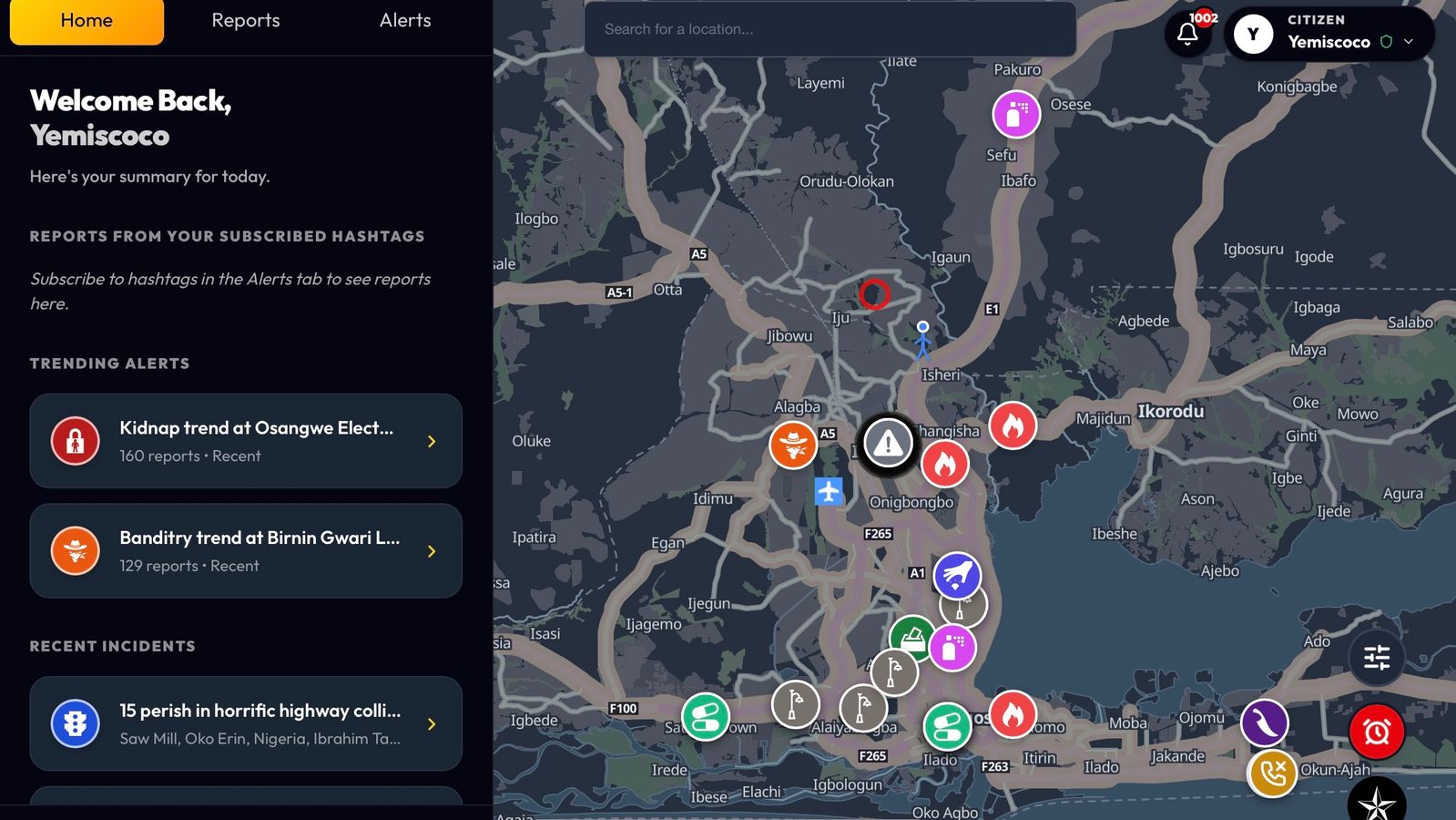
The app's live incident map displays reported incidents as scattered pins, which users can filter by distance or timeframe. According to the founders, users can narrow their view to incidents within a 1km radius or expand it to incidents across the country. When a user creates a report, people within a 1km or 5km radius receive real-time alerts, allowing them to avoid danger zones. The platform generates reports from two sources: user-submitted reports, which include photos, videos, and descriptions of incidents, and the Wahala AI, which analyzes data to identify potential incidents.
While the Wahala App offers a vital tool for public safety, it also raises questions about the role of the public in reporting incidents. In Nigeria, social media has often been criticized for spreading misinformation and panic. Will the Wahala App's real-time incident map exacerbate these issues, or will it provide a much-needed platform for verified information to circulate? The founders believe that by harnessing the public's instinct to report and share information, they can create a more informed and responsive community.
The Wahala App's success will depend on its ability to balance the need for real-time information with the risk of misinformation. If it can achieve this balance, it may usher in a new era of public safety in Nigeria, where citizens are empowered to take control of their own safety and hold those in power accountable. As the app continues to grow and evolve, one thing is certain: the future of public safety in Nigeria has never looked more uncertain, and more exciting.
The Wahala App is set to launch a pilot project in Lagos, which will test the platform's capabilities and gather feedback from users. If successful, the app may expand to other cities and states across Nigeria, providing a much-needed tool for public safety in the country.