Politics
Why I dumped Abacha's transition programme: Gen. Abdulsalami
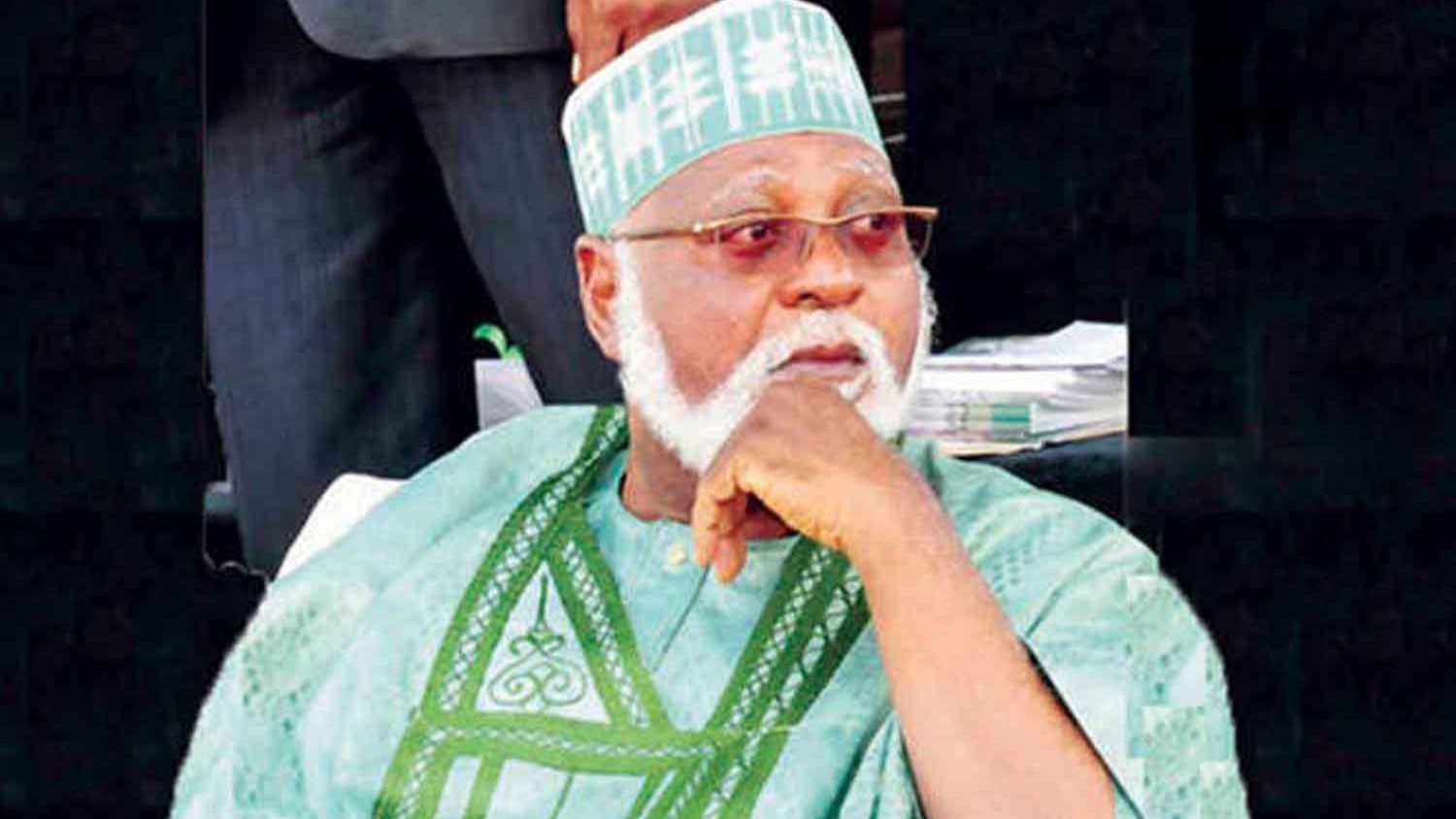
General Abdulsalami Abubakar, a man who played a pivotal role in Nigeria's transition from military rule to democracy, has shared a candid account of his decision to abandon the late General Sani Abacha's transition programme. At 84, the former Military Head of State has written an autobiography that offers a unique perspective on the country's tumultuous past. According to Abubakar, he had no interest in politics, but circumstances forced him to take the reins after Abacha's death on 8 June 1998. The stakes were high, with the country's future hanging in the balance.
Abubakar's decision to dump the transition programme was not taken lightly. He had inherited a system that lacked credibility, with the military not ready to cede power to civilians. The situation was precarious, with no clear path forward. Abacha had announced a transition to democracy by 1 October 1998, but the process was riddled with flaws. Legislative elections had been held, but governorship elections were yet to take place, and the presidential elections were shrouded in uncertainty. To make matters worse, all five political parties had adopted Abacha as their joint presidential candidate, a move that raised eyebrows. Abubakar's assessment of the situation was stark: "The Abacha transition programme obviously lacked credibility."
The National Democratic Coalition (NADECO), a group committed to democracy, lobbied Abubakar to extend the transition programme. However, the former Head of State remained resolute in his decision to abandon the programme. In his autobiography, Abubakar reveals that he consulted widely with civilians and within the military before making his decision. The outcome was a six-month transition plan, which would have seen Nigeria hand over to a democratically elected president by March 1999. However, this timeline was soon revised, with the judiciary requesting an additional 60 days to ensure that all judicial matters were dispensed with before inauguration.
Abubakar's decision to dump the transition programme was also influenced by the military's reluctance to cede power to civilians. He reveals that some military officers were opposed to handing over power, a sentiment that was palpable within the echelons of the military. This reluctance was a major obstacle to the transition process, and Abubakar's decision to abandon the programme was, in part, a response to this challenge.
The outcome of Abubakar's consultations was a new timeline for the transition process. With the judiciary's request for additional time, the transition process was revised to ensure that elections could be held within a reasonable timeframe. The result was a new handover date of May 1999, a decision that marked a significant shift in Nigeria's transition to democracy.
In the years since, Nigeria has made significant progress in its democratic journey. However, the country still grapples with the challenges of transitioning from military rule to democracy. Abubakar's account offers a unique perspective on this process, highlighting the complexities and obstacles that were faced. As Nigeria looks to the future, it is essential that the country learns from its past, and Abubakar's autobiography provides a valuable insight into the country's tumultuous history.
In the end, Abubakar's decision to dump Abacha's transition programme was a notable step that paved the way for Nigeria's transition to democracy. While the country still faces many challenges, the progress made since 1999 is evidence of the resilience and determination of the Nigerian people.