News
Google's Intelligent Eyewear vs Ray-Ban Meta glasses: Key differences explained
The Battle for Eyewear Supremacy In a crowded market where innovation is key, Google and Meta are locked in a fierce battle for dominance intelligent eyewear.
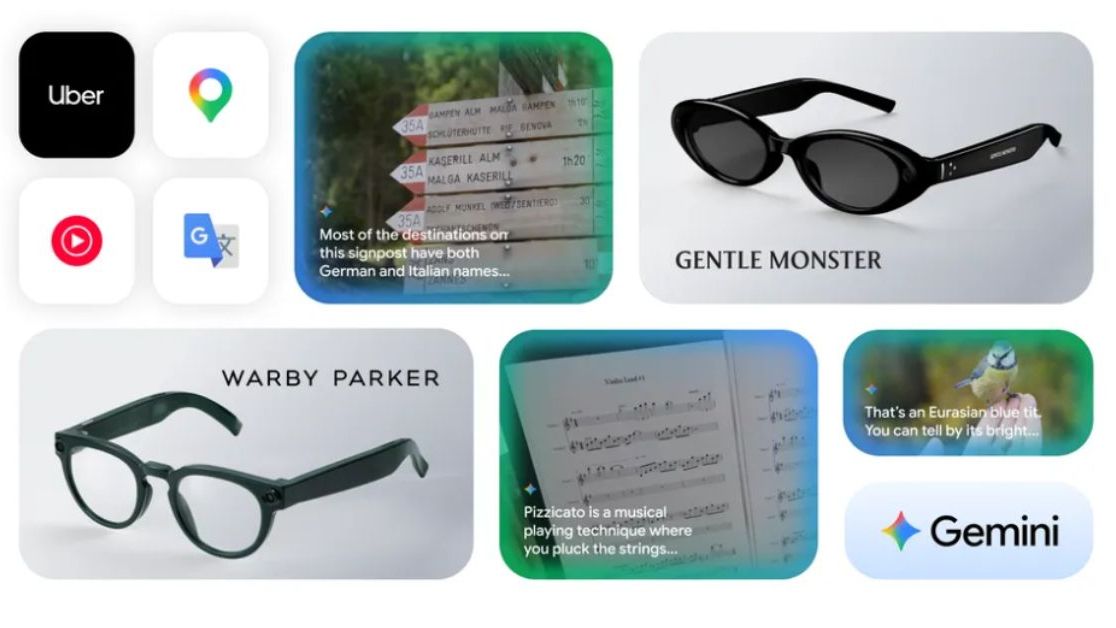
In a crowded market where innovation is key, Google and Meta are locked in a fierce battle for dominance intelligent eyewear. For Meta, it's a story of early mover advantage, with their Ray-Ban Display glasses already making waves in the market. But Google is not one to be left behind, and their Intelligent Eyewear line, built in partnership with Samsung, is set to give Meta a run for their money. As the smart glasses market continues to grow, with over seven million AI glasses sold in 2025, which is worth your money?
Google's foray into the world of intelligent eyewear is a significant milestone in the evolution of smart glasses. At I/O 2026, the tech giant unveiled its plans for a new category of eyewear, which they've dubbed "intelligent eyewear" rather than smart glasses. This shift in terminology reflects the company's vision for a more seamless and intuitive experience, where users can access information and perform tasks with ease. The Intelligent Eyewear line consists of two types of glasses: audio glasses and display glasses. The audio glasses, which feature built-in microphones and over-ear speakers, are set to launch in September 2026, while the display glasses will show information in the lens when needed.
Google's Intelligent Eyewear is built on Android extended reality (Android XR), a platform developed in partnership with Samsung and Qualcomm. This collaboration has enabled Google to create a robust and feature-rich platform that can support a wide range of applications. Both the audio and display glasses run on Gemini, Google's artificial intelligence (AI) assistant, which allows users to activate the assistant by saying "Hey Google" or tapping the frame. The hardware is powered by Gemini 2.5 Pro, paired with the Project Astra vision system, which enables real-time object recognition and contextual memory.
One of the notable differences between Google's Intelligent Eyewear and Meta's Ray-Ban Display glasses is the approach to design. While Meta opted for a tech-first aesthetic, Google has chosen to partner with eyewear brands Gentle Monster and Warby Parker, known for their design credentials. This decision reflects Google's focus on creating a product that is both functional and stylish. As the market for intelligent eyewear continues to grow, it's clear that design will play a crucial role in determining which products succeed.
Meta's Ray-Ban Display glasses, launched in September 2025, are a formidable opponent intelligent eyewear. Priced at $799, the glasses feature a 600 by 600 pixel monocular display in the right lens, offering a 20-degree field of view at 42 pixels per degree. The glasses are controlled largely through the wrist, using the Meta Neural Band to read electrical signals from the wearer's wrist muscles. This unique approach allows users to scroll, select, and type using subtle movements of their wrist.
As the battle for eyewear supremacy continues, one thing is clear: the future of intelligent eyewear is bright. With Google and Meta pushing the boundaries of innovation, it's an exciting time for consumers who are looking for a product that is both functional and stylish. As a writer, I'm intrigued by the potential of intelligent eyewear to revolutionize the way we interact with information. With the market growing at an unprecedented rate, it's clear that this is a space to watch in the coming years.
In the end, the choice between Google's Intelligent Eyewear and Meta's Ray-Ban Display glasses will come down to personal preference. But one thing is certain: the future of intelligent eyewear is here, and it's only going to get better.