Politics
Live Elections Updates: Oyebanji wins ADC candidate Bejide's ward in Ekiti
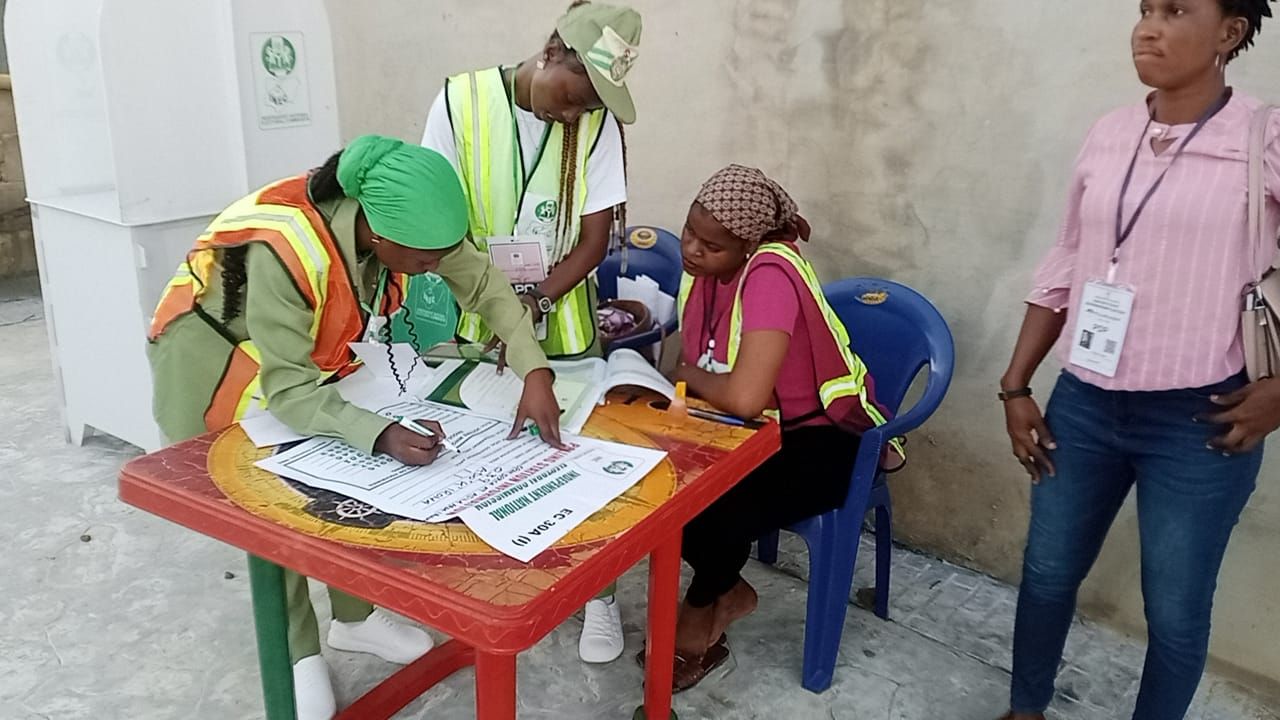
In a stark reminder that politics often trumps personal relationships, Ambassador Dare Bejide, the African Democratic Congress (ADC) governorship candidate, has lost his polling unit and ward to Governor Biodun Oyebanji of the All Progressives Congress (APC) in the ongoing Ekiti State governorship election. Bejide, a respected figure in his community, shares the area with IT expert and politician Makinde Araoye. The results from Polling Unit 004, Ward 2, which Bejide calls home, showed Oyebanji polling 140 votes, while Bejide scored 37 votes, with the Peoples Democratic Party (PDP) recording a paltry 2 votes. It's a resounding defeat for Bejide, who must now confront the harsh realities of politics in Ekiti.
The numbers speak for themselves. In a community where Bejide has deep roots, Oyebanji's victory is evidence of the latter's broader appeal in the state. Bejide's 37 votes, while respectable, pale in comparison to Oyebanji's 140 votes. It's a margin that highlights the yawning chasm between the two candidates in terms of voter support. The PDP's meager 2 votes only underscores the party's struggles in the state. These numbers will undoubtedly be scrutinized by Bejide's team as they seek to understand the factors that contributed to their candidate's defeat.
Bejide's defeat is a personal blow, not just for him, but also for those who have invested their hopes and aspirations in his candidacy. As a respected figure in his community, Bejide's loss will undoubtedly be felt deeply by those who have come to regard him as a leader. The sting of defeat will be particularly painful for Bejide, who has been an advocate for good governance and people-centered politics in Ekiti. His loss will undoubtedly raise questions about the viability of the ADC in the state, and whether the party has the capacity to mount a credible challenge to the APC.
The loss of Bejide's ward to Oyebanji is also a reminder of the broader trends shaping the Nigerian electoral landscape. The APC's dominance in Ekiti is a reflection of the party's stranglehold on power in the state. The PDP's struggles in the state, meanwhile, underscore the party's woes in the region. These trends are reflective of the broader dynamics at play in the Nigerian electoral system, where the APC has emerged as the dominant force. This trend is unlikely to change anytime soon, and it remains to be seen whether the PDP and other opposition parties will be able to mount a credible challenge to the APC's dominance.
In the short term, Oyebanji's victory is a boost to the APC's fortunes in Ekiti. The APC's dominance in the state is likely to be cemented, at least for the foreseeable future. However, the loss of Bejide's ward is also a reminder that the opposition parties in Nigeria are far from defeated. The ADC's strong showing in other parts of the state suggests that the party remains. I predict that the ADC will regroup and reassess its strategy, with a view to mounting a stronger challenge to the APC in future elections.
In the end, Bejide's defeat is a reminder that politics is a brutal business, where the stakes are high and the margin for error is low. While Oyebanji's victory is a significant boost to the APC's fortunes in Ekiti, it is also a sobering reminder of the challenges that lie ahead for the party. As the dust settles on this election, it remains to be seen whether the APC will be able to sustain its dominance in the state, or whether the opposition parties will be able to mount a credible challenge to its power.