Politics
MKO Abiola died of heart attack, not poison: Gen. Abubakar
The Autopsy Report That Changed the Narrative For General Abdulsalami Abubakar, the revelation that MKO Abiola died of a heart attack, not poison, as widely speculated, is a vindication of sorts.
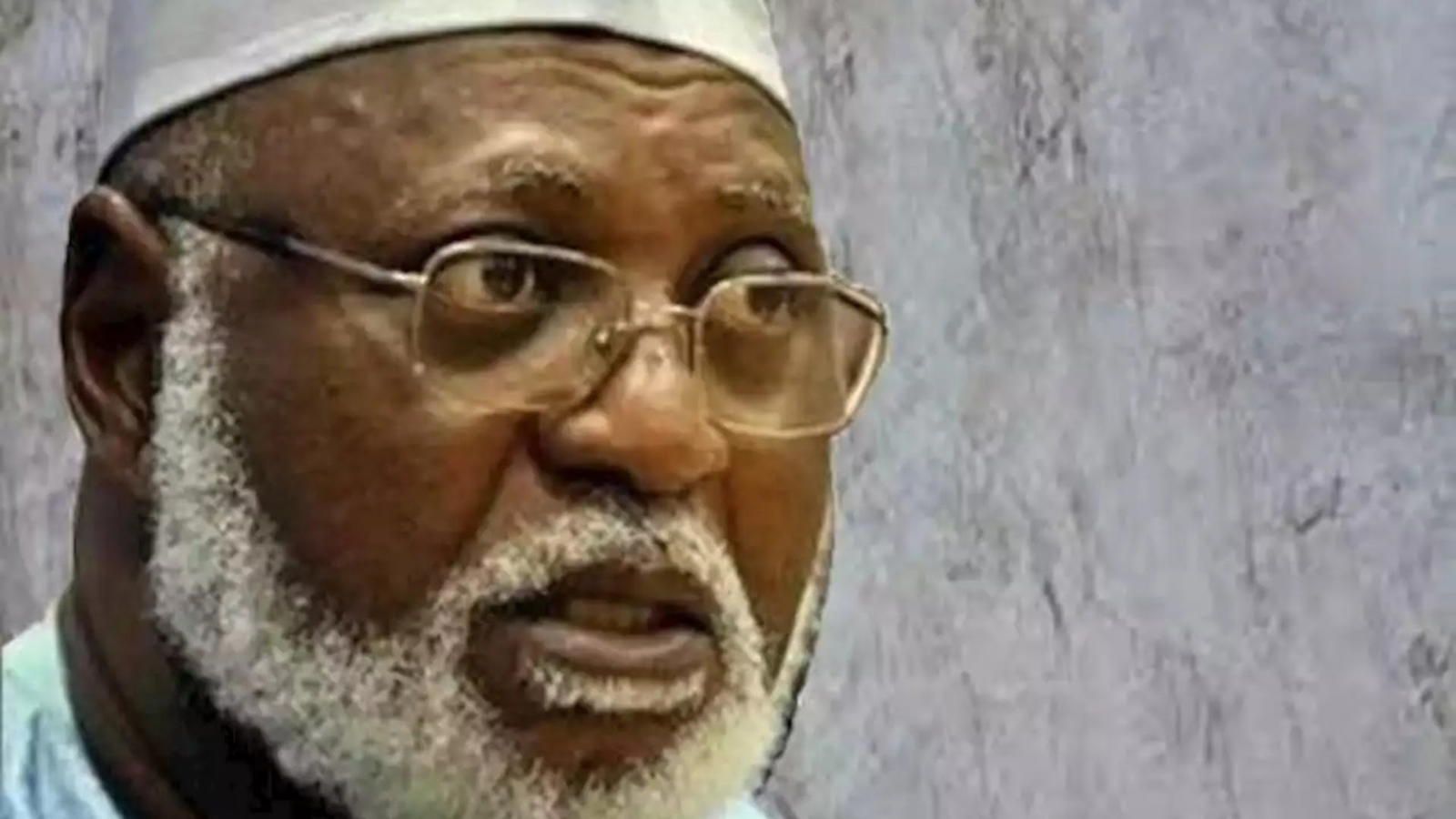
For General Abdulsalami Abubakar, the revelation that MKO Abiola died of a heart attack, not poison, as widely speculated, is a vindication of sorts. The former Head of State, now 84, has spent years navigating the complexities of Nigeria's tumultuous history, and this particular chapter has been a source of controversy for decades. As he recounts in his book, 'Call of Duty', Abubakar, along with other pathologists from four countries, conducted an autopsy on Abiola's body after his death in detention on June 7, 1998. The report attributed Abiola's death to natural causes, specifically a heart ailment that had been pre-existing since at least 1994.
Abubakar's account reveals that MKO Abiola had been managing hypertension and a heart condition as far back as 1994, when he was first detained by the Abacha Administration for declaring himself President. A radiological report from Colonel (Dr) O. Awofeso, then Chief Consultant Radiologist at the Nigerian Army Defence Hospital, Sokoto, dated September 28, 1994, found that Abiola's heart was enlarged with "right ventricular preponderance" consistent with hypertensive cardiac disease. This raises questions about the extent to which Abiola's pre-existing health conditions contributed to his eventual death.
Abubakar's book sheds light on the events leading up to Abiola's death, including a fatal meeting with a visiting American delegation comprising Mr Tom Pickering, then U.S. Undersecretary of State for Political Affairs, and Ms Susan Rice, then Assistant Secretary of State for African Affairs. According to Abubakar, Abiola collapsed during this meeting, which was a turning point in the events that led to his death. This incident highlights the precarious state of Abiola's health at the time and the potential consequences of his detention.
The controversy surrounding Abiola's death is a symptom of a larger cultural issue in Nigeria, where the military regime's handling of the June 12, 1993, presidential election and Abiola's subsequent imprisonment are still a source of pain and debate. Abubakar's revelations are a small but significant step towards closure for many Nigerians who were affected by Abiola's death. As the country continues to navigate its complex history, Abubakar's account serves as a reminder of the importance of accountability and transparency in the face of controversy.
In the coming days, expect a renewed conversation around the circumstances of Abiola's death, with some potentially reevaluating their stance on the matter. As Nigerians continue to grapple with the legacy of the Abacha regime, Abubakar's account provides a crucial piece of the puzzle, shedding light on a dark chapter in the country's history.
Abubakar's decision to share this information in his book is evidence of his commitment to transparency and accountability. As the country moves forward, it is essential that we continue to confront our past, even when it is uncomfortable or painful. By doing so, we can work towards a more just and equitable society for all Nigerians.