Business
Nigeria's data centres face major test under CBN's local hosting mandate
Ayotunde Coker, CEO of Open Access Data Centres (OADC), a subsidiary of the WIOCC Group, is about to find out if his years of investment in Nigeria's digital infrastructure will pay off.

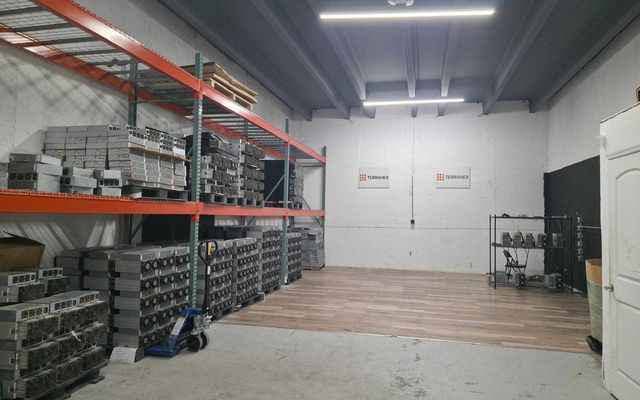
Ayotunde Coker, CEO of Open Access Data Centres (OADC), a subsidiary of the WIOCC Group, is about to find out if his years of investment in Nigeria's digital infrastructure will pay off. The Central Bank of Nigeria's (CBN) directive to repatriate transactional data from overseas cloud servers to data centres inside Nigeria by January 1, 2027, poses a major test for Nigeria's data centre industry. As the country's financial sector undergoes one of its largest cloud migrations to date, the stakes are high. The answer will determine how smoothly the transition unfolds, and whether Nigeria's data centre industry is ready to absorb the demand.
According to data from the Nigeria Inter-Bank Settlement System (NIBSS), the value of electronic transactions surged 80% to a record ₦1.07 quadrillion (approx. $702 billion) in 2024, up from ₦600 trillion ($393.6 billion) the previous year, with total volumes climbing to 11.2 billion transactions. This explosion in digital payments has made the financial sector increasingly dependent on cloud infrastructure, with much of this data still residing on foreign platforms such as Amazon Web Services (AWS), Microsoft Azure, Google Cloud, and IBM Cloud.
Nigeria's 10 largest banks spent a combined ₦177.91 billion (about $116 million) on information technology in the first quarter of 2026, up 30.8% from ₦136.04 billion ($98.46 million) a year earlier. This sharp increase in digital investments has come even as the sector remains heavily reliant on foreign cloud platforms. According to industry experts, requiring payment data to remain within Nigeria will not only strengthen data sovereignty but also improve regulatory and law-enforcement access during investigations, reduce dependence on foreign jurisdictions, and keep more of the capital Nigerian organisations spend annually on overseas cloud and hosting services within the local economy.
Ayotunde Coker, CEO of Open Access Data Centres (OADC), claims that the CBN's directive is the result of years of investment in Nigeria's digital infrastructure. He believes that the industry is ready for the challenge, stating that this has been a long time coming. The industry's confidence in its ability to meet the deadline is likely driven by the fact that Nigeria's data centre operators have been building capacity in recent years. However, the question remains: is the industry truly ready to absorb the demand?
The CBN's directive is part of a broader effort to promote digital inclusion and financial inclusion in Nigeria. By requiring payment data to remain within the country, the CBN aims to reduce the risk of data breaches and improve the overall security of the financial sector. This move also reflects the government's commitment to promoting local content and reducing dependence on foreign technology. As Nigeria's data centre industry undergoes this major test, the success or failure of the CBN's directive will have far-reaching implications for the country's digital economy.
In conclusion, Nigeria's data centre industry is about to face a major test under the CBN's local hosting mandate. As the country's financial sector undergoes one of its largest cloud migrations to date, the stakes are high. With the industry's confidence in its ability to meet the deadline, the question remains: will Nigeria's data centre industry be able to absorb the demand? As the country's digital economy continues to grow, the success or failure of the CBN's directive will have far-reaching implications for the country's financial sector.