News
The young Kenyan engineer who thinks robots belong in every classroom
Norah Kimathi: The Kenyan Engineer Who's Bringing Down Accessibility Barriers in STEM Education At 16, most of us are still figuring out our high school elective courses.
Norah Kimathi: The Kenyan Engineer Who's Bringing Down Accessibility Barriers in STEM Education
At 16, most of us are still figuring out our high school elective courses. But Norah Kimathi, a graduate of informatics and computer science from Strathmore University, Kenya, had already established herself as a budding CEO at 15, running her very own company with the blessing of her parents. It's this kind of unbridled passion for engineering and innovation that drives Kimathi to tackle seemingly insurmountable challenges, including the staggering accessibility gap in STEM education for deaf students in Kenya.
Growing up, Kimathi was always fascinated by technology, engineering, math, and generally STEM-related courses. Her entrepreneurial journey began when she was 15, after witnessing the struggles people faced during the rainy season in Kenya. Roads would flood, and there was no way to alert family members to take different routes. Undeterred, Kimathi decided to create her own phone using Lego bricks. Though it didn't work as intended, her efforts caught the attention of her parents, who registered a company for her, making her the CEO at 15. This early exposure to innovation and entrepreneurship has been a defining aspect of Kimathi's journey.
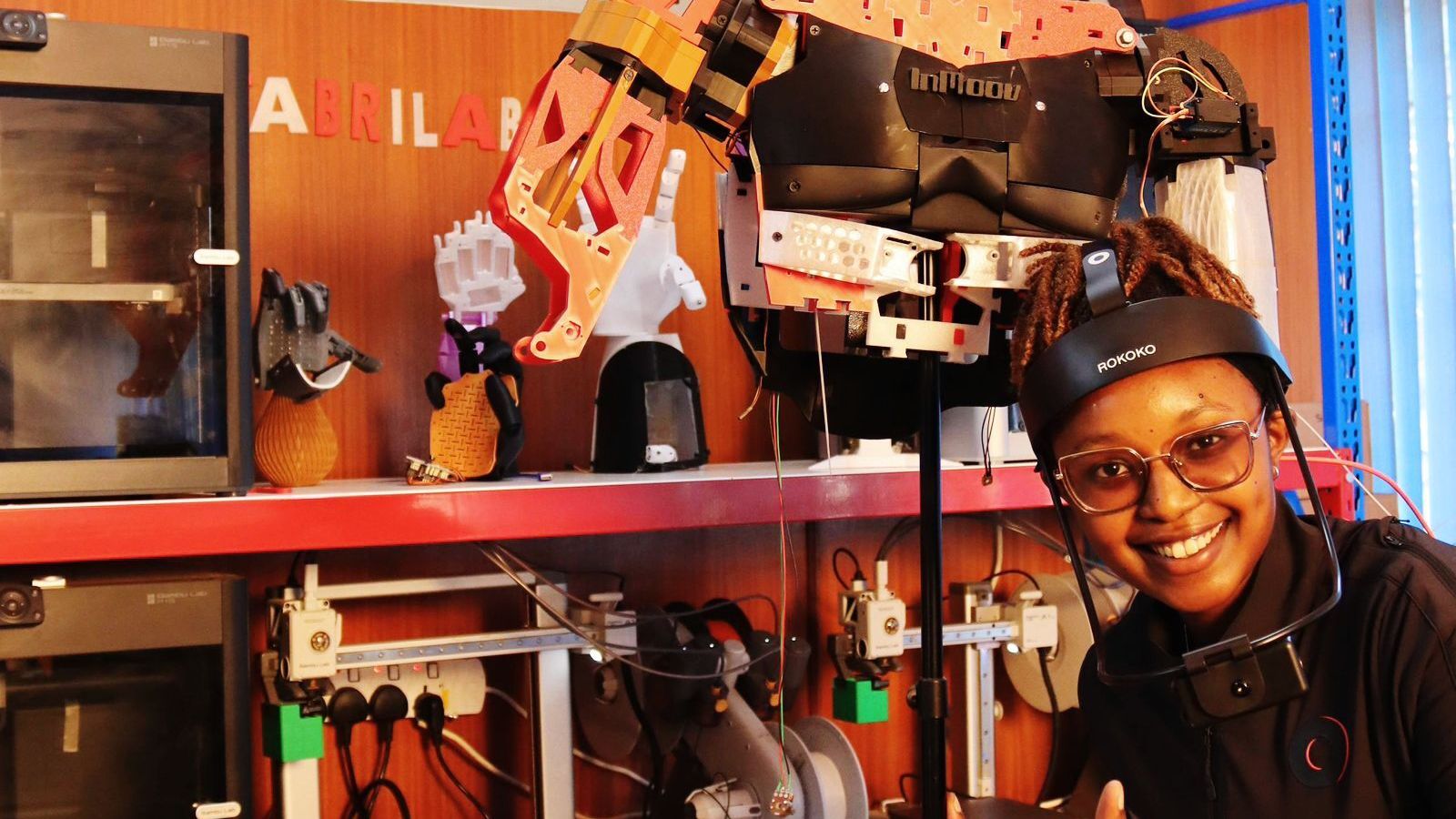
During her mentoring of young people in STEM, Kimathi encountered deaf students struggling through their classes due to a scarcity of qualified sign language interpreters. This encounter sparked a crucial question: if technology could automate factories, navigate roads, and diagnose disease, why couldn't it bridge one of education's oldest accessibility gaps? This question became the foundation of ZeroBionic, the startup she co-founded in 2021. From a robotic hand assembled from recycled plastic in a university workshop to AI-powered humanoid robots capable of translating spoken language into sign language in real-time, Kimathi's vision has evolved significantly.
Kimathi's story is evidence of the power of curiosity and resilience. Her ability to think creatively and outside the box is evident in her early days as a 15-year-old CEO, when she would spend sleepless nights in the lab tinkering with electronics. This same spirit drives her to tackle complex problems like accessibility in STEM education. Her approach to innovation is both optimistic and pragmatic, always keeping in mind the potential impact on people's lives.
As ZeroBionic moves closer to integrating AI-powered robots into every classroom, Kimathi's impact on STEM education will be felt far beyond Kenya. With her innovative approach and dedication to breaking down accessibility barriers, she will undoubtedly inspire a new generation of engineers and innovators. It's not a stretch to predict that Kimathi will become a leading voice in the global conversation around inclusive education and accessibility.
The statistics on accessibility gaps in STEM education are staggering, but what gets lost in the numbers is the human cost. Deaf students struggling to keep up with their peers, their potential stifled by a lack of qualified interpreters, is a tragedy that Kimathi is determined to change. Her story serves as a reminder that innovation and accessibility go hand-in-hand, and that the real cost of ignoring these gaps is not just financial, but human.
The future of STEM education will be shaped by innovators like Norah Kimathi, who refuse to accept that accessibility should always come later. As ZeroBionic continues to push the boundaries of what's possible, one thing is certain: the accessibility gap in STEM education will soon become a relic of the past.