News
3 reasons why Super Falcons failed at the 2026 WAFCON
The 2026 WAFCON was meant to be a coronation for Nigeria's Super Falcons, a team with a long-standing reputation as one of the continent's dominant forces in women's football.
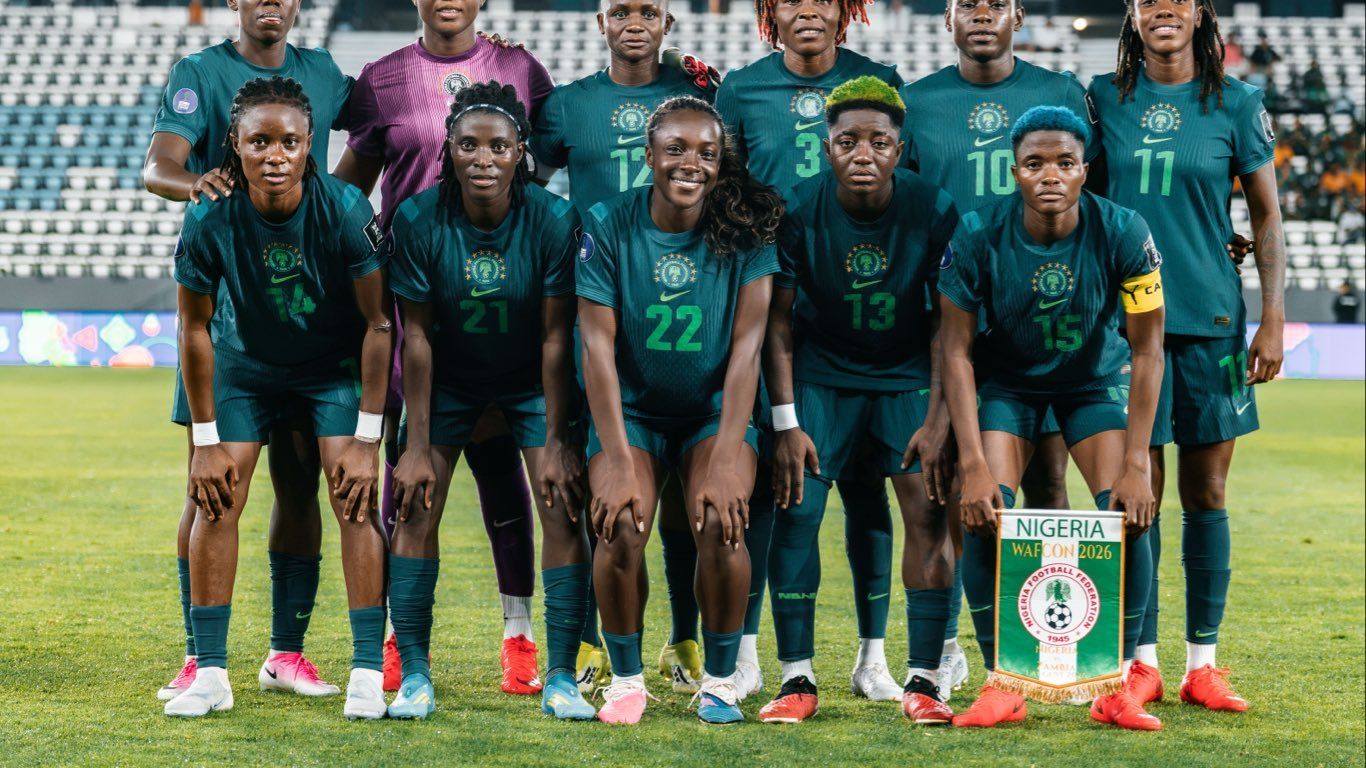
The 2026 WAFCON was meant to be a coronation for Nigeria's Super Falcons, a team with a long-standing reputation as one of the continent's dominant forces in women's football. Aminat Yusuf and her teammates were expected to stroll into the semi-finals, securing an automatic spot for the 2027 FIFA Women's World Cup. But instead, they suffered a disappointing 1-0 quarter-final defeat to Cameroon, a team that has been quietly building its strength in women's football. The defeat was particularly painful for Nigeria, as it exposed deeper issues that contributed to the disappointing campaign.
A significant portion of the Super Falcons squad is now in their late 20s and early 30s, with the forward line particularly dependent on experienced players like Asisat Oshoala. Experience remains valuable, but relying heavily on an ageing attacking core can become a problem when the team needs pace, intensity, and fresh ideas in crucial matches. Nigeria needs to begin a deliberate transition by introducing younger attacking players while still maintaining the experience of the established stars. Rasheedat Ajibade, the Super Falcons' coach, has spoken about the need to develop homegrown talent, but it's clear that the team needs to act faster to prevent a talent drain. The next generation must be given meaningful opportunities at international level rather than being introduced only when the senior players are unavailable. As it stands, the Super Falcons are facing a crisis of succession, and it's not clear who will be the next generation of stars to carry the team forward.
The Super Falcons have often relied heavily on individual quality and the experience of their players, but against well-organised opponents, that may no longer be enough. The defeat to Cameroon highlighted the need for greater tactical flexibility. When Plan A is not working, a top-level national team needs a clear Plan B and, when necessary, a Plan C. Nigeria needs a coach capable of adapting formations, changing the rhythm of games, and exploiting different weaknesses depending on the opponent. The Super Falcons cannot continue to depend solely on individual brilliance to get results. As Chiamaka Nnadozie, the team's goalkeeper, noted after the defeat, the team needs to develop a more cohesive team strategy that goes beyond relying on individual stars.
Perhaps the biggest warning sign is that the gap between Nigeria and the rest of Africa is becoming smaller. Teams such as Cameroon and several other emerging African nations are investing more in women's football, developing their players, and becoming increasingly competitive. The Super Falcons can no longer assume that their history and reputation will be enough to overcome African opponents. Nigeria remains one of the continent's most successful women's football nations, but that status must be defended through continuous investment, better development pathways, and improved preparation. As Rasheedat Ajibade noted, the team needs to develop a more competitive mindset, and be prepared to face teams that are more organised and more determined than ever before.
The Super Falcons' failure at the 2026 WAFCON is a wake-up call for Nigerian football, and a reminder that the team can no longer rest on its laurels. Nigeria needs to invest more in women's football, develop its players, and improve its preparation if it wants to remain a dominant force in African women's football. The next generation of Super Falcons needs to be given the opportunity to shine, and the team needs to develop a more cohesive team strategy that goes beyond relying on individual stars. The future of Nigerian women's football depends on it.