News
'Other Desert Cities' Broadway Review: Julia Louis-Dreyfus Brings Biting Levity to Her Main Stem Debut
In the hush of a Hudson Theatre lobby, Julia Louis‑Dreyfus stepped onto the stage of Jon Robin Baitz’s Other Desert Cities with a smile that could have been a mask.
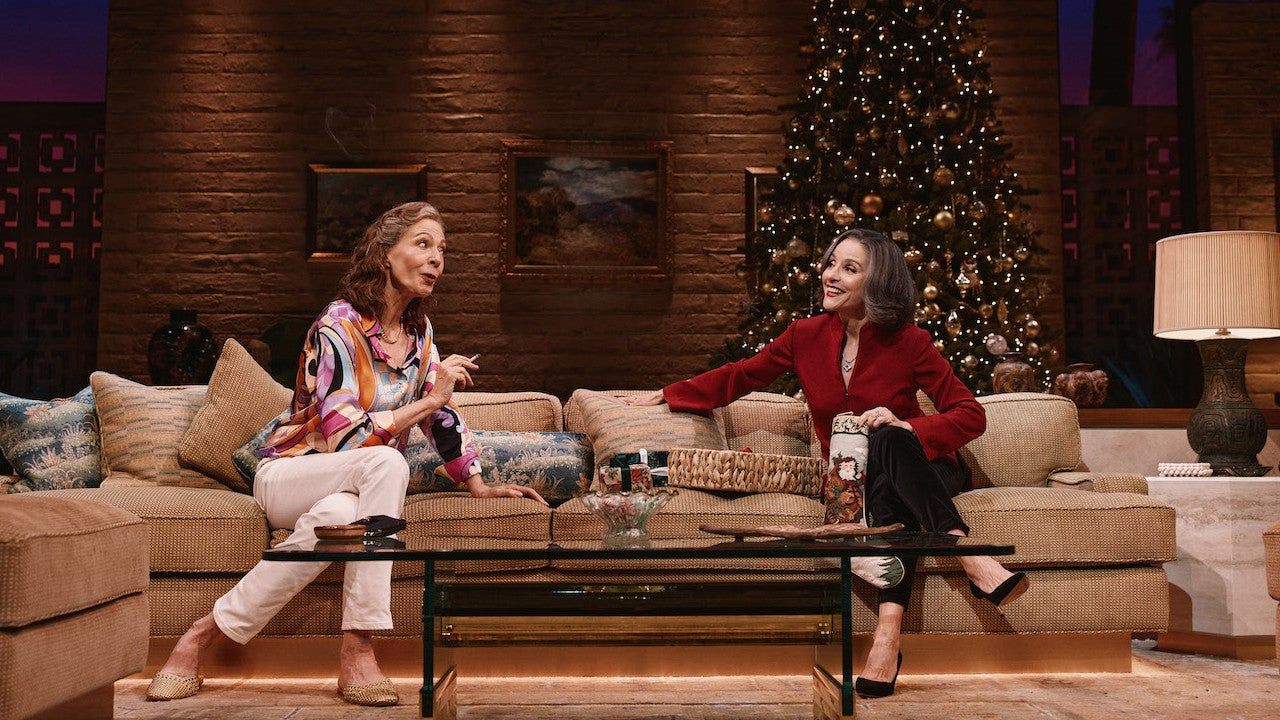
In the hush of a Hudson Theatre lobby, Julia Louis‑Dreyfus stepped onto the stage of Jon Robin Baitz’s Other Desert Cities with a smile that could have been a mask. She was ready to play Polly Wyeth, a matriarch of a fictional Republican clan in Palm Springs, but the weight she carried felt lighter than the one Stockard Channing had carried a decade earlier. While Channing’s Polly had a gravitas that settled into the audience’s bones, Louis‑Dreyfus’s version appeared brittle, a china doll wobbling on a pedestal.
The play’s central tension rests on a family secret: Polly and her husband Lyman, played by Ed Harris, conceal the existence of a third child. In the original 2011 Broadway run, Stockard Channing’s portrayal made this hidden truth feel like a two‑ton weight, a burden that defined every line and gesture. The revelation that Polly actually has three children, not two, is a pivotal moment that shapes the family’s dynamics and the political stakes of the narrative.
With Louis‑Dreyfus, the first act of Other Desert Cities leans toward comedy. Her Polly uses wit to deflect the dangers that loom over her family, especially after her eldest child, a political radical, stages a bombing of an army recruitment center during the Iraq War. The shift in tone mirrors the actor’s background: years on Veep and Seinfeld have honed her timing for sharp, zinger‑laden dialogue. Yet this comedic edge comes at the cost of depth; the audience feels a distance from the character’s internal struggle.
Polly’s relationships are strained. She distances herself from daughter Brooke, played by Lily Rabe, son Trip, portrayed by Joe Keery, and her sister Silda, a recovering alcoholic played by Allison Janney. Lyman, the only one privy to the secret, remains a silent anchor in the family’s orbit. Harris delivers a self‑effacing performance, punctuated by a cameo death scene that recalls his Western film legacy. The dynamic between Polly and Lyman feels more like a polite acquaintance than the intimate partnership that Channing’s version offered.
Watching Louis‑Dreyfus navigate the script, I sensed the tension between preserving a character’s core and reimagining her for a new audience. Her Polly feels like a modern woman caught between the expectations of a legacy and the need to carve her own pathan echo of the broader cultural shift toward questioning inherited power structures.
Other Desert Cities reflects a generation of American families grappling with political legacies and personal secrets. The play’s setting in Palm Springs, a playground for the affluent, underscores the contrast between public facades and private turmoil. The storyline, involving a radical child’s bombing, taps into contemporary anxieties about youth activism and the consequences of political extremism.
As the Hudson Theatre lights dim, the audience leaves with a mix of laughter and unease. The next season may see a different take on Polly Wyeth, perhaps restoring the gravitas that once defined her. For now, the play offers a fresh lens on family, politics, and the weight of secrets, reminding us that even a comedy can carry a heavy truth.


