News
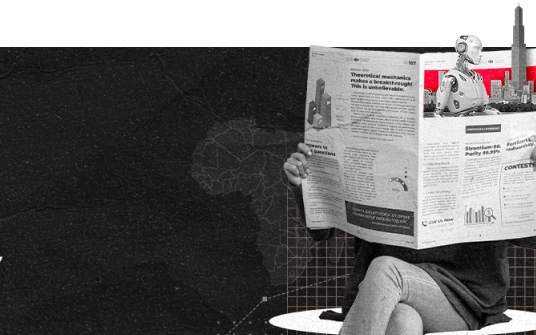
Africa's cybercriminals are adopting AI faster than the institutions chasing them
The AI Arms Race Africa's Cybercriminals Are Winning Meet Aisha, a young Nigerian entrepreneur who runs a thriving online business selling handmade jewelry.

Meet Aisha, a young Nigerian entrepreneur who runs a thriving online business selling handmade jewelry. Like millions of others across the continent, Aisha relies on mobile banking and digital transactions to keep her business afloat. But with Africa's rapid digitization comes a darker reality: the continent's cybercriminals are adopting AI faster than the institutions chasing them. According to Interpol's African Cyberthreat Assessment Report 2026, AI was involved in 55% of cybercrime cases observed by African countries surveyed in 2025.
The gap between cybercriminals and law enforcement agencies is staggering. While 92% of agencies cited a lack of technical expertise as their main obstacle to using AI, only 8% of intelligence analysts surveyed had advanced AI expertise. Most still relied on manual processes, leaving them woefully unprepared to tackle the new wave of AI-powered cybercrime. "Criminals are now operating at machine speed," Interpol warned, while law enforcement remains constrained by "legal processes, bureaucratic delays, and a lack of technical capacity".
The consequences of this AI gap are dire. Phishing, identity theft, and financial fraud are becoming cheaper and easier to scale, thanks to the ease of use and accessibility of generative AI tools. What was once the preserve of researchers and developers is now being "weaponised by criminal actors with minimal technical expertise". AI is being used across the entire attack cycle, from getting potential victims and generating phishing messages to extortion and evading detection.
Africa's rapid digitization has brought hundreds of millions of people into financial systems built around mobile phones. With over 1.1 billion mobile subscriptions and $1.1 trillion in digital transactions processed in 2025, the stakes are too high to ignore. As more people access banking, healthcare, education, and government services online, the potential for damage increases exponentially. African-origin material appearing on dark-web forums increased 62% year on year, including identity documents, banking credentials, SIM PINs, and mobile-money account details. AI can turn this information into more convincing fraud, making it harder for authorities to keep up.
The implications of this AI arms race are far-reaching. As AI adoption continues to accelerate, we can expect to see more sophisticated forms of cybercrime. Deepfake incidents, which increased sevenfold between the second and fourth quarters of 2024, will become the norm. With AI-generated audio and video, cybercriminals will have a new arsenal to manipulate and deceive. Can Africa's institutions keep pace?
The verdict is clear: Africa's cybercriminals are adopting AI faster than the institutions chasing them, leaving the continent at risk of unprecedented cybercrime. As the continent's digital landscape continues to evolve, one thing is certain: the fight against AI-powered cybercrime will be a long and arduous one.