News
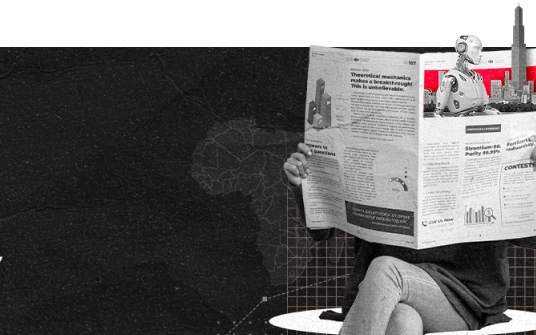
As African newsrooms shrink, powerful companies face less scrutiny

As Ivana Heijnen and her podcast guests on Voices and Visions delve into the intricacies of Africa's innovation economy, a stark reality emerges: the newsrooms meant to scrutinise powerful companies are dwindling in size and influence. Ivana's conversations with journalists, entrepreneurs, and thought leaders highlight the dire consequences of this trend, and it's the ordinary people that suffer. For those of us who care about the stories that shape our continent, this development is a disaster waiting to happen.
Journalism is not just about reporting events; it's about holding those in power accountable for their actions. It's about shining a light on the institutions that are failing and the individuals who are exploiting others. This is the core of what Ivana calls the "surveillance role of a journalist." But as African newsrooms face financial pressure, this role is becoming increasingly difficult to perform. Reporters are expected to produce more stories with fewer resources, and investigative journalism, the type of journalism that truly holds those in power accountable, is particularly vulnerable.
African newsrooms are struggling to stay afloat due to the decline of print circulation, the shift of advertising revenue to global tech platforms, and the pressure to provide free content. This perfect storm of challenges has led to hiring freezes, layoffs, and reduced editorial budgets. Reporters are now expected to work miracles with limited resources, producing multiple stories across various platforms with little time to spare. Investigative journalism, which requires time, money, and expertise, is the first to suffer. It's a vicious cycle that benefits no one except the powerful companies that are supposed to be held accountable.
The consequences of weaker newsrooms are far-reaching. Powerful companies, which should be subject to rigorous scrutiny, are gaining room to shape the stories told about them. They can afford to hire PR teams and lawyers to spin their narratives, while journalists are left to fight for scraps. This is a crisis not just for journalism, but for democracy itself. Without a free press, the voices of the marginalized and the vulnerable are drowned out, and the powerful are free to continue exploiting them.
As Ivana Heijnen notes, watchdog journalism requires more than just responsibility, it requires resources, institutions, and a commitment to truth-telling. Without these, the people and companies that need to be held accountable will continue to thrive. The future of African journalism is uncertain, and it's the ordinary people who will suffer the most. We must demand better from our newsrooms and our leaders. We must prioritize accountability and transparency, even in the face of adversity.
As the newsrooms shrink, the silence grows. The powerful companies are getting away with murder, and the people are left to pick up the pieces. It's time for a change. We need newsrooms that are committed to telling the truth, no matter the cost. We need journalists who are willing to take risks and push back against the powerful. And we need a society that values accountability and transparency above all else. The future of Africa depends on it.