News
At His First Show In Georgia, Moby Talks About 'Music's Ability to Reach Everybody: And to Reach Them In the Most Personal Way'
The Sound of Connection In the sweltering summer heat of July 30, Moby took the stage in the country of Georgia for the first time.
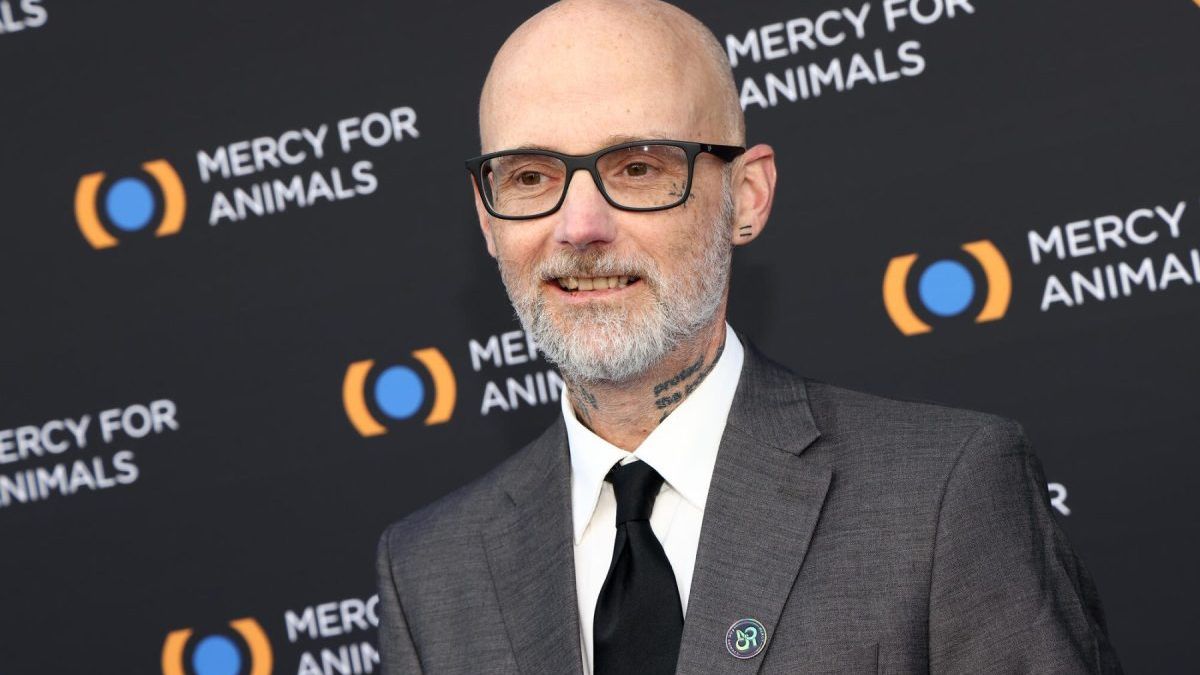
In the sweltering summer heat of July 30, Moby took the stage in the country of Georgia for the first time. As he prepared to meet the Georgian audience, I couldn't help but wonder what was going through his mind. Here was an artist who had spent decades pushing the boundaries of electronic music, bringing emotional depth to a genre often dismissed as superficial. His concerts were no longer confined to the clubs; they were now a global phenomenon, with fans from all walks of life drawn to his music's raw emotion and sincerity. But what was it about this place, this city of Tbilisi, that had captured Moby's imagination?
As Moby himself described it, Tbilisi felt like a European city, a thousand miles away from Europe. It was a city of contrasts, where ancient history and modernity coexisted in a delicate balance. And it was this very quality that made it so fascinating to him. For an artist who had spent his career exploring the intersection of technology and human emotion, Georgia's unique cultural landscape was a treasure trove of inspiration. As he spoke to Billboard Georgia backstage, Moby's eyes sparkled with a sense of wonder, his voice filled with a sense of awe. It was clear that he was eager to connect with this audience, to share his music and his message with a new community.
But beneath the surface of Moby's enthusiasm, there was a more nuanced conversation taking place. As an artist who had been in the industry for decades, he had gained a unique perspective on the music business. He spoke candidly about the biggest illusion that the industry creates for emerging artists: the idea that their agents, managers, and record labels are their friends. "When you're young and successful, everybody's nice to you," he said. "But wait until a few years pass, and you've gone a few years without success. They might not be quite as nice, which is just the nature of things." It was a sobering reminder that the music industry, like any other business, is driven by self-interest and financial gain.
And yet, despite the harsh realities of the industry, Moby remained optimistic about the power of music to connect people. "Music's ability to reach everybody, and to reach them in the most personal way," he said, "is a truly remarkable thing." It was this capacity to transcend borders, cultures, and languages that made music such a powerful force in the world. As an artist who had spent his career pushing the boundaries of electronic music, Moby knew this firsthand. His music had taken him to the farthest reaches of the globe, connecting him with fans from all walks of life.
As Moby took the stage in Georgia for the first time, I couldn't help but wonder what this moment meant for him. Was it a moment of validation, a recognition of his hard work and dedication to his craft? Or was it something more profound, a connection with a new community, a new audience? Whatever the case, it was clear that Moby was driven by a sense of purpose, a desire to share his music and his message with the world. As he began to play, the crowd erupted into cheers, a sea of faces united in their love of music. It was a moment of pure connection, a reminder of the power of music to bring people together.
In the end, Moby's show in Georgia was more than just a concert, it was evidence of the power of music to connect us all. As an artist who had spent his career pushing the boundaries of electronic music, he knew that this was a moment that would stay with him forever. And as I watched him take the stage, I couldn't help but feel a sense of awe at the sheer scale of his achievement. For in a world that often seems to value spectacle over substance, Moby's music was a beacon of hope, a reminder of the transformative power of art to connect us all.