News
Bette Midler Accepts 2026 Woody Guthrie Prize, Sings Protest Classic: 'My Small Contribution to the Resistance'
Bette Midler, a veteran of the stage, stepped onto the stage of Cain’s Ballroom in Tulsa and handed the 2026 Woody Guthrie Prize while belting a new version of “All You Fascists (Bound to Lose).
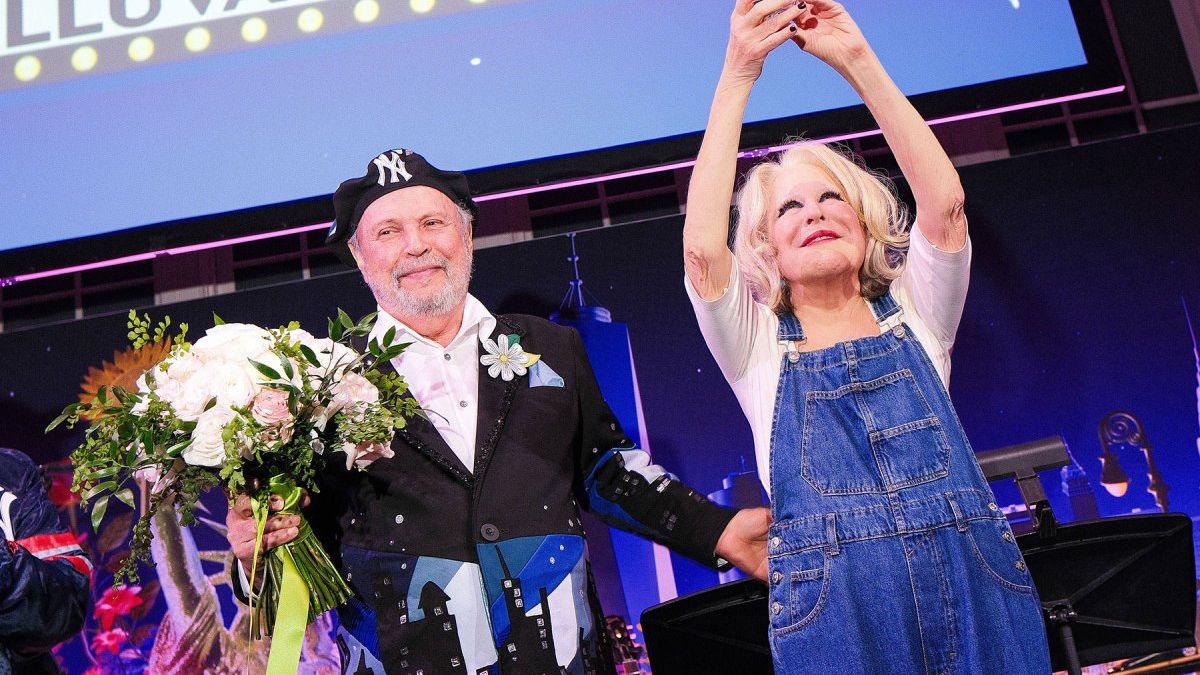
Bette Midler, a veteran of the stage, stepped onto the stage of Cain’s Ballroom in Tulsa and handed the 2026 Woody Guthrie Prize while belting a new version of “All You Fascists (Bound to Lose). The audience was not just hearing a tribute; they were witnessing a modern protest anthem that Midler herself rewrote to speak on the political climate of 2026. For the thousands of concertgoers and the millions who watched the performance online, the moment was a reminder that art still can be a frontline in the fight for justice.
Midler’s choice of a T‑shirt emblazoned with the song title was more than fashion. It was a visual cue that the performance was not a nostalgic nod to the past but a direct challenge to the present. In the same breath she said, “Justice doesn’t always come from the courthouse. Sometimes the law is late, overdressed, and on the wrong side. Justice comes from a beat‑up guitar instead.” The shirt, therefore, served as a billboard of dissent, turning a simple garment into a rallying cry.
The original 1940s protest classic had already been a rallying point for labor movements, but Midler’s version, co‑written with Eric Kornfeld, updates the lyrics to match the “new suits” of contemporary struggle. By inserting contemporary references, she bridges the gap between the past and the present, showing that the “old fights” are never truly over. This act of lyrical adaptation is a bold statement: the fight against oppression is cyclical, and each generation must reinterpret its tools. The decision to rewrite Guthrie’s words rather than perform the original underscores the idea that resistance is living, not static.
Midler’s claim that “justice comes from a beat‑up guitar” flips the traditional image of the courtroom into a music venue. The guitar, a symbol of grassroots activism, replaces the scales and gavels of the legal system. In a country where political polarization has made court decisions seem delayed and biased, the guitar becomes a more immediate vehicle for change. This metaphor resonates with audiences who feel that institutional justice is often out of reach.
The performance was amplified by the presence of notable cameos, including Barbara Hershey and David Hyde Pierce, both of whom shared Midler’s history on stage. Their participation added weight to the protest, illustrating how established artists can mobilize their fan bases for political causes. The event, captured by directors Toni Basil and Seanne Farmer, was not just a performance but a call to action. Anna Canoni, Woody Guthrie’s granddaughter, praised Midler for “bringing Woody back to the fight, back to the protest, the rallies, the ongoing struggle for democracy, and humanity.” Her endorsement signals that the legacy of Guthrie is being carried forward by contemporary artists who understand the urgency of the moment.
Midler’s performance is part of a broader trend where musicians use their platforms to confront political injustices. While some critics argue that celebrity protests are performative, the tangible impact of a rewritten anthemespecially one that goes viralcannot be dismissed. The YouTube release in April, with a message urging people to “sing it when you are marching,” demonstrates how music can mobilize crowds beyond the confines of a single venue. The phrase “you just gotta SING OUT!” echoes the call for active participation rather than passive observation.
Given the success of this performance and the viral nature of the video, I predict that more artists will follow suit, rewriting classic protest songs to suit contemporary struggles. The next wave of protest music will likely see a blend of traditional folk melodies with modern rap or EDM elements, creating a hybrid genre that appeals to younger audiences while retaining the potency of historical protest anthems.
While the mainstream media often celebrates award ceremonies as celebratory events, the reality here is starkly different. The award ceremony was not a gala of glitter; it was a platform for dissent. Midler’s acceptance speech“We are having a knife fight in a phone booth”brought the abstract notion of war into a concrete, visceral image. This directness confronts the audience with the uncomfortable truth that the fight for democracy is not a distant concept but an everyday reality.
Midler’s words were not a monologue; they were a directive. By encouraging listeners to “sing it when you are marching,” she transforms passive listeners into active participants. This shift from spectator to activist is the core of her message: music can inspire, but it is the collective voice that can shift the balance of power.
The performance ended not with applause but with a palpable sense of resolve. The audience left Cain’s Ballroom carrying not just a memory of a powerful performance but a new anthem to carry into their own protests. In a world where justice is often delayed, Bette Midler’s guitar became a tool of immediate resistance, proving that the fight for democracy still has a beat, and it is loud enough to be heard.