News
Billy Evans: What we know about Elizabeth Holmes husband featured in You Can See Everything
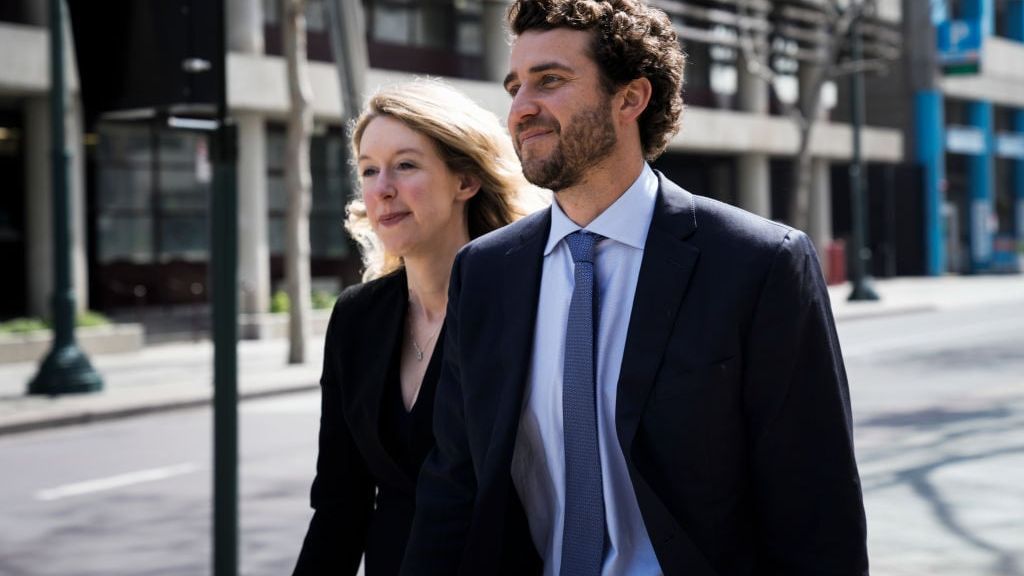
The first time I saw the trailer for You Can See Everything the scene that stuck in my mind wasn’t Elizabeth Holmes in a courtroom, but a quiet, unassuming man standing beside her at Burning Man, a desert festival where the sky blazed like a neon horizon. It was Billy Evans, a name that had never crossed my radar before. The film’s focus was clearly on Holmes, yet the audience was left wondering about the man who had become her partner, her confidant, and later, her spouse.
Billy Evans grew up in a San Diego family that owned a chain of hotels. His grandparents, William and Anne Evans, founded Evans Hotels in 1953, and the company still runs the Bahia Resort Hotel, the Catamaran Resort Hotel and Spa, and The Lodge at Torrey Pines. Despite this legacy, Evans chose a different path, graduating from MIT in 2015 with a Bachelor of Science in Economics. During his time at the institute he took on student gigs at financial firms across California and even worked as a brand manager for Red Bull. After MIT, he landed a role at LinkedIn in 2017 as a strategy and leadership program analyst before moving to Luminar Technologies, an autonomous‑car tech firm, later that same year.
The turning point came in 2017, at a house party in San Francisco, where Evans met Elizabeth Holmes. A joint interview with the New York Times in 2023 revealed that the pair talked for three consecutive hours, a conversation that, according to Evans, felt like instant chemistry. Holmes, already a controversial figure but not yet charged by the SEC, described how the public scrutiny of her work allowed Evans to see a different side of her, a connection that felt “really deep.” Their romance quickly moved into the public eye when they were spotted together at Burning Man, and they announced their engagement in August 2018.
In early 2019, Evans left Luminar Technologies. The New York Post reported that colleagues speculated his departure was driven by the media attention surrounding his relationship with Holmes. The move marked a shift from a promising tech career to a life intertwined with a woman whose name was already on the headlines.
Today, Evans is among those who have submitted letters of support and testimony in the ongoing legal saga surrounding Holmes. His role may seem peripheral, but his presence has become an integral part of the narrative that the documentary seeks to expose.
In watching the film, I felt a strange empathy for Evans. He was not the mastermind behind the blood‑testing scandal; he was a man caught in the orbit of a larger story. His journey from hotel heir to MIT graduate, from LinkedIn analyst to autonomous‑car engineer, and finally to the spouse of a high‑profile entrepreneur, mirrors the unpredictable twists that define the modern creator economy. As the documentary unfolds, it will be interesting to see how much of Evans’ own story is foregrounded, and whether his perspective will add nuance to the tale of ambition, deception, and the human cost of fame.


