News
Brendan Carr Dodges Questions About Public Execution Livestream: 'I Trust Secretary Hegseth'
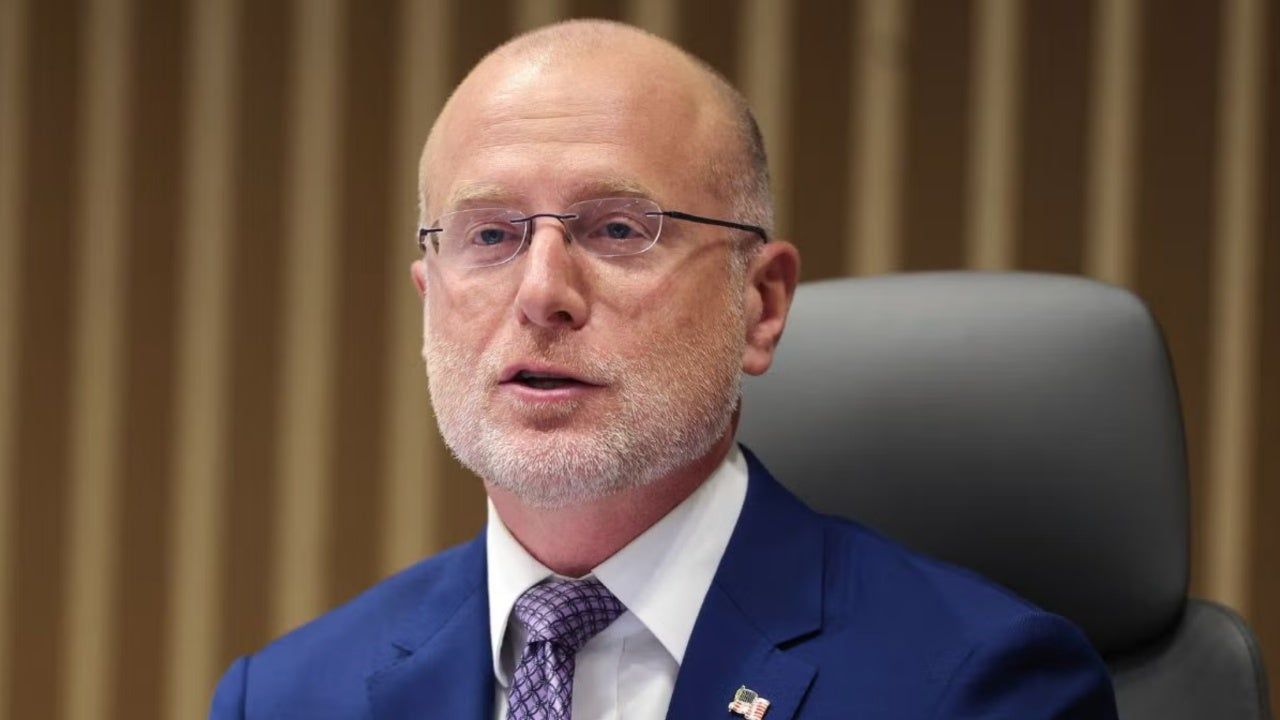
Brendan Carr’s silence on the Pentagon’s plan to livestream a public execution isn’t a neutral stanceit’s a strategic retreat that leaves ordinary citizens wondering who will hold the military accountable. The decision to let the Department of Defense decide the fate of a live broadcast on a matter that touches on the sanctity of life, the limits of state power, and the moral compass of a nation is a gamble that could reshape how the public engages with government actions. When the FCC chair says he trusts Secretary Hegseth to “make the right call,” he is effectively handing a court‑room decision to a military officer, and that has real consequences for the American public’s right to know.
The Pentagon’s announcement that it will livestream the firing‑squad execution of Nidal Malik Hasan on Dec. 3 marks the first military execution in more than six decades. This move, announced by Secretary Hegseth on Real America’s Voice, is presented as a “public” event to illustrate the “serious consequences” for mass murder. The very idea of broadcasting an executionan act traditionally shrouded in secrecy and ritualraises questions about desensitization, the spectacle of state violence, and the ethical limits of media coverage. The military’s justification hinges on transparency, yet the practical outcome is a televised spectacle that could normalize state‑sponsored death.
During a CNBC interview, Carr dismissed the possibility of the FCC’s involvement by stating, “I don’t think there’s a role for the FCC one way or the other there.” Instead, he deferred to Hegseth’s authority, saying, “I trust Secretary Hegseth.” By deferring, Carr is effectively saying that the FCC’s regulatory purview ends where the Department of Defense’s jurisdiction begins. This hand‑off is problematic because the FCC regulates all broadcast content, including what is deemed “public interest.” The FCC’s refusal to engage in a debate about a live execution leaves a regulatory vacuum that the military can exploit without public scrutiny.
Labeling the broadcast as “public” is a euphemism that masks a deeper moral dilemma. The execution of a convicted killer for the murder of 13 soldiers is a state-sanctioned death. Broadcasting it as a public service ignores the fact that the audience is being exposed to a ritualized death that could desensitize viewers and erode the sanctity of human life. Historically, the U.S. Has avoided televising executions to preserve dignity and prevent sensationalism. By reversing that trend, the Pentagon risks normalizing state violence and undermining the ethical standards that have guided media coverage of capital punishment.
If the FCC remains silent, the precedent will be set: the military can decide what content is “public” without regulatory oversight. I predict that, within the next year, the FCC will be pressured to clarify its stance on military broadcasts, potentially leading to new regulations that require explicit FCC approval for any live military execution. This would reassert the FCC’s role as a guardian of public interest and prevent the military from unilaterally shaping the narrative around state violence.
The FCC chair’s shrug is not just a bureaucratic shrugit’s a decision that will echo through the halls of power and the living rooms of citizens. The next time a government agency proposes a public broadcast of a state-sanctioned death, the public will be watching not just the event, but the regulatory silence that allowed it.


