News
Bumble adds social media-esque handles
On a crisp October morning, the screen of a young woman’s iPhone flickered to life as she opened Bumble for the second time that day.
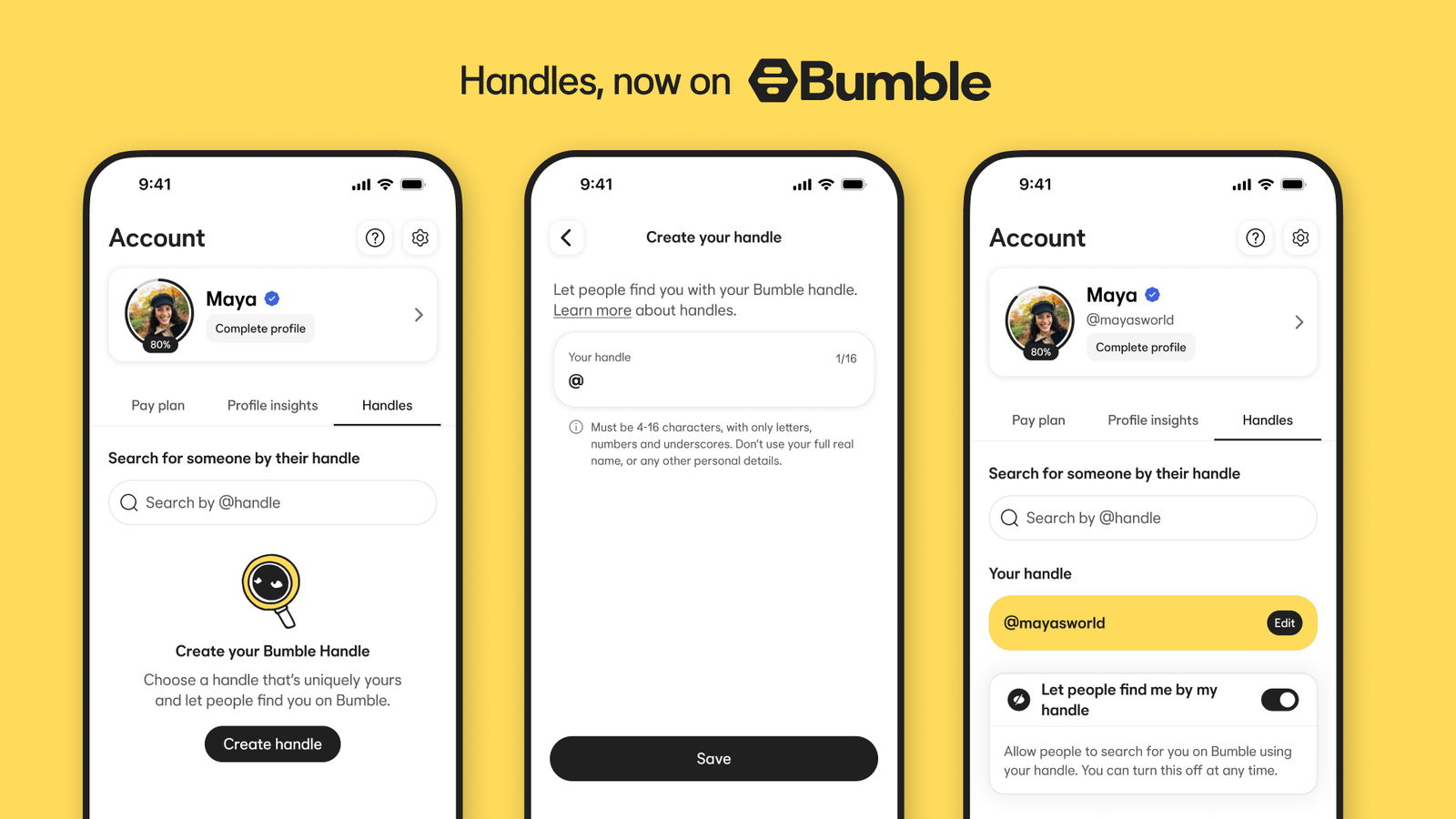
On a crisp October morning, the screen of a young woman’s iPhone flickered to life as she opened Bumble for the second time that day. A new icon glowed beside her profileHandlespromising a way to share a name without handing over a phone number or social media link. She tapped it, typed a simple, memorable handle, and felt a small surge of control over her digital identity.
Handles are not a new social media platform; they are a feature that lets users create a custom username to be found by others within the app. The idea, announced on October 14, follows Bumble’s recent acquisition by Ithaca Holdings for $1.3 billion. Founder Whitney Wolfe Herd explained that private and professional circles “aren’t necessarily where you want your dating life to begin.” She added that the new handles would let people “find them on Bumble” without exposing phone numbers or other accounts.
The feature is optional, and users can opt out of being discoverable by their handle at any time. A handle must be exact for a search to return a result, and even then, “discoverable doesn’t mean accessible.” A user may express interest after locating a profile, but both parties still need to mutually agree before a conversation can start. Bumble’s existing moderation guidelines govern handle creation, and the company claims to have added extra safeguards against impersonation.
When a user types a handle, the app checks for uniqueness and compliance with community standards. If the chosen name passes, it becomes a searchable tag. Friends and acquaintances can then type that handle into the search bar and be directed straight to the profile. The process is designed to keep contact information private while still allowing a degree of personal branding within the dating ecosystem.
This update arrives amid a series of changes that have reshaped Bumble’s user experience this year. Notably, the app now allows men to message women first in heterosexual matchesa move that has sparked debate about gender dynamics in online dating. The handles feature can be seen as another step toward giving users more control over how they present themselves and how they are found.
For the woman who first typed her handle that October morning, the change felt more than technical. It was a small act of agency in a space that often feels chaotic. She imagined a future where a friend could locate her profile with a simple username, bypassing the need for a phone number exchange. The possibility of connecting without compromising privacy resonated with her, reflecting a broader cultural shift toward digital self‑curation.
Handles are currently available to iOS users in the U.S. Whether this feature will spread globally or become a staple for users seeking a balance between visibility and privacy remains to be seen. Yet the introduction of handles signals a growing trend: platforms are increasingly offering users ways to curate their online personas without sacrificing security. As Bumble’s ownership shifts to Ravi Gupta and John Hegeman, it will be interesting to observe how these new tools fit into a broader strategy of redefining digital intimacy.


