News
Can SpaceXs Starship actually loop Earth six times? Watch it live
The first time a Starship will circle Earth, a handful of engineers, a crew of 33 Raptor engines, and the quiet, early‑morning buzz of Starbase will be the real protagonists.
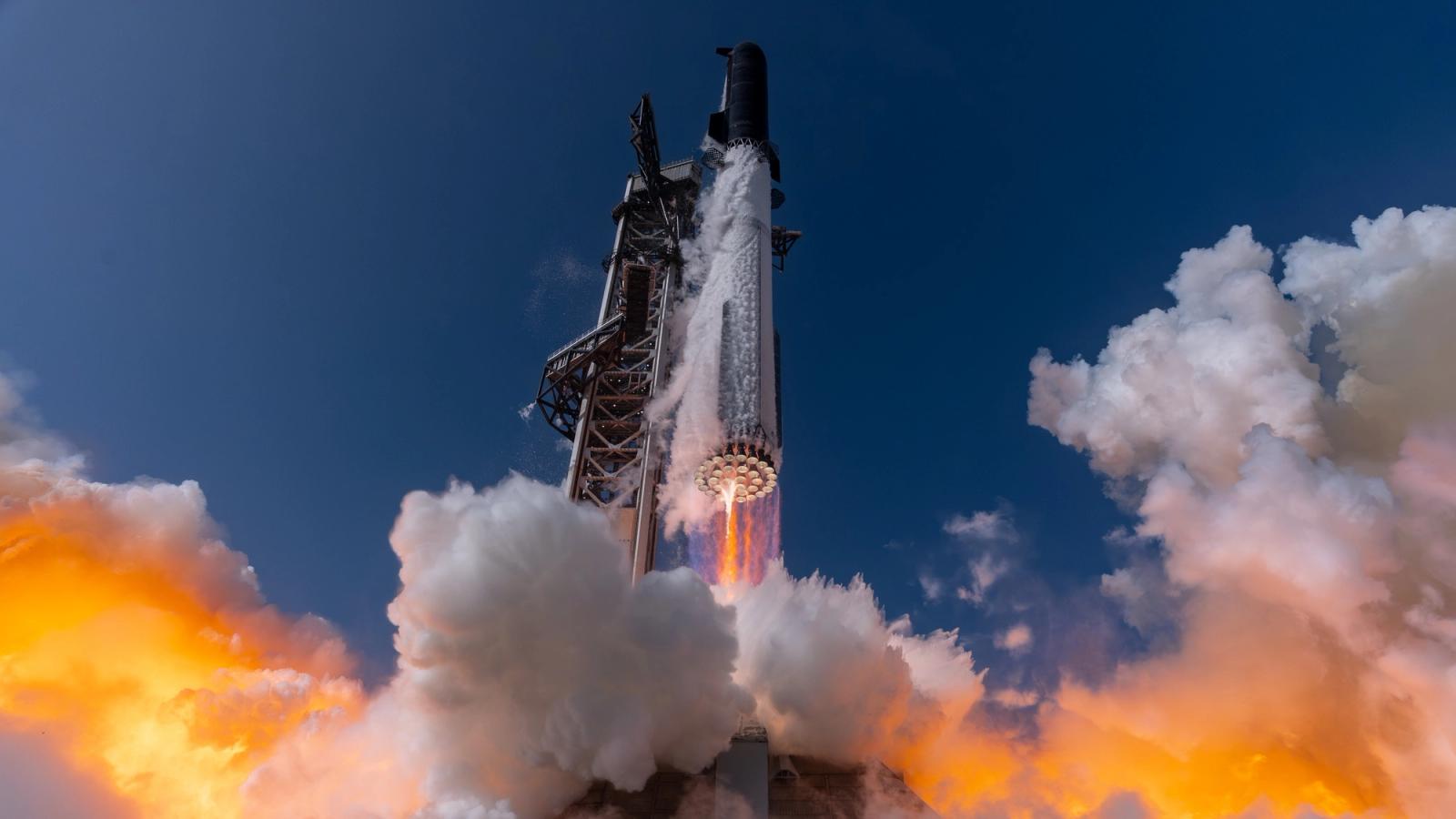
The first time a Starship will circle Earth, a handful of engineers, a crew of 33 Raptor engines, and the quiet, early‑morning buzz of Starbase will be the real protagonists. For those 10 hours, the launch pad in Texas will be a stage where human ambition meets the unforgiving physics of orbit. If the mission succeeds, it will mean that the giant rocket can actually stay aloft, looping the planet six times before splashing back into the Pacific. For the people who built it, the test is a milestone; for the rest of us, it signals a new era where reusable rockets become routine.
Orbital flight is not about going straight up; it is about slipping sideways fast enough that the planet curves away beneath you. The article explains that Starship must reach 17,500 mph to maintain orbit. At that speed, the craft is still falling, but Earth's surface curves at the same rate, allowing it to stay in space indefinitely. This is the same principle that keeps satellites in orbit, but for a 400‑foot, 33‑engine behemoth, the challenge is enormous. The engineers at Starbase are essentially testing whether the vehicle can manage the stresses of staying in a near‑vacuum while still being able to re‑enter and land safely. If this test fails, the entire reusable strategy could be delayed, pushing back NASA’s Artemis moon missions and Musk’s Mars ambitions.
Previous Starship flights have lasted a little over an hour, following passive, sub‑orbital trajectories that keep the public safe while still providing data. This time, the plan is to send the vehicle around the planet six times, a full 10‑hour loop. That is a stress test on every system: thermal protection, guidance, propulsion, and the Raptor engines themselves. The launch window is set for 8:15 a.m. ET on September 28, with a live stream beginning at 7:45 a.m. ET. The early timing is not arbitrary; it allows flight controllers to monitor the entire mission from sunrise to sunset, a long day at the console that mirrors the long day in space.
If Starship can complete this orbit and land, it will prove that the most powerful rocket ever built can be fully and rapidly reusable. That would slash launch costs dramatically, opening the door for commercial cargo, satellite deployment, and even crewed missions to the Moon and Mars. The article notes that SpaceX’s next phase is to develop Starship for “fully and rapidly reusable” missions. A successful test would therefore not only validate the engineering but also cement SpaceX’s leadership in the global space economy, giving competitors a new benchmark to chase.
Everyone’s celebrating the prospect of a reusable super‑heavy launcher, but the narrative often forgets the human cost of these trials. The 33 Raptor engines are not just machines; they are the culmination of years of work by hundreds of engineers, technicians, and support staff. The article’s focus on the speed and the loop masks the fact that each failure could mean lost jobs, delayed projects, and a dent in investor confidence. In the race to Mars, the pressure to succeed is immense, and the margin for error is razor‑thin.
I predict that if Starship completes its six‑orbit loop, the next 12 months will see a cascade of more ambitious reusable missions from SpaceX and other players. The technology will set a new industry standard, forcing competitors to either match or innovate beyond it. If the test fails, we will see a temporary slowdown in reusable development, but the lessons learned will still push the field forward.
The 10‑hour flight will either prove that a reusable super‑heavy rocket can survive the rigors of orbit or reveal the limits of current engineering. Either outcome will shape the future of space travel, and the people at Starbase are ready to answer the question.


