Music
Digital Nomads: How a Nigerian tutor relocated to Thailand on a $500 visa
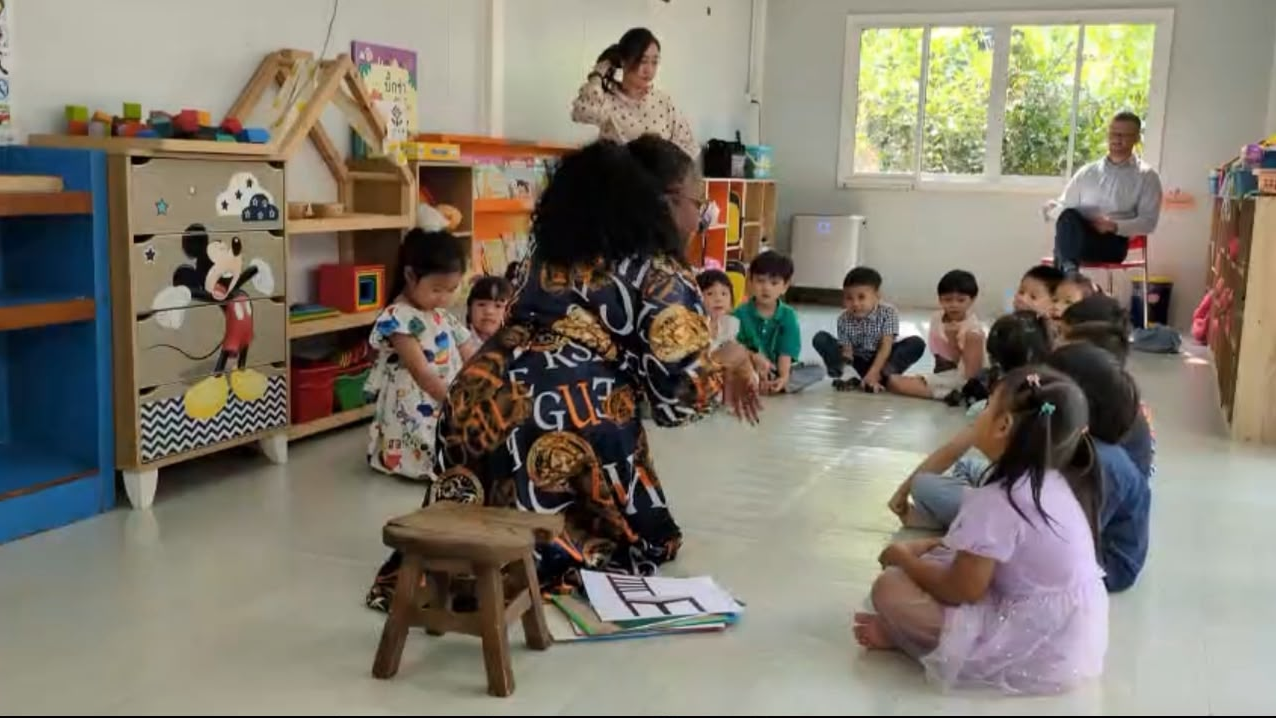
Ava Anthony, a Nigerian singer-songwriter who performs under the stage name 'Denle,' is at a crucial juncture in her career, having recently relocated to Thailand on a $500 visa. The 30-year-old had always been driven by a passion for music, but her experiences in Thailand have fundamentally reshaped her perspective on the future of African music. Anthony's journey to Thailand was initially meant to be a temporary escape from her native Nigeria, where she intended to teach English while experiencing life in a different country.
Anthony's observations in Thailand have been starkly contrasted by the statistics of the global music industry. She notes that Asian artists, particularly those in the region, are achieving remarkable success with an astonishing 30 to 100 billion streams annually, while Afrobeats, a genre of which Anthony is a part, struggles to reach even a fraction of this number, with approximately 30 billion streams per year. These statistics have led Anthony to question the potential of Afrobeats if artists were to develop within more structured systems, mirroring the approach taken by Asian artists.
Anthony's relationship with music began in a far less structured setting, growing up in a family where music was woven into everyday life. Her parents sang in the church choir, and gospel singer Panam Percy Paul and American country musician Jim Reeves were frequent influences on her early musical tastes. It was during a solo performance in her church's children's choir that Anthony first realized her potential as a singer. A woman approached her mother after the performance and remarked in Yoruba, "What a voice your daughter has." This moment marked the beginning of Anthony's musical journey, which would eventually take her from studying electrical and electronics engineering to working as a digital strategist for major Nigerian brands, teaching English in Thailand, and pursuing a career as a singer-songwriter.
Anthony's experiences in Thailand have significant implications for the broader African music industry. The success of Asian artists is evidence of the power of structured systems and deliberate preparation. If African artists were to adopt a similar approach, the potential for growth and success is immense. Anthony's story serves as a reminder that even in the most unlikely of places, individuals can find new perspectives and insights that can shape the direction of their careers and industries.
Thailand's digital nomad visa has been a significant draw for individuals like Anthony, who seek a new and exciting experience while also maintaining their remote work capabilities. The visa, which costs a mere $500, has attracted a growing number of digital nomads who are drawn to Thailand's low cost of living, rich culture, and vibrant expat community. For Anthony, the visa has provided a unique opportunity to balance her work and personal life, allowing her to focus on her music while also experiencing life in a new country.
In the wake of Anthony's experiences in Thailand, it is clear that the future of African music is bright with possibility. The potential for collaboration and innovation between African and Asian artists is vast, and Anthony's story serves as a reminder that even in the most unlikely of places, new perspectives and insights can be found. As Anthony continues to navigate the complexities of the global music industry, one thing is certain: her experiences in Thailand will continue to shape the direction of her career and the future of African music.
As I see it, Anthony's story is evidence of the power of travel and exploration in shaping our perspectives and insights. Her experiences in Thailand have opened her eyes to the potential of structured systems and deliberate preparation in the music industry, and it will be fascinating to see how she applies these lessons to her own career and the broader African music industry.