Movies
Grace Owoola Is 96! The Eran Iya Oshogbo Star Celebrates With These Beautiful Portraits
Grace Owoola sits barefoot on a strip of sand, the heat of the sun catching the sequins on her maroon lace gown.
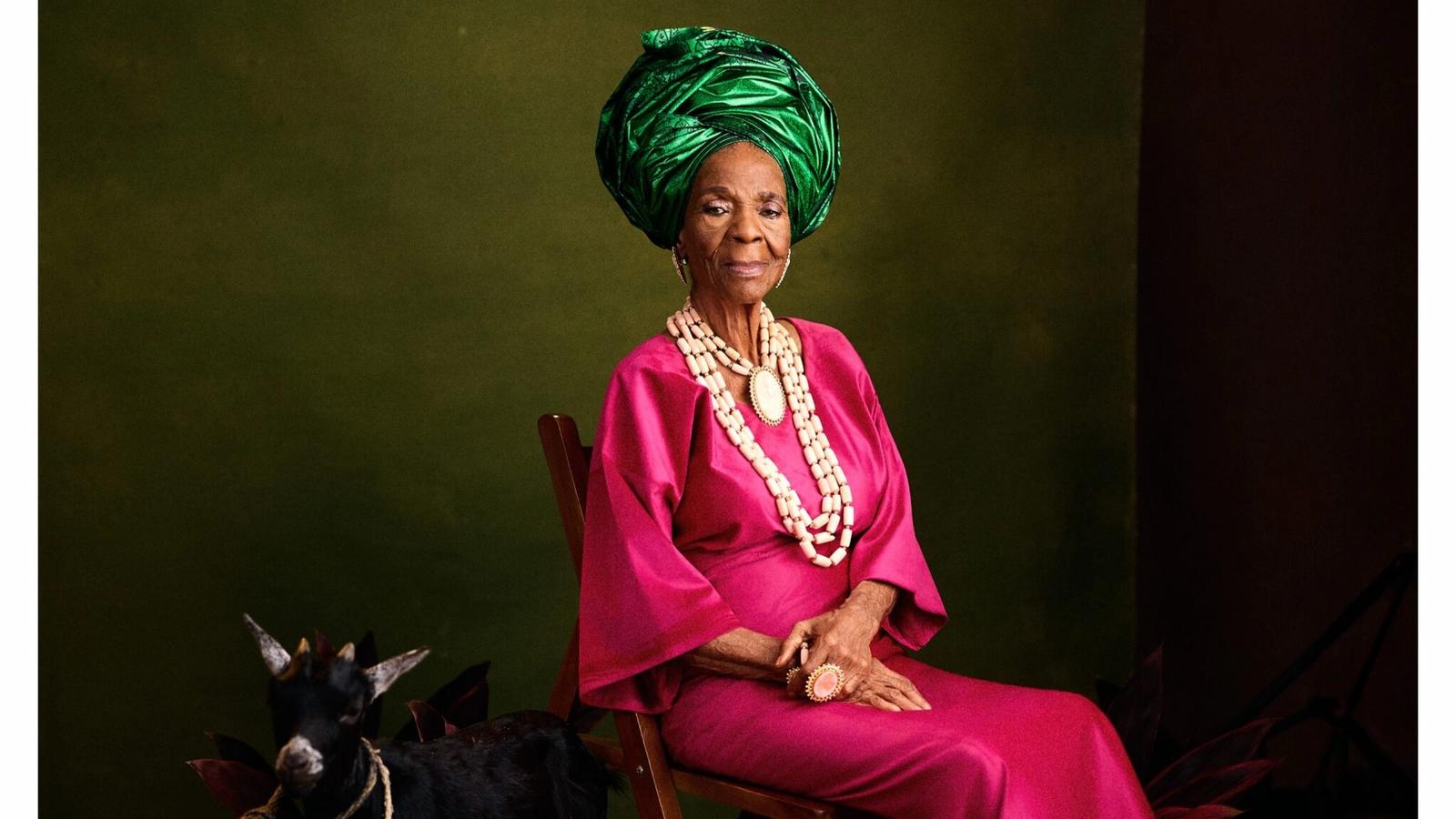
Grace Owoola sits barefoot on a strip of sand, the heat of the sun catching the sequins on her maroon lace gown. A hot‑pink buba and iro frame her face, while an emerald‑green gele crowns her head, and layers of blush‑pink coral beads glint against her skin. Beside her, a live black goat stands tethered, its presence a living echo of the title that made her a household name. In that moment, the veteran actressnow 96smiles, her eyes reflecting a lifetime of stories that have threaded through Nigerian screens for decades.
The photoshoot, captured by photographer Oluwatosin Victoria, is more than a celebration of age; it is a homage to a cultural icon. Grace Owoola’s portrayal of Iya Oshogbo in the classic Yoruba film Eran Iya Oshogbo cemented her status as a pillar of indigenous storytelling. The film, a staple of Yoruba cinema, introduced audiences to a woman who balanced tradition and modernity, a theme that resonates across generations. The choice of a live goat, a symbol often associated with the film’s narrative, bridges the gap between past and present, reminding viewers that the stories she helped tell still echo in contemporary life.
The wardrobe choices in the shoot weave together contemporary flair and deep cultural roots. The sequined maroon lace, a modern twist on traditional Yoruba attire, contrasts with the classic black ipele draped over her shoulder in another shot. The coral beadsmulti‑strand and meticulously arrangedare not merely decorative; they carry symbolic weight, often used in Yoruba ceremonies to signify protection and prosperity. By incorporating these elements, the photoshoot becomes a visual narrative of how Yoruba aesthetics evolve while staying anchored in heritage.
In Yoruba culture, goats often feature in rituals and storytelling, symbolizing sacrifice, resilience, and continuity. The presence of the live black goat in the photos is a deliberate nod to the film’s title, Eran Iya Oshogbo, which translates to “The Tale of Iya Oshogbo.” The goat’s calm demeanor beside Grace’s chair echoes the character’s composed strength. It also serves as a living reminder that the stories she once embodied continue to thrive, much like the goat that has stood beside her through the years.
Grace Owoola’s 96th birthday is not merely a milestone of years but evidence of endurance in an industry that has seen dramatic shifts. From the early days of Yoruba cinema to the rise of Nollywood, she has remained a constant figure, her performances bridging the gap between traditional theater and modern film. The warm smiles from fans and fellow actors that flooded social media during the photoshoot underscore a collective gratitude for her contributions. These reactions, filled with affection, highlight how her legacy has woven itself into the cultural fabric of Nigeria.
As a writer, I find the photoshoot’s composition striking. The juxtaposition of natural sand, the vibrant colors of her attire, and the symbolic goat creates a tableau that speaks louder than words. It reminds me that visual storytellingwhether through film or a single framehas the power to capture the essence of a culture and its people. In a world where digital media often overshadows traditional art forms, this celebration reaffirms the enduring relevance of Yoruba aesthetics.
Grace Owoola’s 96th birthday photoshoot is more than a personal celebration; it is a cultural event that invites new generations to rediscover the roots of Yoruba storytelling. As Nigeria continues to produce fresh voices in cinema and television, the legacy of icons like Grace Owoola provides a compass, guiding creators toward narratives that honor tradition while embracing innovation. The images she has shared today will likely inspire future artists to blend heritage with contemporary expression, ensuring that the stories of Eran Iya Oshogbo and beyond remain alive in the collective memory.