News
Grand Theft Auto VI Hype Keeps Building Ahead of Launch | Chart
Grand Theft Auto VI is no longer a rumor; it’s the pulse of the entertainment world. Five weeks before its November 19 release, the game dominates every conversation, climbing 6.
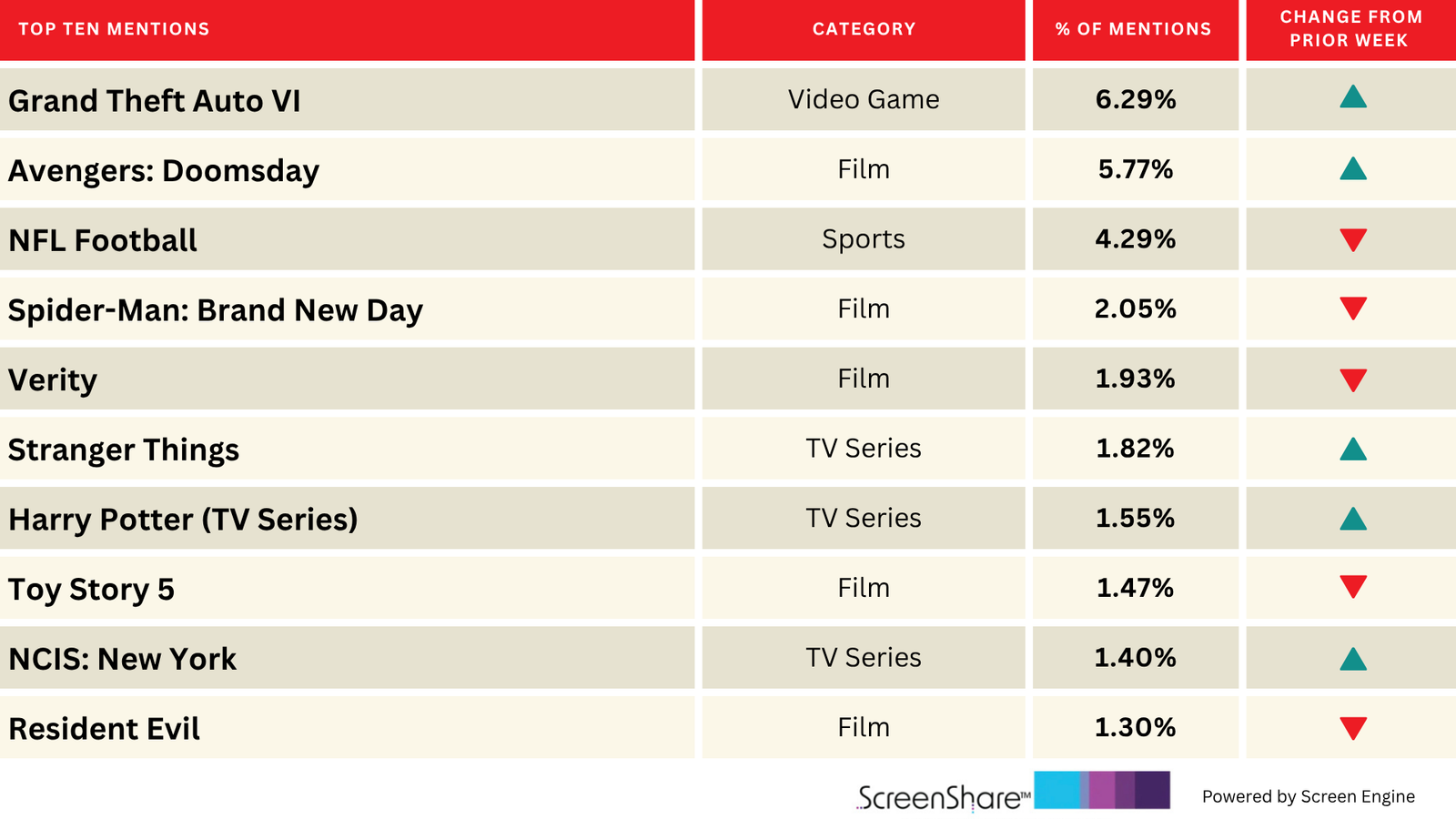
Grand Theft Auto VI is no longer a rumor; it’s the pulse of the entertainment world. Five weeks before its November 19 release, the game dominates every conversation, climbing 6.3 % in mentions and eclipsing everything else on the chart. The numbers speak for themselves: gamers, marketers, and casual fans alike are lining up for a new chapter in one of the most profitable franchises ever. For the creators behind the game, the hype translates into a cultural moment that could redefine how we talk about virtual worlds and the future of interactive storytelling.
The data partnership between Screen Engine and TheWrap shows GTA VI at the top of the weekly mentions chart, with a jump of 6.3 %. That figure is not a marginal uptick; it’s the biggest increase seen that week. In a landscape crowded with blockbuster releasesAvengers: Doomsday, NFL Football, and Spider‑Man: Brand New Daythe game’s ascent signals a shift. It suggests that the appetite for immersive, open‑world experiences is growing faster than the appetite for traditional media. The numbers also hint at a new generation of consumers who measure entertainment through interactivity rather than passive consumption.
Everyone’s celebrating the hype, but let’s be honest: the gaming industry is saturated. GTA V sold millions, and the brand is already a household name. Why should the new entry matter? The answer lies in the context of the data. While Avengers: Doomsday and NFL Football maintain steady streams of interest, GTA VI is the only title showing exponential growth. That indicates a shift in the cultural zeitgeist. The game isn’t just another product; it’s becoming a touchstone for how we experience narrative, economy, and community in a digital age.
The rise of GTA VI mirrors past moments when a single title reshaped an industry. Remember when Fortnite turned streaming into a mainstream platform? Or when The Witcher 3 redefined open‑world storytelling? Each of those games pushed the boundaries of what audiences expect. GTA VI is poised to do the same, but with a larger, more diverse audience. Its launch will likely spark conversations about virtual economies, digital citizenship, and the ethics of immersive storytelling. These are not niche concerns; they touch every creator who wants to build a world that feels alive.
I predict that by the end of 2027, GTA VI will generate more revenue from in‑game purchases than any other title in history. The current momentum6.3 % weekly mentionssuggests that players are already primed to spend. If the game’s monetization model follows the pattern set by its predecessor, the influx of micro‑transactions could eclipse traditional box‑office earnings. That would force studios across the board to rethink how they package and price content.
Behind the data are real people: the developers who have spent years crafting a world that feels both familiar and fresh; the gamers who will spend countless hours exploring a city that feels like a living organism; the marketers who are betting billions on a single title. For the creators, the hype is a double‑edged sword. On one side, it guarantees a massive audience and a lucrative platform. On the other, it raises expectations to unprecedented levels. The pressure to deliver a flawless experience could stifle innovation, as teams may prioritize polish over experimentation.
The data shows enthusiasm, but enthusiasm does not equal quality. Past titles have faltered under the weight of anticipationthink Cyberpunk 2077’s launch woes. GTA VI must navigate the same pitfalls. If Rockstar Games can deliver a seamless, bug‑free experience, the hype will translate into lasting cultural impact. If not, the 6.3 % spike could become a cautionary tale about over‑promising and under‑delivering.
The climb of GTA VI to the top of the mentions chart is more than a marketing win; it’s a bellwether for the future of entertainment. The numbers say it’s happening, but the real test will be whether the game lives up to the expectations it has already built. If it does, we’ll see a new standard for interactive storytelling that could ripple across film, music, and beyond. If it falls short, the industry will learn a hard lesson about the limits of hype. Either way, the next few weeks will be a crucible for the next chapter in digital culture.


