News
How a Berlin-based developer turned Lagos traffic into a viral game
The first time I saw the screen flash with a yellow‑lined bus cutting through a grid of red‑and‑black stripes, I was halfway through a traffic jam on the Lekki‑Ikoyi Expressway.
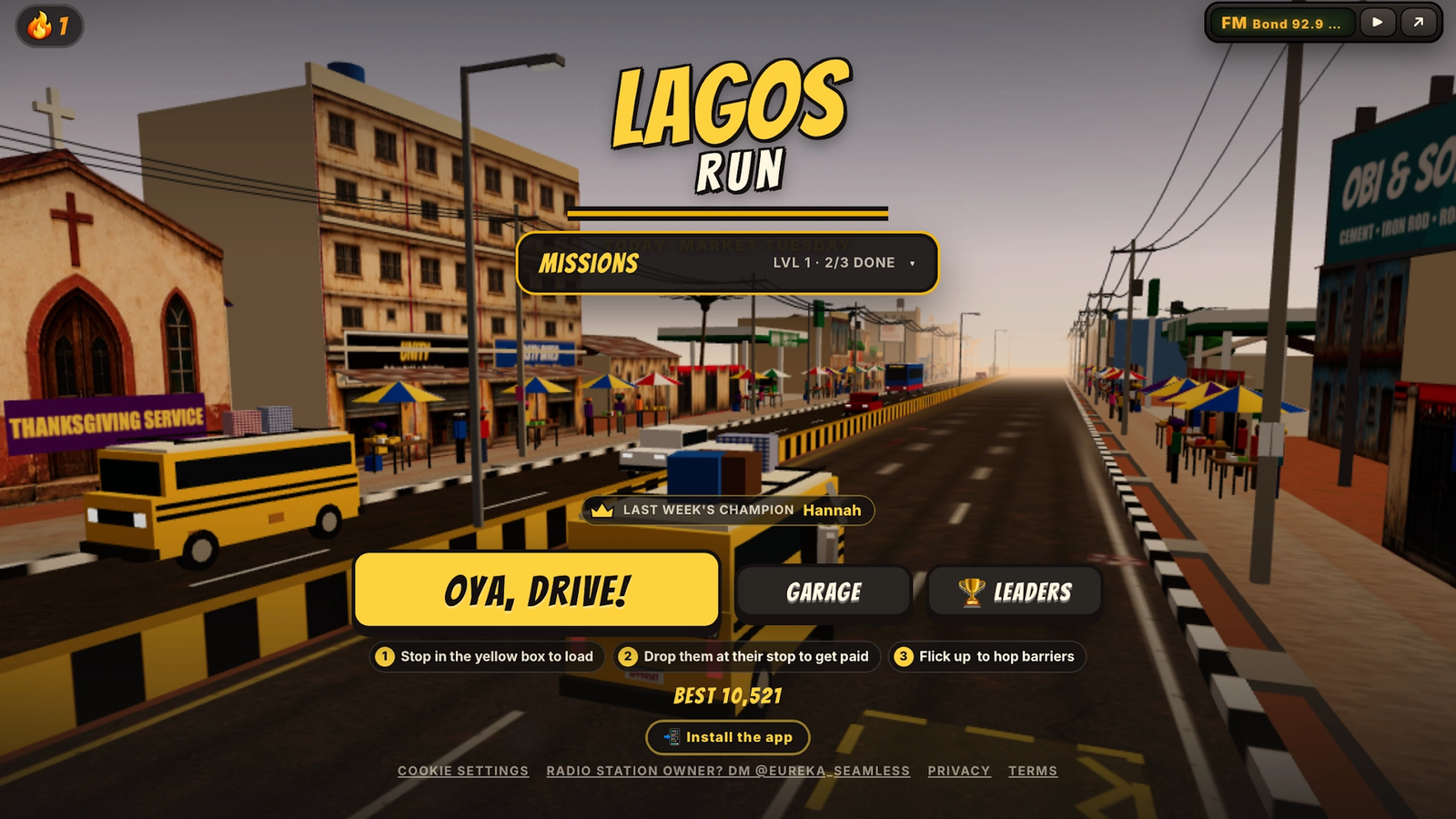
The first time I saw the screen flash with a yellow‑lined bus cutting through a grid of red‑and‑black stripes, I was halfway through a traffic jam on the Lekki‑Ikoyi Expressway. The bus, a danfo, swerved past a pile of tyres, honked, and the familiar “pom‑pom‑pom” echoed in my ears. A swipe left, a swipe right, a tap on the brakemy fingers moved before my mind caught up. That was Lagos Run, a browser‑based endless runner that has turned Lagos traffic into a shared, digital experience for more than 20,000 players in just two days.
Opeyemi Adeniran grew up in Ojuelegba, a suburb that feels like a living, breathing map of Lagos traffic. He remembers the honking, the screeching brakes, the rhythm of the city’s pulse. Those memories became the seed for a game that could be played anywhere, anytime. After moving to Berlin, he kept the itch alive: “I play games almost every day of my life,” he told TechCabal. His early career as a senior frontend engineer in 2017 introduced him to game development, first through Unity and later through web‑based tools. The idea of Lagos Run crystallised when he asked himself, “Why don’t I bring home to myself?”a simple question that turned into a side project with a grander vision.
The first prototype was a two‑dimensional, flat representation of Lagos streets. It felt too static, too far from the chaotic, layered reality of the city. After several iterations, Adeniran pushed the limits of browser technology, adding depth, realistic physics, and a 3D environment that feels like the actual streets of Lagos. Players now navigate a danfo that can dodge roadblocks, pull over at bus stops, and collect coinsall while the background hums with a radio track that sounds like a Lagos street corner.
Players use swipe gestures to steer the bus: left to avoid a car, right to dodge a heap of tyres, a tap to brake. The game incorporates familiar Lagos elements: bus stops where passengers tumble in and out, road signs, and the ever‑present traffic lights. Missions and levels add structure to the endless runner format, while a leaderboard encourages competition. The result is a digital Lagos that feels both nostalgic and fresh, a place where the chaos of real traffic is distilled into an engaging, addictive gameplay loop.
Within two days of its public release, Lagos Run drew more than 20,000 players, evidence of the power of shared cultural touchstones. The game’s launch screen showcases a virtual Lagos, complete with a garage, missions, and a leaderboard. Players can start a run, check their missions, visit the garage, and compare scoresall within a single interface that feels like a micro‑version of the city itself. The game’s success highlights how digital spaces can become arenas for cultural expression, even when built by someone living halfway across the world.
Adeniran’s journey from a Berlin‑based frontend engineer to a game developer who captured the heart of Lagos is a reminder that technology can bridge distances. The game’s rapid uptake suggests that there is a hunger for culturally resonant digital experiences. Whether Lagos Run will evolve into a full‑featured platform or inspire other creators to translate their hometowns into games remains to be seen, but the current momentum is clear.
As I watched a stream of players navigate the virtual streets, I realized that Lagos Run is more than a game; it is a living archive of a city’s everyday rhythm, turned into a shared experience that transcends borders. The next time you swipe left or right on your screen, you might be stepping into a piece of Lagos, no matter where you are.


