Music
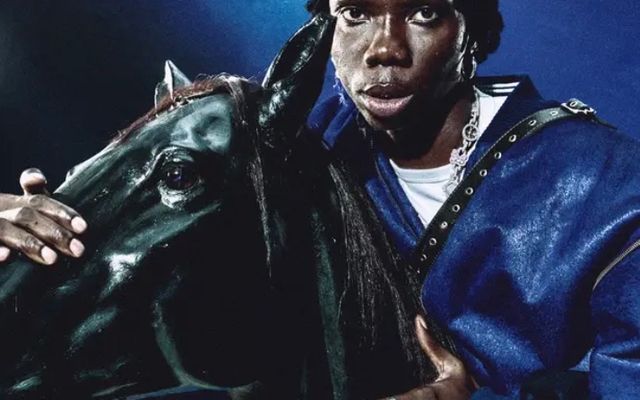
How Did Terry Apala Get Into Apala Music? The Singer Takes Us Through His Journey
Terry Apala’s latest track “Apaladisskizzy” dropped with Mavo, and the buzz is already turning heads in Lagos, Accra and even Toronto.

Terry Apala’s latest track “Apaladisskizzy” dropped with Mavo, and the buzz is already turning heads in Lagos, Accra and even Toronto. But the story behind that collaboration isn’t just about a new single; it’s about a man who grew up in Mushin, Lagos, listening to the drums of his Isoko roots while the streets pulsed with Yoruba beats. He’s the guy who says Apala fusion isn’t just for the Yoruba it’s for Africa, for Gen Z, for anyone who can feel a rhythm in their bones. When I sat down with him for BellaNaija, he opened up about that journey, the people who pulled him back into music, and why he believes traditional sounds can still shine in a hyper‑digital world.
Look, Terry’s story starts in Mushin, a neighborhood that’s a melting pot of cultures. He’s Isoko by birth, but his family didn’t shy away from the vibrant Yoruba music that filled the air. “Seeing myself in a different community shaped my personality, my way of reasoning,” he told me. Growing up, the local radio was saturated with Yoruba artists, and that environment seeped into his early attempts at rap and R&B. Yet those genres felt too generic; he wanted something that felt uniquely his. That’s when Apala, a traditional Yoruba rhythm known for its deep, resonant bass and call‑and‑response vocals, caught his ear. He started blending Apala with hip‑hop and Afrobeats, creating what he calls Apala fusion. The result? A sound that feels both ancient and fresh, a bridge between generations.
The first time Terry’s fusion hit the mainstream was with “Champagne Showers” in 2016. The track’s infectious beat and unapologetic blend of old and new caught the attention of listeners who were tired of the same old Afrobeats formula. It was a turning point that proved Apala could thrive in contemporary music. “It’s not just for Yoruba alone; it also represents Africa,” he mused. That line isn’t just a slogan; it’s a declaration that his music is a cultural statement, a nod to the diverse tapestry of Nigerian sounds.
Terry’s appeal to Gen Z is more than just a demographic win; it’s a cultural shift. He joked that people used to think he was in his seventies, but now the younger crowd is discovering his vibe. “It’s a win for Apala music,” he said about his recent collaboration with Ayra Starr. The partnership was born when Ayra’s team reached out, and Terry’s inclusion on her album was a milestone that put Apala on the international radar. He credits Don Jazzy and the Mavin team for opening doors, but he’s quick to say it’s the music that matters. “I love the song too, and your contribution made it much better,” he told the team, underscoring his collaborative spirit.
Like many artists, Terry took a break from the spotlight. During that time, he felt the weight of expectations and the fear of losing relevance. “I was nowhere to be found,” he admitted, reflecting on his early days of rap and R&B where he felt invisible. It was a period of introspection that ultimately led him back to his roots. The people who helped him find his way back were not just industry giants; they were friends, family, and the community that never stopped listening to his beats. Their support reminded him that authenticity trumps trendiness, and that’s why he keeps pushing Apala into new territories.
“Apaladisskizzy” featuring Mavo is evidence of Terry’s commitment to evolution. The track layers traditional Apala percussion with contemporary synths and a hook that could easily drop on a TikTok dance floor. Mavo’s contribution adds a fresh lyrical edge, proving that Apala fusion can adapt without losing its soul. “What drew me to the collab?” Terry asked, and his answer was simple: “It’s about bringing something new to the table while staying true to the core.” That balance is what keeps his music relevant and exciting.
Terry Apala’s journey is a reminder that traditional sounds aren’t relics; they’re living, breathing entities that can be reimagined for the digital age. His blend of Apala with hip‑hop, Afrobeats, and modern production shows that cultural heritage can coexist with innovation. The fact that he’s being featured on international projects and gaining traction with Gen Z audiences proves that authenticity resonates louder than any algorithm.
In the end, Terry’s story isn’t just about a single artist; it’s about a movement that redefines what it means to be Nigerian music in 2026. He’s proving that when you honor your roots while embracing the future, you create a sound that’s both timeless and timely. And that, my friends, is the real beat we’re all here to feel.
More stories you'll like

Music
Cotonou Lyrics by Dwin, The Stoic & Rhaffy
Music
I LOVE THIS Lyrics by Blaqbonez Feat. Igwe Aka
Music