News
It's a charade: Aggrieved NDC members reject Utomi, Galadima reconciliation committee
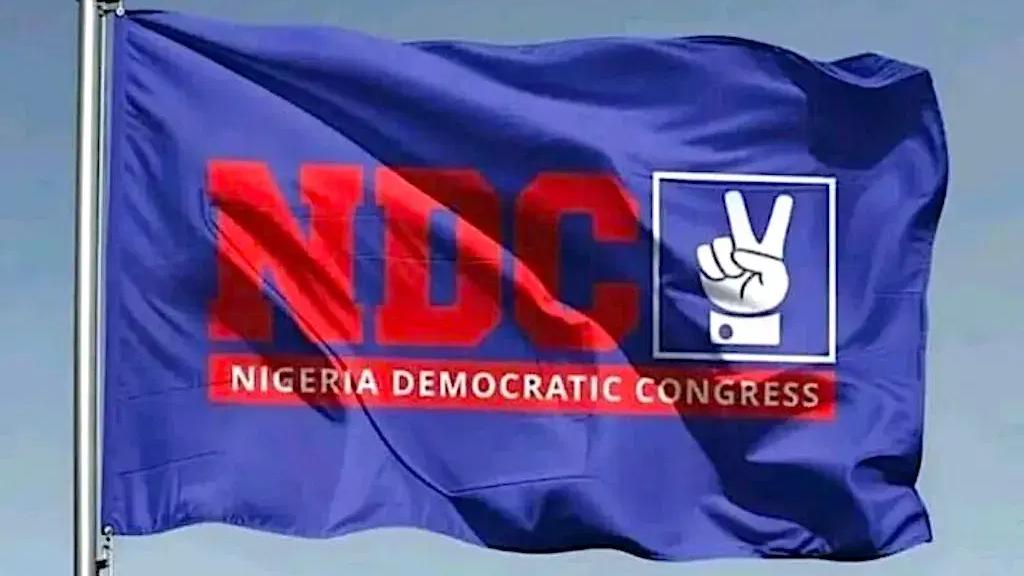
For Agbonaye Osazee Ofo, a member of the Nigerian Democratic Congress (NDC) in Edo South Senatorial District, the party's national reconciliation committee is nothing more than a charade designed to silence legitimate grievances and force compliance. Ofo and his fellow aggrieved members are rejecting the committee, arguing that it cannot heal the wounds of injustice caused by the party's leaders. The disputed primary elections that led to this point cannot be wished away, and the committee's main objective is to persuade aggrieved members to accept an unfair outcome.
The NDC's decision to establish a national reconciliation committee following its contentious primary elections has been met with skepticism by aggrieved members. They question who is to be reconciled and on what terms, pointing out that a reconciliation committee cannot become a substitute for justice. It cannot be used to paper over disputed primaries, silence legitimate grievances, or compel aggrieved members to accept outcomes they firmly believe were imposed upon them. The committee's role is being seen as an attempt to manufacture acceptance, rather than a genuine effort to heal wounds and restore unity within the party.
Agbonaye Osazee Ofo has urged the NDC leadership to understand that political parties do not become stronger by suppressing legitimate grievances. Instead, they become stronger by confronting wrongdoing and addressing the concerns of their members. The committee's approach, which invites the betrayed to sit at a table set by those accused of betraying them, is seen as an attempt to enforce compliance rather than facilitate genuine reconciliation. This approach is not only flawed but also damaging to the party's integrity and trustworthiness.
The NDC's leadership has been criticized for its handling of the primary elections, which has led to widespread discontent among members. The party's decision to establish a reconciliation committee without addressing the underlying issues has only exacerbated the problem. The committee's failure to establish the truth behind the disputed primaries has left aggrieved members feeling betrayed and disenfranchised. This crisis of leadership has the potential to undermine the party's credibility and erode its support base.
I predict that the NDC's reconciliation committee will ultimately fail to achieve its objectives. The aggrieved members will continue to reject the committee's efforts, and the party's leadership will be forced to confront the consequences of its actions. This failure will be a turning point for the NDC, as it will be forced to re-examine its leadership and its approach to addressing the concerns of its members. The party will have to choose between confronting wrongdoing and suppressing legitimate grievances, and I believe that the latter approach will ultimately lead to its downfall.
The NDC's future hangs in the balance, and it is up to its leadership to choose the right path. Will they continue to suppress legitimate grievances and force compliance, or will they confront wrongdoing and address the concerns of their members? The answer to this question will determine the party's fate and its ability to regain the trust of its members.