Sports
Jorge Jesus explains why he called up Cristiano Ronaldo to Portugal Squad
Portugal’s most prolific striker, Cristiano Ronaldo, has re‑entered the national squad under new head coach Jorge Jesus.
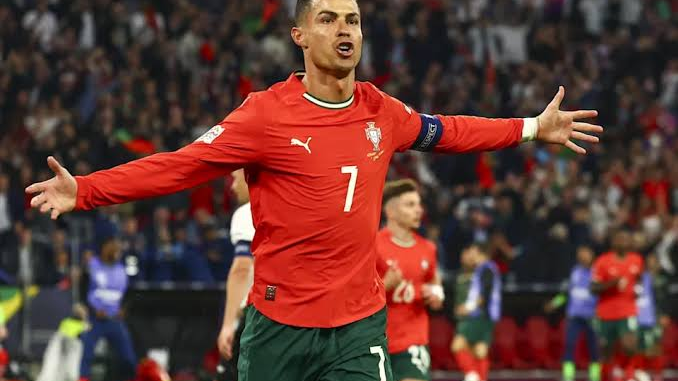
Portugal’s most prolific striker, Cristiano Ronaldo, has re‑entered the national squad under new head coach Jorge Jesus. At 41, the veteran’s inclusion is not a nostalgic gesture but a tactical decision that hinges on his current form. Jesus has made it clear that Ronaldo’s legacy will not dictate his selection; performance will. The stakes are high for Ronaldo, who must prove he still commands the pitch, and for Jesus, who must balance a legendary talent with a competitive squad dynamic.
Jesus’ statement that “his performance is what matters” underscores a shift from past accolades to present output. Ronaldo’s recent club formscoring consistently for Al‑Hilal and delivering in high‑pressure matcheshas earned him a spot in the lineup. The coach’s emphasis on treating him like any other player signals a meritocratic approach. If Ronaldo fails to meet the required level, he will not be guaranteed a starting position. This stance is significant because it challenges the traditional deference given to a five‑time Ballon d’Or winner and re‑frames the national team as a merit‑based unit rather than a star‑centric project.
The former Al‑Hilal and Fenerbahçe manager’s insistence on competition is a deliberate strategy. By positioning Ronaldo as a peer rather than a legend, Jesus encourages younger forwards to step up. This approach mirrors a broader trend in international football where coaches prioritize form over fame. In Portugal’s case, it means that emerging talents like Rúben Dias or Diogo Jota can vie for spots without fear of being sidelined by a veteran’s reputation. Jesus’ message“If he is performing well, he will play. If he isn’t, he won’t”sets a clear benchmark for all squad members.
Ronaldo’s presence offers a proven goal‑scoring outlet, a crucial asset as Jesus implements his tactical vision. The striker’s experience in high‑stakes games provides a psychological edge in qualifiers and tournaments. Yet, his role must be balanced with the team’s evolving dynamics. Jesus’ decision to integrate Ronaldo while fostering competition suggests a hybrid model: a seasoned playmaker combined with fresh talent. This blend could elevate Portugal’s attacking options, allowing for flexible formations that adapt to opponents’ strengths.
Portugal’s decision reflects a cultural shift in football management across the globe. The era of “icon‑centric” squads is giving way to performance‑driven selections. Jesus’ transparent criteria resonate with a generation of fans who demand accountability. Moreover, the move signals to other national teams that legendary status does not guarantee selection, reinforcing a meritocracy that could reshape international football’s competitive landscape.
Given Jesus’ clear stance, Ronaldo’s next test will be in upcoming qualifiers where his goal‑scoring prowess can be measured against fresh competition. If he maintains his form, he will likely secure a starting role; if not, he will be relegated to the bench. For Jesus, the challenge will be to integrate Ronaldo’s experience with emerging talents without creating friction. The balance he strikes now will dictate Portugal’s performance in the coming Euro and World Cup cycles.
In the end, Ronaldo’s call‑up is less a sentimental nod and more a strategic choice that aligns with a modern, performance‑centric football ethos. The next chapters of Portugal’s journey will reveal whether this blend of legacy and meritocracy can translate into silverware.