News
Matt Willis felt 'guilty' for distancing himself from Amy Winehouse before she died
Matt Willis sat in a quiet corner of a London café, the hum of conversations around him a stark contrast to the weight of the memories he carried.
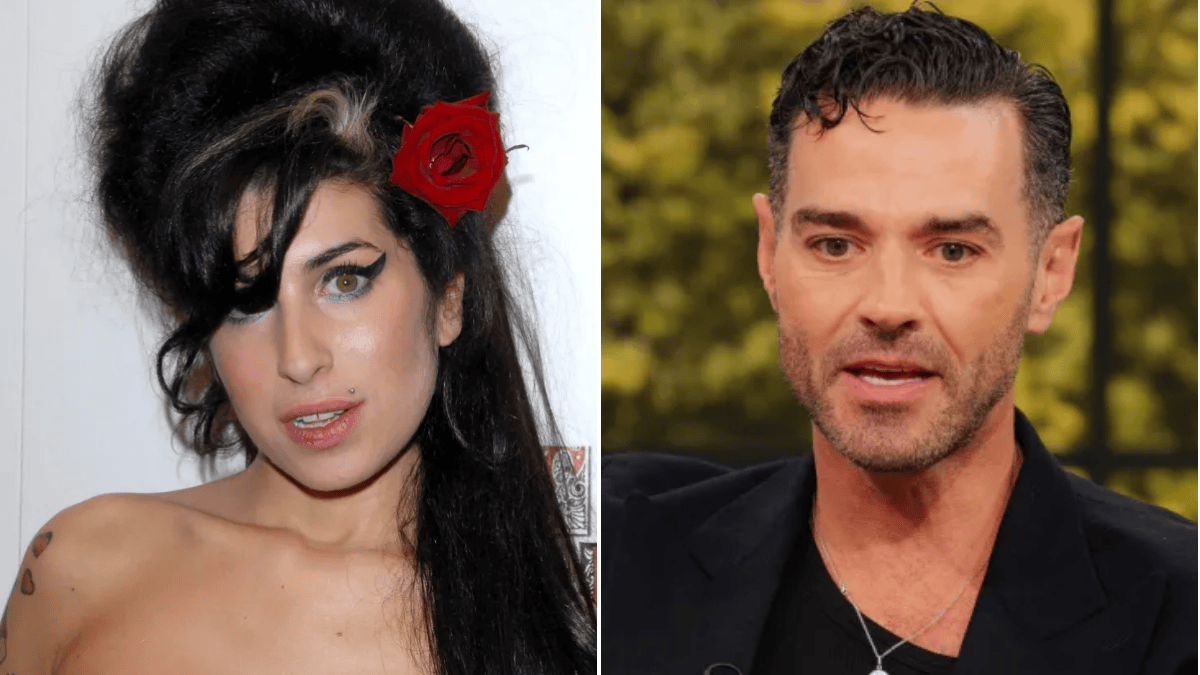
Matt Willis sat in a quiet corner of a London café, the hum of conversations around him a stark contrast to the weight of the memories he carried. He had once walked the same halls of Sylvia Young drama school as Amy Winehouse, the two of them sharing laughter, a kiss, and the shared dream of stage lights. Now, years later, the echo of that friendship felt like a distant drumbeat, a reminder of a bond severed by the very addiction that had claimed her life.
The friendship that blossomed in the corridors of Sylvia Young was more than a teenage romance; it was a companionship forged in the same cultural milieu that shaped many London artists. Amy Winehouse and Willis were close enough that, in 2019, Willis recalled their shared experiences and a kiss that, while brief, cemented their bond. Yet the trajectory of their lives diverged sharply. While Winehouse struggled with alcohol, Willis faced his own addictions. In an effort to protect himself and his future, he made the painful decision to distance himself from the environments and people that could jeopardise his sobriety, including his friend.
When Winehouse died in 2011 from alcohol poisoning, Willis was already clean. He had cut ties with the circles that once bound them, believing that removal was the only path to safety. In a candid interview, he admitted the guilt that followed: “It hit me like a ton of bricks, I had a lot of guilt. I loved her so much, we were really close.” The realization that he could not be there for her in her final moments haunted him. He questioned whether he could have done more, even though he knew she would not have listened. “Would she, if I’d really tried?” he wondered, a regret that lingered like a shadow over his recovery.
The turning point in Willis’s life came with the arrival of Emma Griffiths. Their first meeting at MTV in 2004 led to an engagement in 2007 and a wedding in 2008. Emma’s unwavering support became the cornerstone of Willis’s sobriety. He credits her as the person who saved him from falling back into the abyss of drugs and alcohol. “If I didn’t have her, I don’t know where I would have ended up,” he reflected. The couple’s family grew with the births of Isabelle in 2009, Ace in 2011, and Trixie Grace in 2016, each child evidence of the life Willis chose to build.
As a writer who has followed the trajectories of many artists, I find Willis’s story a stark reminder of how personal choices ripple outward. The decision to step away from a friend can feel like betrayal, yet it can also be a necessary act of self-preservation. In the creative industries, where the line between camaraderie and addiction often blurs, such narratives force us to confront the cost of survival.
Today, Willis continues to live a life anchored by family and sobriety. He speaks openly about his past, using his platform to advocate for mental health and addiction recovery. While the loss of Amy Winehouse remains a painful chapter, it has also become a catalyst for his advocacy, reminding audiences that the path to healing is rarely linear.
In closing, Willis’s journey underscores that redemption is not a single moment but a series of deliberate steps. The next chapter for him will likely involve further public speaking and perhaps a deeper engagement with the causes that saved his life. The story of a boy from London, a friendship cut short, and a man who chose to rebuild his life offers a powerful lesson: that the most profound acts of love sometimes come from the decision to step back, to heal, and to return stronger.


