News
Robert De Niro's Brendan Carr Slaps Some Sense Into Jimmy Kimmel in Surprise Late-Night Appearance
The night Jimmy Kimmel’s monologue turned into a mock courtroom, the real drama unfolding not on the screen but on the stage of a late‑night show.
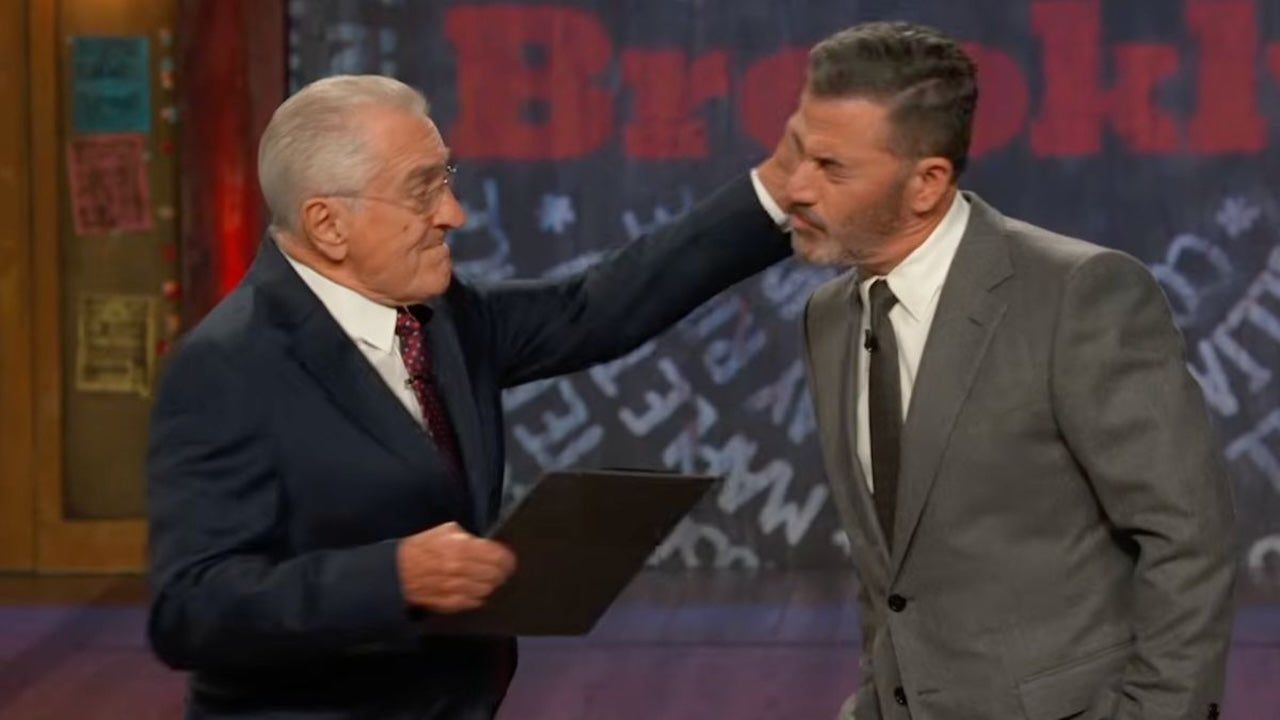
The night Jimmy Kimmel’s monologue turned into a mock courtroom, the real drama unfolding not on the screen but on the stage of a late‑night show. When Robert De Niro appeared in a navy suit, not as the iconic actor but as FCC Chairman Brendan Carr, the audience was handed a live‑action parody of the regulator’s long‑standing feud with the network. The stunt was more than a gimmick; it was a blunt reminder that the FCC’s reach still feels like a looming shadow over American media, a fact that hits every producer, advertiser, and viewer who depends on the airwaves.
Carr’s entrance, armed with a baseball bat, was a visual shorthand for the perceived power of the FCC. He repeatedly poked Kimmel in the chest, a slap‑in‑the-face that echoed the regulator’s real‑world enforcement actions. The bat is not just a prop; it’s a metaphor for the FCC’s authority to strike at any content that violates its rules. Kimmel’s flippant responses“Hey, look who it is, everybody” and “I have a few items I’d like to discuss”were the show’s attempt to downplay the seriousness of the FCC’s scrutiny. Yet the audience could not ignore the underlying tension: the FCC’s 192 alleged infractions against Kimmel’s jokes about the president and his family.
Carr’s line, “This is just a routine inspection to make sure you are abiding by the terms of your license,” is a direct jab at the very institution that has repeatedly clamped down on late‑night hosts. The irony is thick: a fictional caricature of a real regulator, portrayed by a legendary actor, is mocking the regulator’s own authority. This is the moment when satire turns into a critique of regulatory overreach. Kimmel’s defense“You speak when I tell you to speak otherwise you shut the f‑k up”mirrors the FCC’s own demands for compliance, suggesting that the line between free expression and regulatory compliance is thinner than many realize.
Everyone loves the narrative that the FCC is an invisible hand, nudging content creators toward decency. In reality, the regulator’s actions have often felt more like a leash than a guide. Carr’s mockery exposes this contradiction: the FCC’s enforcement record is not a matter of public debate but a litmus test for how much creative freedom a show can afford. The fact that Kimmel’s jokes about the president’s son, Eric, were singled out among “over 3,000 jokes” shows that the FCC’s focus is selective, targeting content that is politically charged rather than universally offensive. This selective enforcement fuels the argument that the FCC’s power is exercised unevenly, favoring certain political narratives.
Given the growing trend of high‑profile satire targeting regulatory bodies, I predict that the FCC will soon find itself the butt of more high‑visibility mockery. As more creators use late‑night platforms to push boundaries, the regulator’s hand will be watched more closely, and any misstep could become a viral moment. The FCC’s response will likely be to tighten its guidelines, but that tightening will only fuel further creative backlash.
In a world where the line between regulation and censorship blurs, the night De Niro’s Carr stepped onto the stage was a stark reminder that the FCC’s shadow still looms large over the airwaves. The show’s satire was not just entertainment; it was a call to examine the real power dynamics that shape what we see on TV.


