Sports
'SNL': Jalen Brunson and Knicks Teammates Chuckle Through NBA Championship Q&A Monologue
Jalen Brunson stepped onto the Saturday Night Live stage with a grin that said the NBA championship was nothing compared to the night’s comedy.
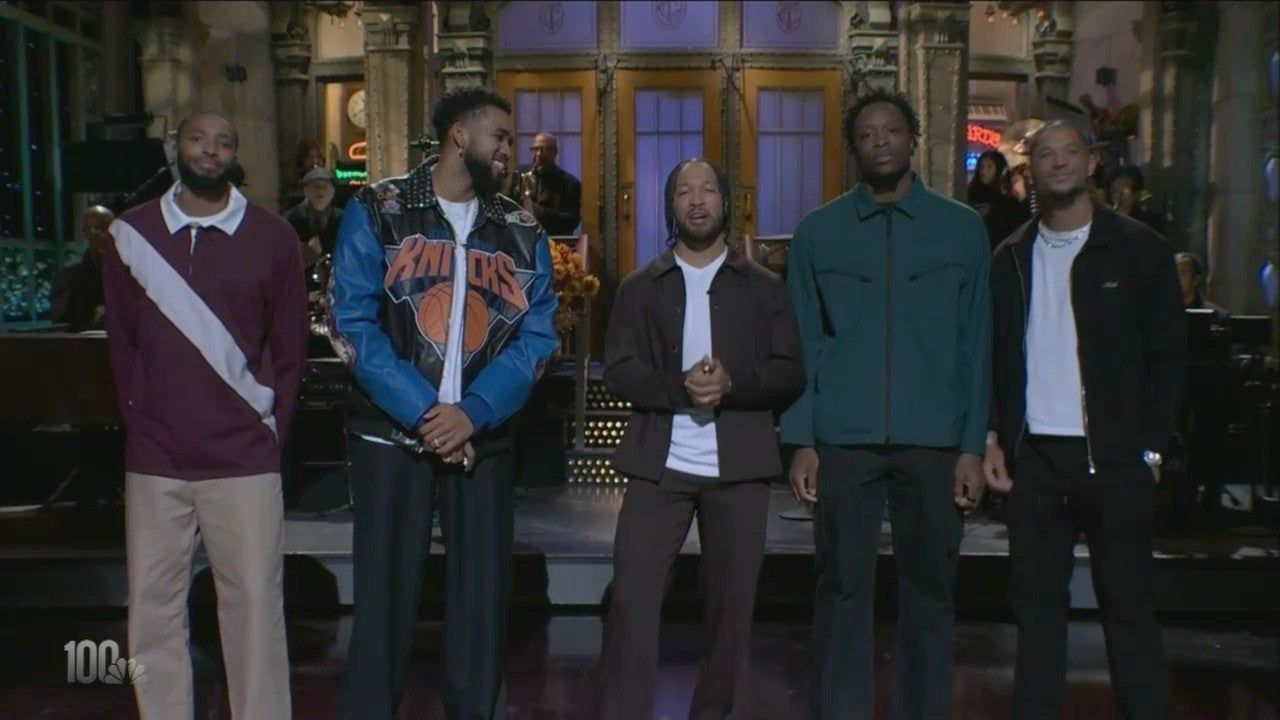
Jalen Brunson stepped onto the Saturday Night Live stage with a grin that said the NBA championship was nothing compared to the night’s comedy. The New York Knicks star, fresh off a title, announced that the first half of his monologue would feel “god awful,” mirroring the early struggles of a playoff run, while the finale would be a highlight reel. The stakes were clear: he was the host, his teammates were his audience, and the whole show hinged on keeping the crowd laughing while honoring the team’s recent triumph.
Brunson’s first joke was a direct nod to basketball strategy. By declaring that the first three quarters of SNL would be terrible, he set expectations for a slow burn that would pay off in the final sketch. The analogy worked on two levels. For the Knicks, the championship run was a roller coaster; for the audience, it promised a payoff after a deliberate build‑up. The humor was self‑aware, a hallmark of the show’s tradition of turning sports lore into punchlines. The opening line also served as a subtle reminder that the team’s success was earned through resilience, not instant glory.
The heart of the monologue came when Brunson invited Josh Hart, OG Anunoby, Mikal Bridges, and Karl‑Anthony Towns onto the set. Each player brought a distinct flavor to the conversation. Towns asked if he could foul out of SNL, a playful twist on basketball fouls that landed on the audience’s funny bone. Bridges revealed his wingspan, lamenting that it didn’t grant him flightan amusing metaphor for the limits of physical prowess. Anunoby teased Brunson about a missed shot in Game Four, only for the star to confirm it, turning the moment into a shared joke about clutch plays. Finally, Hart confronted the rumor that Brunson had taken a $113 million pay cut to stay with the Knicks, a question that highlighted the personal sacrifices athletes make for team loyalty.
This episode is more than a funny night; it reflects a broader trend of athletes stepping into mainstream media to shape their own narratives. When a championship team’s captain hosts a cultural institution like SNL, it blurs the line between sport and entertainment. The Knicks’ victory, a first in 25 years, provided a backdrop that resonated with fans beyond the basketball court. The monologue turned the team’s story into a national conversation about dedication, humor, and the human side of athletes. It also underscored how late‑night shows increasingly feature sports personalities, acknowledging that the reach of the NBA extends into every facet of pop culture.
Given the success of this crossover, it is likely that future SNL hosts will seek similar collaborations. The Knicks, having proven they can command national attention, may leverage the platform to attract sponsors and broaden their brand. For SNL, the episode demonstrated that integrating current sports stars can revitalize the show’s relevance among younger audiences who follow the NBA closely. I predict that the next season will feature another championship team’s captain, perhaps from the NBA, NFL, or MLB, as the network continues to capitalize on the synergy between sports triumphs and comedy.
The night closed with the entire squad joining Brunson on stage, a visual testament to the unity that underpins both the championship run and the monologue. The final laugh was not just about a joke; it was a celebration of a team that, through perseverance and a touch of humor, had earned its place in history.