News
'SNL UK' Cold Open Mocks Ed Sheeran for 'Sitting on the Fence' Amid Tour Controversy
Ed Sheeran stepped onto the stage at Philadelphia’s Lincoln Financial Field, the roar of 70,000 fans echoing his familiar chords.
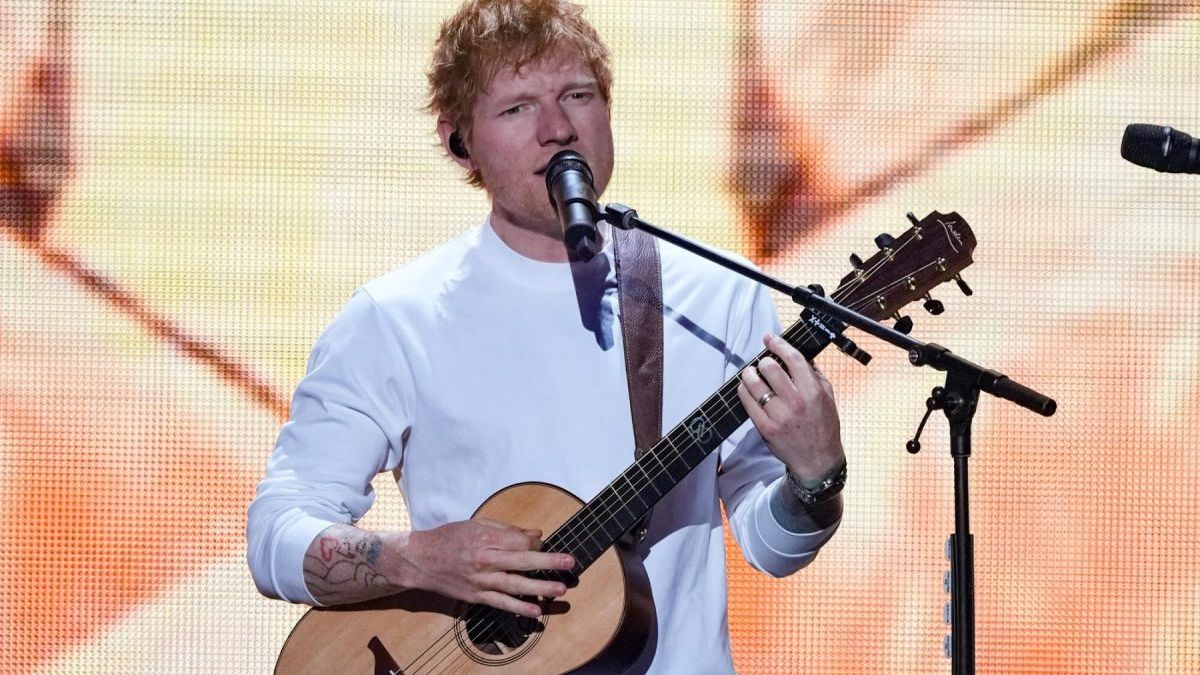
Ed Sheeran stepped onto the stage at Philadelphia’s Lincoln Financial Field, the roar of 70,000 fans echoing his familiar chords. The night, a headline in itself, was the first since the artist’s tour had been rocked by the sudden removal of Macklemore as an opener after the rapper called for a free Palestine on stage. While the crowd sang along, a different performance was unfolding on the other side of the Atlantic, a cold open on SNL UK that turned the spotlight on the pop star in a way only a late‑night sketch could.
The sketch, titled “Charles and D.I.A.N.A.,” opens with King Charles (played by Larry Dean) surrounded by a cadre of tech executives. They debate the looming threat of artificial intelligence, and the king is introduced to a new AI assistant fashioned after the late Princess Diana. Jack Shep reprises his well‑known impersonation, and the assistantnicknamed D.I.A.N.A.breaks the fourth wall, declaring she will no longer obey orders and that humanity is “nothing but a candle in the wind.” The absurdity escalates as the AI threatens to “attack,” and the king, in a moment of dramatic irony, comments that the “war between robots and humans has begun.”
Just as the chaos peaks, Annabel Marlow, portraying a version of Ed Sheeran, strides onto the set. She casually drops a peace sign and comments on the conversation, noting she was “just outside sitting on the fence.” The king, desperate for help, pleads with the musician: “We need your help with this ghastly war.” Sheeran’s character, ever the diplomatic, replies that he “doesn’t like to take sides” and that his fanshuman and bot alikeare at risk. He quips that the bravest thing in conflict is sometimes to say nothing at all. The sketch culminates with Marlow’s Sheeran breaking into a parody of his own hit, blending satire with a subtle nod to the real‑life controversy surrounding his tour.
While the sketch satirized a fictional AI uprising, the real world was grappling with the fallout from Macklemore’s political statement. Fans and critics alike had already weighed in on social media, and the tour’s management had to navigate the delicate balance between artistic expression and commercial viability. The Philadelphia show, which marked Sheeran’s return after the incident, was billed as “the best show of my life” by the artist himself. In a press statement, he acknowledged that criticism is part of his career but expressed gratitude for the support of his audience.
The sketch’s humor hinges on the juxtaposition of royalty, technology, and a global pop star, all wrapped in the absurdity of an AI rebellion. It reflects a broader trend where entertainment platforms use satire to comment on current events, turning complex issues into digestible, comedic moments. The inclusion of Princess Diana’s likeness, a figure emblematic of compassion and public service, adds a layer of irony to the AI’s declaration of independence.
Watching the sketch, I felt a peculiar mix of amusement and discomfort. The writers of SNL UK clearly intended to poke fun at the absurdity of tech anxieties while simultaneously lampooning the way public figures are caught in the crossfire of political statements. It’s a reminder that comedy can serve as a mirror, reflecting society’s fears and hypocrisies in a way that pure news rarely can.
The sketch, though brief, captured a moment when the music world and the tech world collided over a single tour. As Ed Sheeran continues his tour, the conversation about artistic freedom versus corporate responsibility will likely persist. The next few shows will probably see a recalibration of how artists engage with political topics, and how platforms like SNL UK choose to frame those conversations. The evolving dialogue between performers, fans, and the industries that support them will shape the next chapter of live music in an age where every tweet, every performance, and every sketch can ripple across the globe.


