News
'You Can See Everything' Review: Elizabeth Holmes Exposé Is the Documentary to End All Documentaries
Elizabeth Holmes, once hailed as a Silicon Valley prodigy, now sits behind bars after a federal sentence that stretches beyond eleven years.
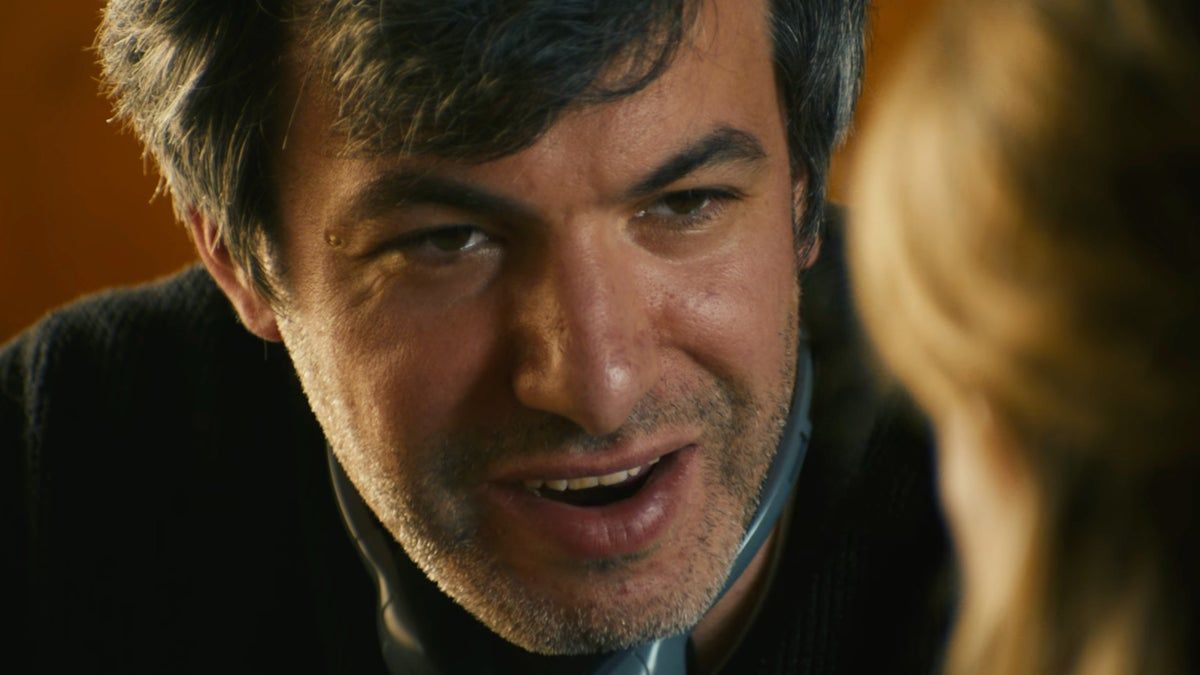
Elizabeth Holmes, once hailed as a Silicon Valley prodigy, now sits behind bars after a federal sentence that stretches beyond eleven years. In the middle of that sentence, a pair of filmmakersNathan Fielder and Lance Oppenheimtried to peel back the layers of her story in a documentary that has since been dubbed “You Can See Everything.” The film, rather than delivering a tidy narrative, throws the viewer into a maze of uncertainty, forcing a reckoning with what a documentary can truly claim to reveal.
The film opens with a quiet, almost mundane scene: Holmes’ husband, Billy Evans, snatches a bowl of eggs from her hands as she whiskes them wrong. The moment feels oddly intimate, a glimpse into a domestic routine that feels ordinary until the camera lingers. It is a subtle reminder that the documentary is not merely about the high‑profile fraud but about the people who surround the headline. The presence of Billy in a naked shower scene, a surreal visual that the title promises, underscores the filmmakers’ intent to push the boundaries of what “seeing” means in a documentary context.
Fielder and Oppenheim set out to uncover the mysteries of a woman whose name had become synonymous with deception. Their goal was to sift through the layers of lies and ambition that had built the Theranos empire. Yet, as the film progresses, the very act of investigation becomes a commentary on the medium itself. The filmmakers admit they can draw no firm conclusions, and their own objectivity frays as they become immersed in Holmes’ world. The narrative shifts from a biographical inquiry to a meta‑documentary about the challenges of capturing truth on film.
The documentary does not shy away from reflecting on how Holmes has been portrayed elsewhere. The audience is shown the Emmy‑winning Hulu mini‑series “The Dropout,” where Amanda Seyfried portrays Holmes. In a candid moment, the real Holmes watches the biopic and feels “really weird” about it. That scene, juxtaposed with the filmmakers’ own struggles, creates a layered critique of how media shapes public perception. It also highlights how Holmes’ story has already been dissected through multiple lenses, each adding another layer of complexity.
While the film is heavily focused on the mechanics of documentary filmmaking, it does offer glimpses into the human side of the story. Holmes’ bizarre family life, her myriad excuses for misleading investors, and the raw moments with her husband all paint a portrait that is far from a simple villain narrative. These vignettes, though brief, humanize a figure who has become a cautionary tale in the tech world. They remind us that behind every headline there are real people with real emotions, even if those emotions are hard to trust.
As a writer who often walks the line between reportage and narrative, I find the film’s self‑reflexive approach refreshing. It forces the audience to question the very act of watching and to confront the idea that truth is not a fixed point but a shifting horizon. The filmmakers’ choice to foreground themselvesespecially Nathan Fielder, known for his reality‑manipulating pranksadds a layer of meta‑commentary that is both audacious and unsettling. It is a reminder that documentaries, like all art forms, are products of their creators’ perspectives.
“You Can See Everything” is less a definitive account of Elizabeth Holmes’ fraud and more an exploration of how we construct narratives around deception. It exposes the fragility of trust in documentary filmmaking and invites viewers to remain skeptical, even when the footage feels raw and candid. The film’s ending, with Holmes watching a dramatized version of her life, leaves us with a lingering question: can we ever truly see everything, or are we always looking through a lens that distorts reality?


