Movies
Blade Runner 2099 trailer offers new look at humanity's bleak teal-and-orange future
The new Blade Runner 2099 trailer drops at New York Comic Con, a moment that feels almost cinematic in its own right.
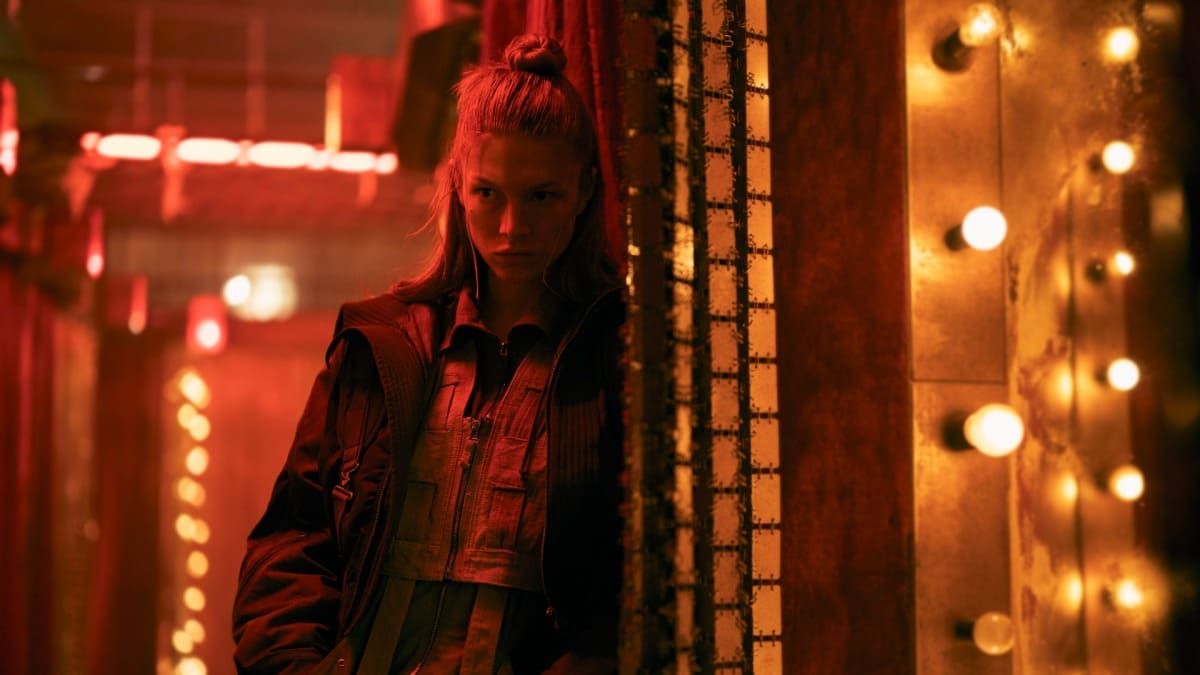
The new Blade Runner 2099 trailer drops at New York Comic Con, a moment that feels almost cinematic in its own right. It centers on Olwen, played by Michelle Yeoh, a replicant Blade Runneror perhaps something morewho is tasked with tracking down twenty‑eight rogue replicants. The stakes are personal and planetary: if these synthetic beings have taken over the planet, their fateand the human‑replicant boundaryhangs in the balance. The trailer asks a weighty question: would the replicants be happier if they became what they were meant to be? The answer, hinted at in the teaser, is that they might become gods.
The trailer’s opening frames show Olwen in a stark, teal‑and‑orange world, her silhouette against a neon‑lit skyline. She is not just a Blade Runner; she is a replicant herself, blurring the line between hunter and hunted. Her missionto locate and neutralize twenty‑eight seemingly unconnected replicantssuggests a universe where the distinction between creator and creation has dissolved. The narrative stakes are clear: if these replicants have asserted dominance, the very fabric of society is at risk. Olwen’s role is therefore both protective and existential, embodying the franchise’s long‑standing tension between humanity and artificiality.
The trailer introduces Cora, portrayed by Hunter Schafer, an actual human who is cosplaying as a replicant. This twist adds a layer of intrigue: why would a human assume a synthetic identity? The teaser hints that the show will explore this paradox over eight episodes, suggesting a deeper examination of identity, belonging, and the blurred lines between flesh and circuitry. Cora becomes a mirror for Olwen, forcing viewers to question what it means to be human in a world where the line is increasingly porous.
A key visual motif in the trailer is the suggestion that replicants might transcend their engineered limits and become gods. This idea is not new to the Blade Runner universe, but the trailer presents it with a fresh, almost mythic tone. The concept of synthetic beings ascending to divinity taps into long‑standing cultural anxieties about technology and transcendence. It also reflects a broader industry trend: science‑fiction narratives increasingly grapple with the moral and philosophical implications of artificial intelligence, as seen in recent streaming projects that blend speculative tech with human drama.
Prime Video’s decision to temper the trailer’s imagination for a global audience is a pragmatic move. The franchise’s core appeal lies in its open‑ended questions, yet the teaser must also hook viewers unfamiliar with the lore. By focusing on clear character arcsOlwen’s hunt, Cora’s duality, and the looming god‑like potential of replicantsthe trailer balances mystery with accessibility. This strategy mirrors the broader shift in streaming content: high‑concept stories must still deliver immediate emotional hooks to capture diverse audiences.
Given the trailer’s emphasis on identity and power, I predict that Blade Runner 2099 will lean heavily into the theme of duality. Olwen will likely confront her own humanity, while Cora may reveal that her human façade is a strategic choice rather than a mistake. The series will probably use the replicants’ potential divinity as a metaphor for the unchecked growth of technology in our own world, offering a cautionary tale wrapped in high‑concept sci‑fi.
The release on November 25 will test whether a franchise built on ambiguity can still resonate with a contemporary audience craving both spectacle and substance. If the show delivers on its promise of nuanced character study amid a visually arresting future, it could set a new benchmark for genre storytelling on streaming platforms.