Politics
Justice Department Investigates White House TV Press Pool for 'Proudly' Boycotting Coverage
The Department of Justice has opened a probe into the TV press pool that has recently chosen to boycott White House coverage.
The Department of Justice has opened a probe into the TV press pool that has recently chosen to boycott White House coverage. The boycott came after the Trump administration attempted to bar CNN, MS NOW and Politico from the White House, citing “purposely negative” reporting. Left no footage of high‑profile eventssuch as the visit of Chinese President Xi Jinpingthe other major networks ABC, CBS, Fox News and NBC stood in solidarity and refused to replace the banned outlets in the pool. The DOJ now questions whether this collective action violates the Sherman Act.
The antitrust investigation hinges on the idea that a group of commercial competitors can be seen as colluding when they agree to refuse coverage. The DOJ’s spokesperson, Emily Covington, stated that the Antitrust Division is “simply investigating to determine whether these news organizations have violated the antitrust laws.” The legal argument is that the boycott could suppress competition for audiences, advertising revenue and influence over public perception. The networks were reportedly contacted about suspending their televised press pool coverage on Friday, according to six sources cited by The New York Times. If the DOJ finds that the boycott was coordinated, the networks could face significant penalties under the Sherman Act.
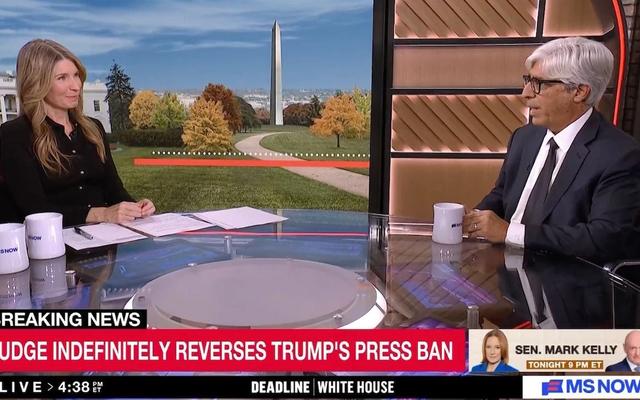
The boycott erupted after President Trump announced on September 18 that he was barring CNN, Politico and MS NOW from the White House. The trio sued on First and Fifth Amendment grounds, and a federal judge temporarily blocked the ban. A subsequent extension kept the ban in place until the following Tuesday. The networks’ decision to refuse to replace the banned outlets was a direct response to the administration’s attempt to silence dissenting voices. The Trump administration’s stance that the banned outlets “do not have guaranteed access to specific locations including the Oval Office or Air Force One” further complicated the situation, with Politico reporters even being blocked from covering a trip despite regaining credentials. This episode illustrates the fraught relationship between the executive branch and the press, a theme that has resurfaced repeatedly during the Trump era.
When the boycott took effect, there was a tangible loss of coverage for events that usually draw global attention. The absence of televised footage from the White House meant that international audiences and domestic viewers alike were deprived of real‑time reporting on key diplomatic visits and policy announcements. In a media landscape where live coverage is prized, the boycott created a vacuum that competitors and independent outlets had to fill. The return of the TV press pool to full coverage on September 25 temporarily restored the flow of information, but the underlying tensions remained. The incident underscores how media accessor the lack thereofcan shape public understanding of governmental actions.
This investigation sits at the intersection of antitrust enforcement and press freedom, a convergence that is becoming more common in the digital age. As media conglomerates consolidate and compete for advertising dollars, regulators are increasingly scrutinizing how collaborative practices affect competition. Simultaneously, the First Amendment remains a bulwark against governmental overreach. The DOJ’s probe signals a willingness to hold media giants accountable for actions that may undermine competitive dynamics, even when those actions are framed as a defense of editorial independence. This development could set a precedent for future cases where media alliances are used to counteract perceived political pressure.
Given the DOJ’s stated intent to “determine whether these news organizations have violated the antitrust laws,” it is likely that the investigation will focus on the coordination mechanisms between the networks. If evidence of explicit agreements or shared strategies emerges, the networks could face civil penalties. However, the DOJ may also consider the context of a political dispute and the networks’ claim of protecting editorial integrity. I anticipate that the outcome will hinge on whether the boycott can be shown to be a coordinated effort rather than an incidental, independent choice by each outlet. In either case, the case will prompt media houses to re‑evaluate their collaborative protocols when facing political pressure.
The DOJ’s inquiry into the TV press pool boycott is more than a legal footnote; it is a litmus test for how the media industry balances competition, editorial freedom, and governmental influence. The next few months will reveal whether the antitrust framework can adapt to the unique challenges of contemporary journalism.