News
'League Of Legends' K-pop virtual group K/DA returns without Madison Beer
In the glow of a New York‑style neon skyline, a new single blared across streaming platforms, its beat echoing the pulse of the city’s underground.
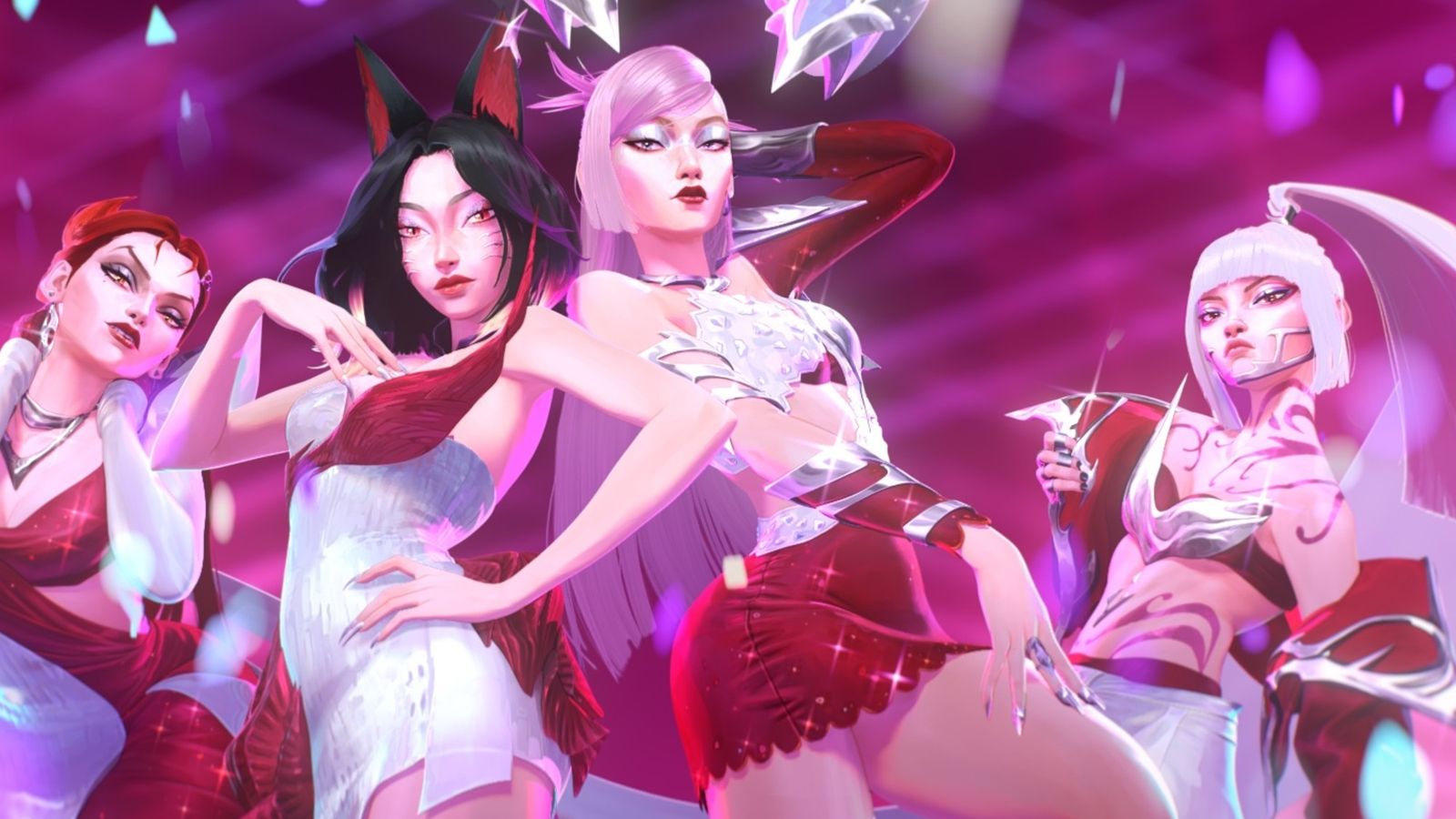
In the glow of a New York‑style neon skyline, a new single blared across streaming platforms, its beat echoing the pulse of the city’s underground. “Firestarter” dropped on Monday, October 19, marking the return of K/DAthe League of Legends‑backed K‑pop virtual bandafter a six‑year silence. The track’s bass thumps and synth swells carry the same swagger that first captivated millions in 2018, but the lineup has shifted: Miyeon and Soyeon of i‑dle resume their roles as Ahri and Akali, while Sophie Powers steps in as Evelynn, and Mimi Webb replaces Jaira Burns as Kai’Sa.
The song’s opening drops with a gritty drill rhythm, a departure from the pop‑centric sounds that defined “Pop/Stars.” Its chorussharpened by Powers’ raspy vocalscreates a bridge between esports and mainstream music, a hallmark of Riot Games’ ambition to fuse gaming culture with global pop trends. The release was accompanied by a slick animated music video, where the digital avatars perform against a backdrop of flickering city lights, a visual nod to the urban grit that inspired the track.
Miyeon and Soyeon have been constants since the group’s inception, voicing Ahri and Akali with the same charisma that made “Pop/Stars” a viral hit. The departure of Madison Beer, who previously voiced Evelynn, was a notable change; her exit was not accompanied by a public statement, but the new collaboration with Sophie Powers signals Riot’s willingness to experiment with fresh voices. Similarly, Mimi Webb taking over from Jaira Burns for Kai’Sa’s voice marks a new chapter in the group’s musical journey, hinting at a broader strategy to keep the virtual band dynamic and relevant.
Riot’s Alex Shahmiri has framed these releases as experiments in cross‑media storytelling. He notes that the company “has seen and appreciated how players love Riot’s music,” and that each release is approached with “care” to meet high expectations. Shahmiri’s comments suggest that K/DA is not just a marketing gimmick but part of a larger effort to explore how music can deepen player engagement and expand the League universe. By introducing new artists and sounds, Riot is testing the boundaries of what a virtual band can achieve while staying true to its gaming roots.
The return of K/DA after six years underscores the growing legitimacy of esports‑derived music projects in mainstream pop culture. The collaboration between i‑dle members and a gaming franchise demonstrates how digital platforms can serve as launchpads for emerging artists. Meanwhile, the inclusion of a New York drill influence reflects the global nature of contemporary pop, blending East Asian K‑pop sensibilities with Western urban beatsa fusion that resonates with a diverse, international audience.
As I watched the music video scroll, I felt a sense of anticipation for what Riot might deliver next. The company’s own words hint at “endless possibilities,” and the fact that K/DA has returned after a long hiatus suggests that the project is far from finished. The next steps could involve live virtual concerts, collaborations with other gaming franchises, or even cross‑media storytelling that ties back to League’s lore. For fans, the re‑emergence of K/DA offers a fresh soundtrack to the game’s ever‑expanding narrative, while for industry observers it signals a notable step toward integrating music and gaming into a single, immersive ecosystem.