Politics
Tinubu-Bishops' meeting: Bwala says Onaiyekan spoke for Catholics, not Christians
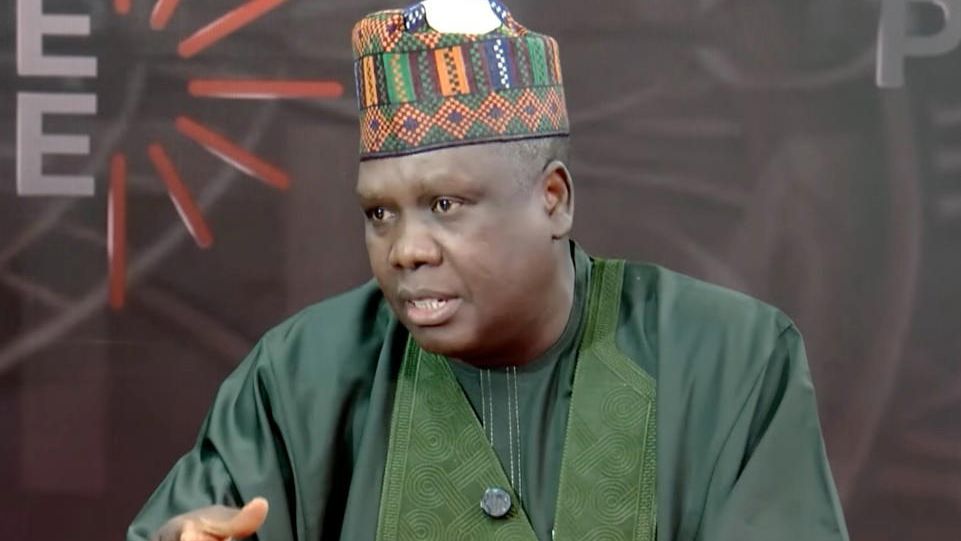
Daniel Bwala, Special Adviser to President Bola Tinubu on Policy Communication, is at the centre of a storm brewing around the recent meeting between the Catholic Bishops' Conference of Nigeria and President Tinubu. Bwala's X post has ignited controversy, with many questioning his interpretation of Cardinal John Onaiyekan's comments on the state of the nation. At stake for Bwala is his reputation as a defender of the President's policies, and his ability to navigate the treacherous waters of Nigerian politics. As he wades into the fray, Bwala's words are laced with conviction, but also a hint of tension. He is not just defending the President, but also his own understanding of the role of faith in Nigerian politics.
Bwala's central argument is that Cardinal Onaiyekan's comments should be seen as representative of the Catholic institution, rather than the broader Christian community. He points to the Catholic Bishops' Conference's alleged support for Labour Party presidential candidate Peter Obi during the 2023 general election as evidence of this. This is a significant claim, as it implies that the Catholic Church is taking a partisan stance in Nigerian politics. However, Bwala's assertion is not supported by any concrete evidence, leaving it to interpretation. What is clear, however, is that the Catholic Church has been a vocal critic of the current administration, and has called for greater accountability and transparency.
Bwala's comments are not just about Cardinal Onaiyekan's words, but also about the broader politics of faith in Nigeria. As a country with a diverse range of religious denominations, Nigeria has long struggled to navigate the complex relationships between faith and politics. The Catholic Church, in particular, has a significant presence in the country, with millions of adherents across the nation. However, the Church's influence extends beyond its membership, with many Nigerians looking to the Church as a moral authority. Bwala's comments reflect a broader trend in Nigerian politics, where faith is often used as a tool for political mobilization. This is a delicate balance, as faith leaders must navigate the fine line between speaking truth to power and taking a partisan stance.
As Nigerian politics continues to evolve, it is likely that the role of faith will remain a contentious issue. Bwala's comments reflect a growing trend towards polarization, where faith leaders are increasingly seen as taking sides in the country's complex politics. However, this is not a new phenomenon. In the 2015 general election, the Catholic Church was accused of supporting the opposition, with some clerics even endorsing the then-candidate Muhammadu Buhari. This was seen as a significant departure from the Church's traditional stance, and sparked controversy among some Nigerians. As the 2027 general election approaches, it is likely that faith leaders will once again find themselves at the centre of the storm.
As the controversy surrounding Bwala's comments continues to simmer, it is clear that the politics of faith in Nigeria will remain a contentious issue. While Bwala's words may have sparked outrage among some Nigerians, they also reflect a broader trend towards polarization. As the country navigates the complex relationships between faith and politics, it is likely that faith leaders will continue to find themselves at the centre of the storm. For Bwala, the stakes are high, as his reputation as a defender of the President's policies hangs in the balance. However, as the country looks to the future, it is clear that the role of faith in Nigerian politics will remain a contentious and complex issue.