Politics
Trump Lashes Out at Nobel Peace Prize Winner Navi Pillay After Press Jab: 'I Know Nothing About This Woman'
Donald Trump took to Truth Social to lash out at Navi Pillay after she was named the 2026 Nobel Peace Prize laureate.
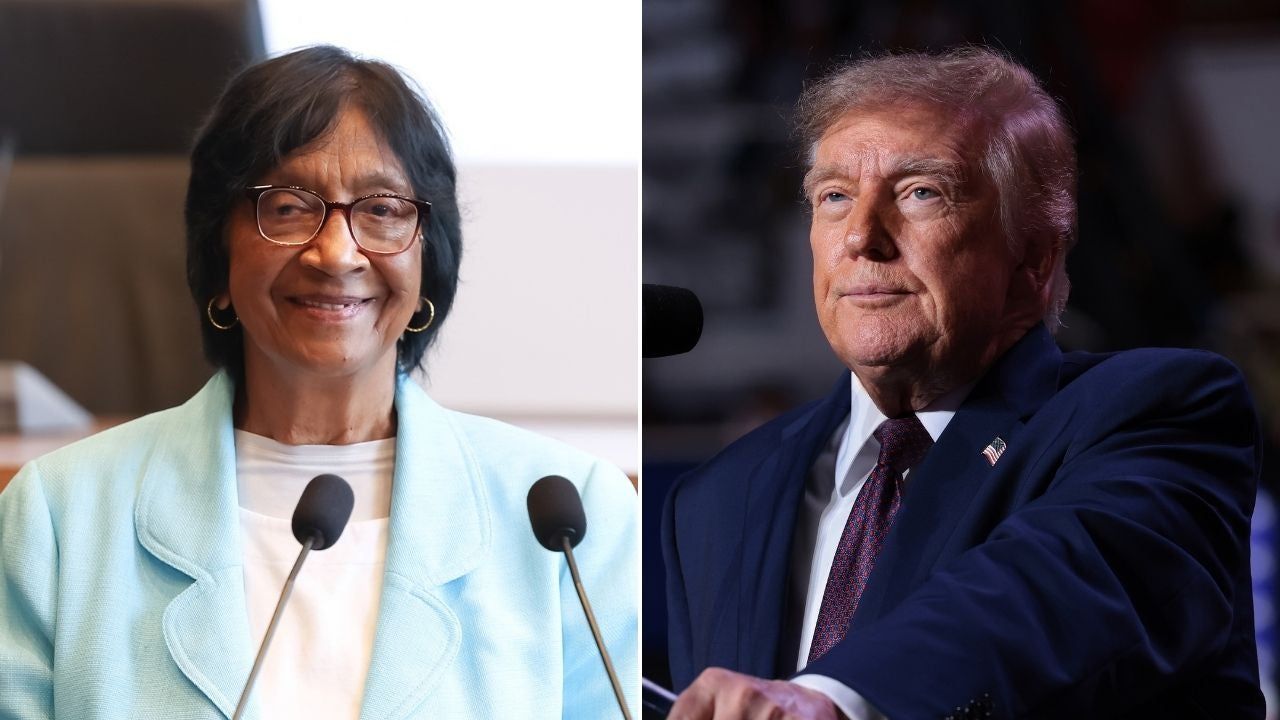
Donald Trump took to Truth Social to lash out at Navi Pillay after she was named the 2026 Nobel Peace Prize laureate. In a scathing post, the former president declared he knew “nothing about this woman” and accused her of being an “enemy of civilization.” He listed a litany of wars he claimed to have settled and argued that the United States should have received the award instead. The backlash was swift, with critics pointing out the absurdity of a former leader attacking a human‑rights jurist on a global stage.
Trump’s post was a catalog of self‑congratulation. He boasted about “settling eight wars,” naming conflicts from Cambodia to Israel and Iran. He added that he had prevented Iran from developing a nuclear weapon and removed Venezuelan President Nicolás Maduro. The former president’s narrative was that his diplomatic victories should have earned him the Nobel Peace Prize. Yet, the post was devoid of concrete evidence, relying instead on hyperbolic claims that echo his earlier rhetoric about “winning” wars.
The tone of the message“I know nothing about this woman, and neither does anyone else”suggests a dismissive stance toward Pillay’s credentials. She is a South African‑born jurist and former United Nations human rights chief, whose work has spanned international law and advocacy for marginalized communities. Trump’s attack, therefore, feels less like a critique of policy and more like a personal affront to a woman who has spent decades championing human rights on a global stage.
Navi Pillay’s career is anchored in the United Nations Human Rights Office, where she served as the first South African and first woman to hold the position of UN High Commissioner for Human Rights. Her tenure was marked by a focus on the rights of refugees, women, and indigenous peoples. She also played a pivotal role in shaping international norms around gender equality and combating discrimination. The Nobel Committee’s decision to award her the Peace Prize reflects her lifelong commitment to advancing human rights worldwide.
Her selection over Trump is not merely a symbolic gesture; it underscores the Nobel Committee’s preference for individuals whose work aligns with the prize’s ethos of promoting peace through justice and human dignity. Pillay’s contributions to international law and her advocacy for vulnerable populations resonate with the Committee’s mandate, making her a fitting recipient in the eyes of many observers.
The award to Pillay signals a broader shift in how global institutions recognize peace efforts. Historically, the Nobel Peace Prize has often favored political leaders or activists who have directly negotiated treaties or ended armed conflict. In recent years, however, the Committee has leaned toward individuals whose work has built the foundations of peacehuman rights law, gender equality, and social justice. Pillay’s victory is evidence of this trend, highlighting the growing importance of institutional reform and legal frameworks in sustaining long‑term peace.
This shift also mirrors the increasing visibility of women leaders in international affairs. From the United Nations to regional bodies, women are taking on roles that shape global policy. Pillay’s recognition is part of a larger narrative that celebrates the impact of women in diplomacy and human rights, challenging the traditional male‑dominated paradigm of peacebuilding.
Trump’s criticism is unlikely to alter the perception of Pillay’s achievements. The Nobel Committee’s decision remains intact, and the global community is already discussing her contributions. In the short term, the former president’s comments may galvanize his supporters, but they will likely be dismissed by international observers as an attempt to deflect from his own controversial legacy.
In the longer term, this episode could reinforce the narrative that the Nobel Peace Prize is a tool for recognizing those who work behind the scenes to protect human rights, rather than for political leaders who claim to have “settled wars.” It may also prompt a reevaluation of how political figures are portrayed in the media, especially when they attempt to align themselves with global honors.
The controversy surrounding Trump’s reaction to Pillay’s award highlights a growing divide between political rhetoric and the realities of human‑rights work. While Trump’s post may rally his base, it does little to undermine the legitimacy of the Nobel Committee’s choice. As the world continues to grapple with complex conflicts, the emphasis on legal frameworks and human‑rights advocacyas embodied by Pillaywill likely gain further traction. The next Nobel Peace Prize may very well honor another figure whose quiet, sustained work has laid the groundwork for lasting peace, proving that the path to harmony is often paved with law and justice rather than headlines.